Bitcoin Value Halves From Record High Of $69,000 Amid Sell-Off In Tech Stocks
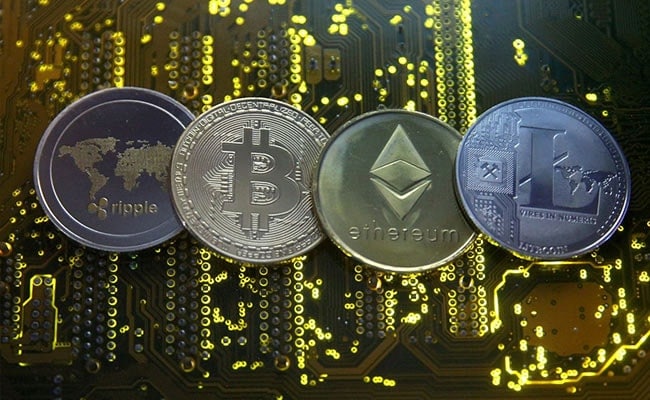
The dollar traded steady on Monday ahead of the U.S. Federal Reserve's January policy meeting later this week, while bitcoin lay bruised near a six-month low hit over the weekend, hurt by a sell-off in technology stocks.
"The Fed has got markets by the leash. And this week, it will once more tug and yank," said Frederic Neumann, HSBC's co-head of Asian economics research, in a morning note.
Attempts to predict when and how quickly central banks will raise interest rates and conclude stimulus programmes launched when Covid-19 hit are a major factor driving currency markets at present.
"What will prompt investors to scurry about will be the guidance Chair Powell might give at his press conference about quantitative tightening later in 2022," Neumann said, adding that he was not expecting a policy change.
The Fed's rate-setting Federal Open Market Committee kicks off its two-day meeting on Tuesday with some analysts starting to speculate that it is possible, though unlikely, that it will raise interest rates for the first time since the pandemic began.
"We consider the higher risk is the FOMC's statement portrays an urgency to act soon, likely in March, in the face of very high inflation. The urgency could culminate in a decision to abruptly stop quantitative easing by mid-February," said analysts at Commonwealth Bank of Australia in a note.
"A bullish statement and/or a faster end to the QE programme could even encourage markets to price a risk of a 50bp rate hike in March," they added, saying they thought this would lead to a knee-jerk reaction higher in the dollar.
The dollar index, which measures the greenback against six major peers was steady at 95.682 on Monday morning.
Also on traders' agenda this week is the Bank of Canada's January meeting, wrapping up just before the Fed, where a rate hike is a possibility, and Australian inflation data due Tuesday, which will guide the Reserve Bank of Australia's stance at its meeting next month.
On Monday morning the Aussie dollar was at $0.7180, the lower end of its recent range. The risk-friendly currency sold off late last week as traders dumped assets like equities, as well as even riskier assets like cryptocurrencies.
Bitcoin was at $36,026, having fallen 10% on Friday and dropping as low as $34,000 on Saturday, its lowest level since July 2021.
The world's largest cryptocurrency has nearly halved in value since its record peak of $69,000 hit November.
The sell-off hurt most digital assets, and ether, the world's second-largest cryptocurrency was at $2,516, also having hit its lowest level since July on Saturday, which was $2,300.
Traders say that as institutional investors increase their exposure to cryptocurrencies, their moves are more closely correlated with other risk assets.
The Nasdaq Composite lost 7.55% last week, its worst week since March 2020.
Back in traditional currency markets, sterling was near a two-week low at $1.3551, and the euro was at $1.1333.
The yen was at the stronger end of its recent range, with one dollar at 113.7 yen not far from the 113.47 touched 10 days earlier. A fall below that level would be a five-week low for the dollar.
(Except for the headline, this story has not been edited by NDTV staff and is published from a syndicated feed.)

-
Where You Live Shapes How You Get To Work | The Reason Why

Two-wheelers are the most popular way to get to work in India, accounting for nearly 43% of workplace commutes.
-
High US Salaries, No Green Card Certainty: The Financial Calculation Facing Indian H-1B Families
The suspension of PERM processing at eight technology employers does not cancel existing H-1B visas. What it does is force a question many Indian families have been avoiding: is the US salary worth tying your career and family plans to one employer?
-
Unhedged Position: Can India See An Indonesia-Style Time Correction?
The Nifty is trading below levels it first clocked in 2024. Is there, then, as I have suggested in the headline, potential that the current time correction drags on painfully for the next three-five, even ten years?
-
Navigating Friction And Energy Realities: An Analysis Of Marco Rubio's October Visit To India
Occurring at a critical juncture marked by stalled trade negotiations and escalating geopolitical pressures over global energy supplies, the visit offers a profound window into modern US-India relations.
-
India Exports Capital. Why Not Export Trusteeship?
The big question, then, is whether India can build an institution that global borrowers, investors, banks, and lawyers can trust, even without an Indian connection.
-
France's Economy & Politics Are In Crisis | The Reason Why
Let's look at how the French economy and politics evolved under Nicolas Sarkozy, Franois Hollande and Emmanuel Macron.
-
You May Inherit The Business. You Must Earn Its Credibility.
Succession tests the founder's ability to share authority as much as it tests the next generation's readiness to assume it.
-
Signing Deals Is One Thing; Making Them Work Is Another | The Week In Whys
Sometimes, things don't turn out as planned. Indian companies have lost some bids to rivals, some projects won't produce until 2030.
-
FOMC Wall, PERM Suspension, Hospital Stocks | Talking Points This Week
A PERM suspension would directly affect green-card sponsorship rather than H-1B visas, so the near-term earnings impact could remain relatively limited. The key question is whether this marks a new phase in US scrutiny of Indian IT.
-
Everything, Everywhere, All At Once: Dalal Street's Week To Forget | Joining The Dots
Visa curbs, a Starlink spat and cancer drug caps: what connects this week's shocks for Indian markets









