Nearly Rs 20 Crore Of Bitcoins Stolen In India's Biggest Cryptocurrency Heist
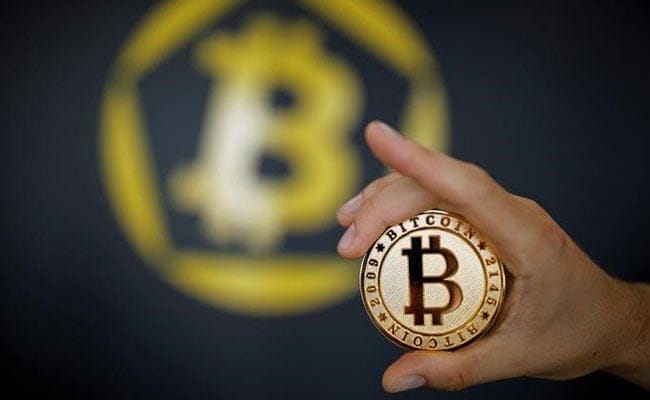
New Delhi: Coinsecure, an Indian cryptocurrency exchange, said nearly $3 million or Rs 19,57,05,000 were stolen from its bitcoin wallet, the biggest reported so far in the country's fledgling virtual currency market.
The theft is expected to further weaken trade in cryptocurrencies, which the government has likened to "Ponzi schemes" that offer unusually high returns to early investors.
Coinsecure, which has over 200,000 users trading on its platform daily, said that around 438 bitcoins, which were stored in a password-protected virtual wallet were siphoned off to an unknown destination on the internet after the details were leaked online.
"We regret to inform you that our bitcoin funds have been exposed and seem to have been siphoned out to an address that is outside our control," the company said in a statement posted on its website.
Legal experts said there was a need to regulate the virtual currency market, instead of imposing restrictions on its trade.
(Also Read: Bitcoin Price Soars 11% To Two-Week High)
"It is for reasons like these that there is a need to regulate crypto-exchanges," said Anirudh Rastogi, founder and managing partner at TRA Law, a firm that specialises in emerging-technology businesses.
"Pushing the exchange business out from the formal economy to the informal cash economy to operate under the radar will worsen the problem, not solve it," Rastogi said.
Coinsecure said it would compensate customers for losses from its existing funds.
Bitcoins were trading at Rs 4,80,000 or about $7,359 on Friday, according to cryptocurrency exchange Coinome, well below its international market price of about $7,771.
The Reserve Bank of India has already dealt a blow to the crytocurrency exchanges, barring banks from facilitating trade on virtual currencies and mandating them to unwind their existing relationship with exchanges within three months.
Elsewhere in Asia, Vietnam and South Korea have also suffered millions of dollars worth of fraud and embezzlement in some of the cryptocurrency businesses. Earlier this year, one of Japan's cryptocurrency exchanges was hit by a daring $530 million theft of digital money.

-
Ten Things I Learnt This Samvat

Patience can be a trap. Cheap stocks can stay cheap. Leverage can wipe you out. What did Samvat 2082 teach us? Niraj Shah writes on 10 lessons from the year gone by.
-
Talking Points This Week: Tech Nerves, FII Buying, And A Faraway Banking Shock
The global markets are not shining this Diwali. The exception in the large markets is, India.
-
Midterm Rally Lasted A Day. The Hard Reality Of A Divided US May Last Two Years | Opinion
Between a contested AI boom, a debt ceiling that arrives in 2027 and a president with every incentive to act alone, the next two years may prove more volatile than the first day's rally suggests.
-
Blue Wave Will Derail the AI Trade but Won't Dismantle the AI Era | Unhedged Position
The Democrats' sweep of the US Congress will see politics collide with economic forces both over the long and short term.
-
It's Time To Take The GST Council's Bet On Trust Global
Payment records can prove India's services exports, and clear, proportionate rules can bring foreign digital sellers into the tax net.
-
Opinion | India at 38: From Innovation Overperformer to Innovation Powerhouse
India now has 453 VC-backed deep science startups, 18 of them late-stage, after 117 percent growth since 2020. Laurus Labs, at USD 9.3 billion, is the most valuable deep science company in any middle-income economy outside China.
-
Navigating Energy Crossroads: S Jaishankar's Call For Diversified Supply Chains At G20 Ministerial Meeting
As geopolitical fault lines continue to test maritime trade routes and commodity flows, Jaishankar's message remains pertinent: true economic resilience requires open markets, protected transit lines, and a genuine commitment to multilateral cooperation rather than coercion.
-
Indians Are Travelling, But Not Every Journey Is A Holiday | The Week In Whys
Pilgrims, patients and working women are the real travellers, and the system hasn't quite caught up with them.
-
Getting To Work Costs Women More | The Reason Why
It is not just about women paying more than men. It is about women paying much more in cities than in villages.









