Bitcoin Soars To Nearly Three-Year High
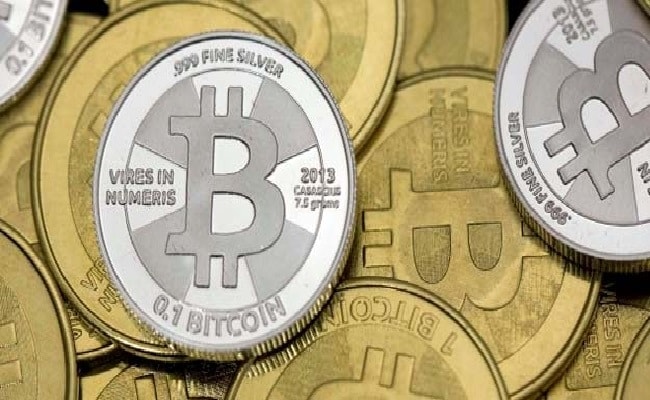
New York: Digital currency bitcoin on Tuesday surged to its highest in nearly three years as investors bought the asset in a supposedly safe-haven bid in the midst of volatility in the Chinese stock market.
On Tuesday, bitcoin climbed as high $793.27 on the BitStamp platform, its highest since February 2014. Since August this year, bitcoin has soared 70 per cent.
Darin Stanchfield, founder and chief executive officer of bitcoin wallet KeepKey, said the bitcoin has benefited from uncertainty in the Chinese stock market.
Mainland Chinese markets have been on the defensive the last two days due to a widely-anticipated interest rate increase by the Federal Reserve on Wednesday. Chinese stock markets though did finish higher on Tuesday.
"Bitcoin has become a safe haven, though not like a mainstream safe haven. We have been seeing lots of volume from China and also India," Mr Stanchfield said.
According to digital currency research firm Coindesk, 95 per cent of global bitcoin trading is done through Chinese exchanges.
Bitcoin is a virtual currency that can be moved money around the world quickly and anonymously without the need for a central authority. That makes it attractive to those seeking to get around strict capital controls in countries like China.
While China currently dominates the space, Chris Burniske, analyst at exchange traded fund manager ARK Invest, noted that bitcoin trading in Venezuela has also soared, rising seven-fold this year as inflation surged and the bolivar currency collapsed.
Analysts said the groundwork for bitcoin gains was laid in July this year in a process called "halving", where the rewards offered to bitcoin miners shrink. That has constrained the supply of the digital currency.
Bitcoin relies on so-called "mining" computers that validate blocks of transactions by competing to solve mathematical puzzles every 10 minutes. In return, the first to solve the puzzle and clear the transaction is rewarded new bitcoins.
Before the halving in July, the miner's reward was 25 bitcoins. The bitcoin program was designed in such a way that it cut the reward for miners in half every four years, a move that was meant to keep a lid on inflation.
"If you look back a couple of years when the mining rewards were halved as well, it did take a few months before the effect of the mining rewards kicked in," said KeepKey's Mr Stanchfield.
Mr Stanchfield believes bitcoin could exceed the record high set in 2013 of more then $1,100.

-
Ten Things I Learnt This Samvat

Patience can be a trap. Cheap stocks can stay cheap. Leverage can wipe you out. What did Samvat 2082 teach us? Niraj Shah writes on 10 lessons from the year gone by.
-
Talking Points This Week: Tech Nerves, FII Buying, And A Faraway Banking Shock
The global markets are not shining this Diwali. The exception in the large markets is, India.
-
Midterm Rally Lasted A Day. The Hard Reality Of A Divided US May Last Two Years | Opinion
Between a contested AI boom, a debt ceiling that arrives in 2027 and a president with every incentive to act alone, the next two years may prove more volatile than the first day's rally suggests.
-
Blue Wave Will Derail the AI Trade but Won't Dismantle the AI Era | Unhedged Position
The Democrats' sweep of the US Congress will see politics collide with economic forces both over the long and short term.
-
It's Time To Take The GST Council's Bet On Trust Global
Payment records can prove India's services exports, and clear, proportionate rules can bring foreign digital sellers into the tax net.
-
Opinion | India at 38: From Innovation Overperformer to Innovation Powerhouse
India now has 453 VC-backed deep science startups, 18 of them late-stage, after 117 percent growth since 2020. Laurus Labs, at USD 9.3 billion, is the most valuable deep science company in any middle-income economy outside China.
-
Navigating Energy Crossroads: S Jaishankar's Call For Diversified Supply Chains At G20 Ministerial Meeting
As geopolitical fault lines continue to test maritime trade routes and commodity flows, Jaishankar's message remains pertinent: true economic resilience requires open markets, protected transit lines, and a genuine commitment to multilateral cooperation rather than coercion.
-
Indians Are Travelling, But Not Every Journey Is A Holiday | The Week In Whys
Pilgrims, patients and working women are the real travellers, and the system hasn't quite caught up with them.
-
Getting To Work Costs Women More | The Reason Why
It is not just about women paying more than men. It is about women paying much more in cities than in villages.









