Bitcoin Is Not A Nothing, But Not A Something Either
A few weeks ago, a reader emailed to challenge what he described as our “cautionary, skeptical and net negative” stance on Bitcoin. To make the case, our interlocutor, who wishes to remain unidentified, cited a series of blogposts written by Allen Farrington, a former fund manager at Baillie Gifford & Co., highlighting one example in particular:
Ludwig Wittgenstein once asked a friend, “tell me, why do people say it is more natural to think that the sun rotates around the earth than that the earth is rotating?” The friend said, “well, obviously, because it just seems like the sun is going around the earth.” Wittgenstein replied, “well, what would it seem like if it did seem like the earth were rotating?”
The reader eloquently argued that inbuilt prejudices may blinker us to the emergence of a truly global digital alternative to fiat currencies. My response was to corral a different quote from the Austrian philosopher: To my mind, Bitcoin is “not a something, but not a nothing either.”

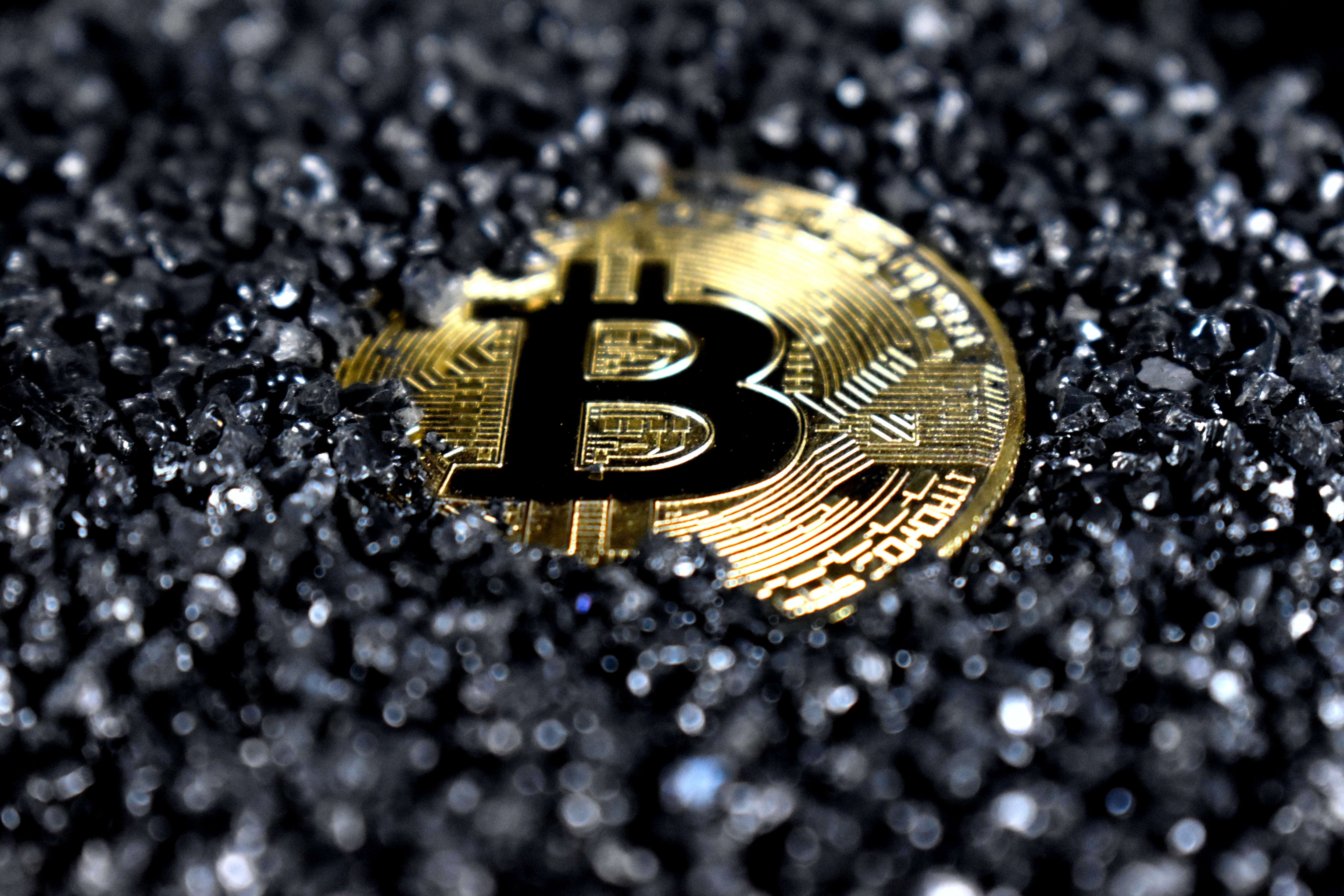
The cryptocurrency's climb to $100,00 last month is viewed by its champions as a vindication of their fealty to the cause. The roaring success of Bitcoin spot exchange-traded funds — the largest, BlackRock Inc.'s iShares Bitcoin Trust ETF, has garnered $53 billion since its launch a year ago — is undeniable. And while the various projects to create central bank digital currencies appear to have stalled, mainstream asset managers are increasingly embracing Tether, Ethereum and their brethren.
My problem with the entire asset class — and I use the term cautiously — is that it's impossible to reflect on it with anything approaching what Thomas Nagel, another philosopher, termed The View From Nowhere. Nagel's 1986 book suggested that the truth of the world can only be revealed by combining our subjective, personal standpoint — the view from here — with an objective, transcendental overview — the view from nowhere. For Bitcoin and its ilk, the latter outlook is unattainable.
In the case of the sun and the earth and which revolves around which, for example, it may seem to an earthbound observer that the star orbits the planet; a Martian, however, would swiftly ascertain the truth. A trader trying to work out the correct value of the 10-year Treasury can assay the US growth rate, its inflation outlook, the geopolitical outlook and the likely behavior of fellow investors — and a host of other factual influences — and decide whether to buy or sell at the current price. A crypto-watcher attempting the same exercise with Bitcoin, however, has to rely solely on the attitude of fellow participants to judge whether the digital unit will rise or decline in value; it is literally untethered (pun intended) from anything but market sentiment.
The aforementioned series of blogposts by Farrington make an effort to address the question of what counts as a valuation driver:
I do not think it is quite accurate to say that Bitcoin's price is its fundamentals, but certainly its price is a largely reflexive function of its fundamentals: as the price goes up, the fundamentals go up (and we must be mindful also that as the price goes down, the fundamentals go down. Sustained attack that drives the price down for long enough is by far the biggest risk). Bitcoin was weakest when smallest, but less so the more time passes. Bitcoin is a black hole sucking unsustainably artificial value beyond its event horizon. As it grows, so does its pull. Bitcoin is gravity.
Read that paragraph again. Then replace the noun Bitcoin with gold, or the dollar, or oil, or any other tradable security, and I hope you'll come to the same conclusion as me: It's sophistry at best, nonsense on stilts at worst. Demand — or the lack thereof — must have some basis in hard, cold facts, some external motivating factor, some reason, to count as a fundamental. The reflexivity Farrington refers to kills stone dead the notion that somehow price is knowledge where digital currencies are concerned — and I'd argue that the extreme intraday price moves in Bitcoin compared with, say, the euro are evidence of its unbound nature.

While volatility is neither inherently good nor bad, Bitcoin's wild mood swings do highlight that its value is solely based on the fickleness of buyers and sellers rather than anything — and I do mean anything — that might qualify as a fundamental. As my colleague Lionel Laurent argued last month, “digital assets have gained acceptance — just not as money.” Digital currencies seem to have proven that they're not a nothing; but that doesn't mean they qualify as a something.

-
Where You Live Shapes How You Get To Work | The Reason Why

Two-wheelers are the most popular way to get to work in India, accounting for nearly 43% of workplace commutes.
-
High US Salaries, No Green Card Certainty: The Financial Calculation Facing Indian H-1B Families
The suspension of PERM processing at eight technology employers does not cancel existing H-1B visas. What it does is force a question many Indian families have been avoiding: is the US salary worth tying your career and family plans to one employer?
-
Unhedged Position: Can India See An Indonesia-Style Time Correction?
The Nifty is trading below levels it first clocked in 2024. Is there, then, as I have suggested in the headline, potential that the current time correction drags on painfully for the next three-five, even ten years?
-
Navigating Friction And Energy Realities: An Analysis Of Marco Rubio's October Visit To India
Occurring at a critical juncture marked by stalled trade negotiations and escalating geopolitical pressures over global energy supplies, the visit offers a profound window into modern US-India relations.
-
India Exports Capital. Why Not Export Trusteeship?
The big question, then, is whether India can build an institution that global borrowers, investors, banks, and lawyers can trust, even without an Indian connection.
-
France's Economy & Politics Are In Crisis | The Reason Why
Let's look at how the French economy and politics evolved under Nicolas Sarkozy, Franois Hollande and Emmanuel Macron.
-
You May Inherit The Business. You Must Earn Its Credibility.
Succession tests the founder's ability to share authority as much as it tests the next generation's readiness to assume it.
-
Signing Deals Is One Thing; Making Them Work Is Another | The Week In Whys
Sometimes, things don't turn out as planned. Indian companies have lost some bids to rivals, some projects won't produce until 2030.
-
FOMC Wall, PERM Suspension, Hospital Stocks | Talking Points This Week
A PERM suspension would directly affect green-card sponsorship rather than H-1B visas, so the near-term earnings impact could remain relatively limited. The key question is whether this marks a new phase in US scrutiny of Indian IT.
-
Everything, Everywhere, All At Once: Dalal Street's Week To Forget | Joining The Dots
Visa curbs, a Starlink spat and cancer drug caps: what connects this week's shocks for Indian markets









