Bitcoin Crashes Below $20,000 For The First Time Since 2020
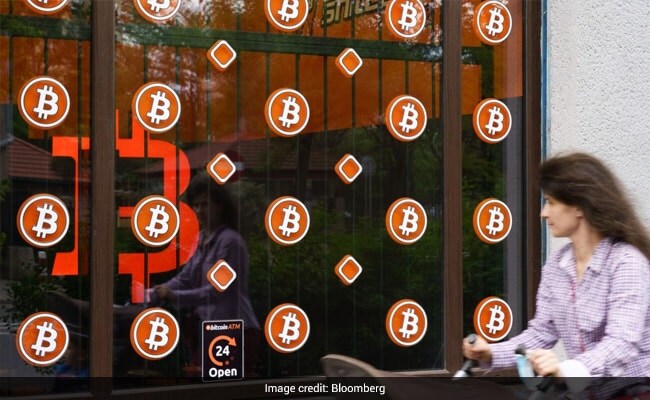
Bitcoin dropped below $20,000 for the first time since December 2020 as evidence of deepening stress within the crypto industry keeps piling up against a backdrop of monetary tightening.
The largest token by market value tumbled more than 9% to $18,740.52 by early morning in London on Saturday, marking a record-breaking 12th straight day in the red according to Bloomberg data.
Ether breached $1,000 and dropped almost 11% to $975.24, the lowest since January 2021.
“Investors are continuing to position defensively following last year's liquidity-driven digital asset bull market,” Alkesh Shah, head of crypto and digital assets strategy at Bank of America Corp., said in a note on Friday.
“Although painful, removing the sector's froth is likely healthy as investors shift focus to projects with clear road maps to cash flow and profitability versus purely revenue growth.”
A toxic mix of bad news cycles and higher interest rates has been deleterious to riskier assets like crypto, contributing to a roughly 70% slide in Bitcoin from its all-time high in November.
The Federal Reserve raised its main interest rate on June 15 by three-quarters of a percentage point -- the biggest increase since 1994 -- and central bankers signaled they will keep hiking aggressively this year in the fight to tame inflation.
Broader signs of stress emerged with last month's collapse of the Terra blockchain, and worsened this week following crypto lender Celsius Network Ltd.'s recent decision to halt withdrawals.
Adding to the mood, crypto hedge fund Three Arrows Capital suffered large losses and said it was considering asset sales or a bailout, while another lender, Babel Finance, followed in Celsius's footsteps on Friday. Even long-term holders who have avoided selling until now are coming under pressure, according to researcher Glassnode.
“Surging recession fears are crippling appetite for risky assets and that has crypto traders remaining cautious about buying Bitcoin at these lows,” Edward Moya, senior market analyst at Oanda, said in a note on Thursday. “The news flow has been terrible for cryptos.”

Altcoins were no exception to soured investor appetite in the wake of Bitcoin's fall, with every token on Bloomberg's cryptocurrency monitor trading in the red.
Cardano, Solana, Dogecoin and Polkadot recorded 24-hour falls of between 7% and 10% on Saturday, while privacy tokens such as Monero and Zcash lost as much as 9%.
Stablecoins — a type of cryptoasset pegged to the value of a fiat currency like the US dollar — have also struggled.
The top four stablecoins saw exchange net outflows last week that were 4.5 times larger than the prior week, Bank of America's Shah said, having charted net outflows in eight of the 10 prior weeks.
Stablecoins are often relied upon by crypto traders to move funds around the ecosystem without needing to exit into traditional currencies, so persistent outflows indicate that investors remain defensive, he added.
Even with the piercing of the key $20,000 level, historical data show that Bitcoin may find key support around that mark as previous selloffs demonstrate where the token usually finds points of resilience, according to Mike McGlone, an analyst for Bloomberg Intelligence.
Bitcoin may “build a base around $20,000 as it did at about $5,000 in 2018-19 and $300 in 2014-15,” he said in a note on Wednesday. “Declining volatility and rising prices are earmarks of the maturing digital store-of-value.”
The crypto market now stands at a fraction of its heights in late 2021, when Bitcoin traded near $69,000 and traders poured cash into speculative investments of all stripes.
The total market cap of cryptocurrencies was around $880 billion on Saturday morning, down from $3 trillion in November, according to pricing data from CoinGecko.
“Sentiment in crypto markets is that the unknown unknowns are the most significant at this point in time,” Ainsley To, Noelle Acheson and Konrad Laesser of Genesis Trading said in a note on Thursday.
“The resurgence of counterparty risk is a reminder that not everything that matters in risk management can be precisely quantified. Risk is what is left over after you think you've thought of everything.”
--With assistance from Emily Nicolle and Suvashree Ghosh.
(Except for the headline, this story has not been edited by NDTV staff and is published from a syndicated feed.)

-
Opinion | India at 38: From Innovation Overperformer to Innovation Powerhouse

India now has 453 VC-backed deep science startups, 18 of them late-stage, after 117 percent growth since 2020. Laurus Labs, at USD 9.3 billion, is the most valuable deep science company in any middle-income economy outside China.
-
Navigating Energy Crossroads: S Jaishankar's Call For Diversified Supply Chains At G20 Ministerial Meeting
As geopolitical fault lines continue to test maritime trade routes and commodity flows, Jaishankar's message remains pertinent: true economic resilience requires open markets, protected transit lines, and a genuine commitment to multilateral cooperation rather than coercion.
-
Indians Are Travelling, But Not Every Journey Is A Holiday | The Week In Whys
Pilgrims, patients and working women are the real travellers, and the system hasn't quite caught up with them.
-
Getting To Work Costs Women More | The Reason Why
It is not just about women paying more than men. It is about women paying much more in cities than in villages.
-
AI Bias In Investing Cannot Be Eliminated, But It Can Be Governed
Framing is a particularly important example as identical financial information presented in terms of gains rather than losses can lead an LLM to reach a different assessment.
-
Joining The Dots | Dark Skies, Steady Diya: Why Hope Holds This Diwali
With war, a weak rupee and foreign outflows weighing on sentiment, policymakers at the NDTV World Summit and market veterans at NDTV Profit Ignite: Diwali Edition offered the same advice: stay invested and filter out the noise.
-
The Curious Case of Equitas Small Finance Bank And A CEO Who Quit For Stock
PN Vasudevan believes persistent investor concerns over a perceived conflict of interest had become a governance overhang on Equitas Small Finance Bank's stock, even as the lender improved profitability and asset quality.
-
Talking Points This Week: AI Cash Burn, A Tiger Comeback And An India That Still Finds Its Own Path
India is not immune to higher oil or tighter global liquidity, yet its earnings base is broader, its domestic policy levers are still available.
-
Foreign Investors Own Half Of HDFC Bank and ICICI Bank. An LTCG Cut Could Matter Most Here
Foreign portfolio investors have US$115 billion parked in HDFC Bank, ICICI Bank. If the government cuts long-term capital gains tax, Jefferies says returning foreign money could land here first.










