Bisleri Looks To Tap India's Small Yet Fast-Growing Sparkling Water Market
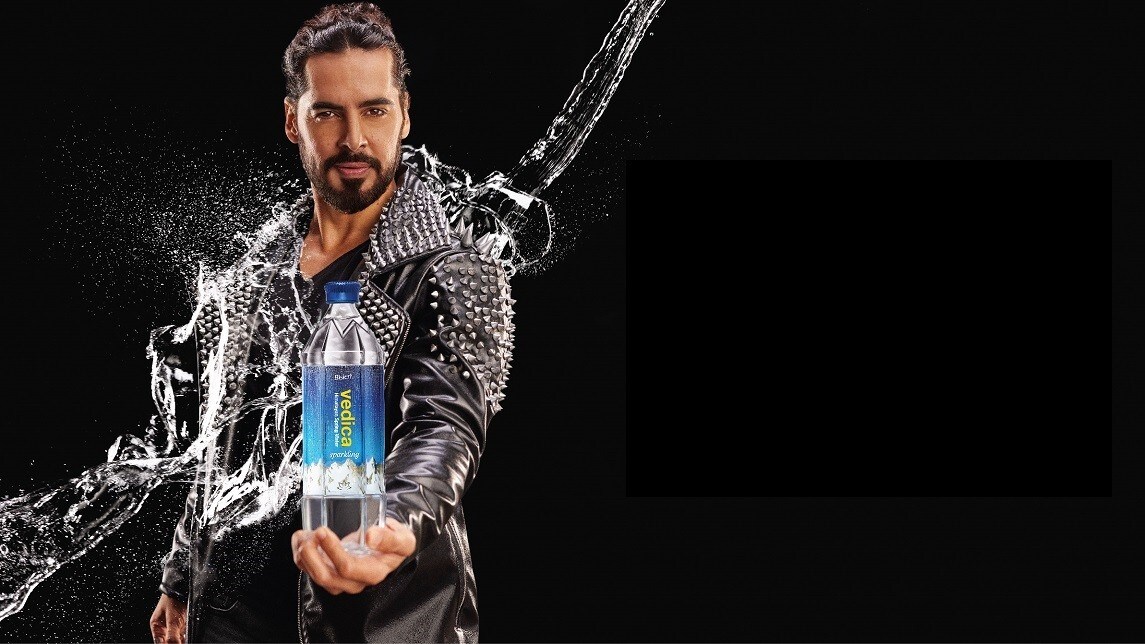
Bisleri International Pvt. is looking to exploit growing health concerns about soft drinks by starting a new fight: the fizzy water war.
The maker of the country's largest-selling packaged drinking water is rolling out sparkling water to capitalise on the popularity of the non-alcoholic option among affluent consumers. While the concept is still niche in India, factors such as transformed habits, more celebrities endorsing the product, and rapid urbanisation are fueling the growth of the category, which is often seen as a healthier alternative to sugary carbonated beverages.
"The launch of Vedica Himalayan Sparkling Water is a response to the evolving consumer preferences in this category," Jayanti Khan Chauhan, vice chairperson, Bisleri International Pvt. told BQ Prime. "It has been strategically timed to coincide with the upcoming festive season, as the beverage is often associated with celebrations and special occasions."
The product "aligns seamlessly with modern lifestyles", said Chauhan, even though she admits that it will take some time before the sparkling water market in India reaches the levels seen in developed markets like Europe.
Packaged in glass bottles of 300 ml, the sparkling water is priced at Rs 175, underscoring the company's premiumisation drive. This would be the company's first extension since it launched its premium water brand, Vedica.
For Bisleri, the sparkling water segment is a big bet.
The move will pit the packaged drinking water giant directly against the Tata Group, which sells sparkling water under the Himalayan brand. Others competing in the space also include global brands like Perrier and San Pellegrino as well as Indian-origin brands such as Zoik and Paper Boat.
While there are no concrete estimates on how big the luxurious sparkling water market in India is, the bottled water market is estimated to be worth Rs 20,000 crore, dominated mainly by unorganised players. Bisleri has a 32% share of the Rs 8,000-crore organised packaged water market, where it competes with Coca-Cola's Kinley and PepsiCo's Aquafina.
The market size for non-alcoholic beverages was valued at $12.15 billion in 2019, compared to $3.5 billion in 2010, according to a report from economic policy think tank ICRIER. Still, India's revenue per person from the sale of such beverages was estimated at $8.89 in 2019, much lower compared to markets such as $1,030 in the US and $67.05 in China.
Bisleri's current distribution network is quite "extensive" with a strong emphasis on urban areas, which is the primary market for packaged drinking water, according to its Chief Executive Officer, Angelo George. Currently, it has a manufacturing presence of 128 plants across the country, over 6,000 distributors, and a fleet of 7,500 trucks to serve all market channels.
"The outlet coverage has increased by 20% in the top 40 towns. We are further deepening our presence in districts with higher per capita income and are tapping the potential of smaller towns to expand our distribution reach."
The premium water brand, Vedica, is expected to touch Rs 100 crore in sales over the next two to three years, according to the company.
Beyond Water
Bisleri wants to build a portfolio that offers something for everyone.
Recently, the company re-entered the carbonated beverage segment, with a focus on tapping Gen Z. A pioneer in the soft drinks space, 54-year-old Bisleri currently has four fizzy drinks in its portfolio.
"We are constantly building relevance and ensuring Bisleri remains the most trusted and loved brand among all beverages, said Jayanti Khan Chauhan.
Almost three decades after selling soft drink brands Thums Up, Gold Spot, and Limca to Coca-Cola, Bisleri has once again ventured into the soft drink market. And this time it's not Ramesh Chauhan, but his daughter, who is in the driver's seat. Senior Chauhan, as Bisleri's chairman, however, continues to guide the team led by Junior Chauhan and George as Bisleri intends to repeat the Thums Up story via its renewed bet on the carbonated beverages space.
"It's an exciting journey, and we're committed to making our mark in the carbonated soft drink segment," said Chauhan.
The journey won't be easy. In the past, Coca-Cola abandoning its India operations turned out to be a golden opportunity for the Parle brothers—Ramesh Chauhan and Prakash Chauhan—who, along with then Chief Executive Officer Bhanu Vakil, launched Thums Up as their flagship drink. This time, Bisleri will be competing with the country's richest man, who has revived the Campa Cola brand in a bid to grab a lion's share of India's Rs 40,000 crore carbonated beverages market, dominated by the likes of Coca-Cola and PepsiCo.
Chauhan, however, isn't overtly worried about competition.
"We need to focus on our business strategy rather than competition. That said, it is also not something that we are worried about," she said.
Bisleri has set an ambitious four-year revenue goal. It aims to double its business to become a Rs 5,000 crore brand by 2027 and expects its carbonated soft drinks segment to contribute 10% to overall sales.

-
High US Salaries, No Green Card Certainty: The Financial Calculation Facing Indian H-1B Families

The suspension of PERM processing at eight technology employers does not cancel existing H-1B visas. What it does is force a question many Indian families have been avoiding: is the US salary worth tying your career and family plans to one employer?
-
Swiggy vs Eternal: Food Delivery's Two Rivals Are No Longer In The Same Race
Eternal is building a private AI assistant, dark.ai. Swiggy is still working out how to make Instamart pay, with an operating loss of Rs 895 crore in the July-September quarter while Blinkit stayed profitable.
-
Where You Live Shapes How You Get To Work | The Reason Why
Two-wheelers are the most popular way to get to work in India, accounting for nearly 43% of workplace commutes.
-
Unhedged Position: Can India See An Indonesia-Style Time Correction?
The Nifty is trading below levels it first clocked in 2024. Is there, then, as I have suggested in the headline, potential that the current time correction drags on painfully for the next three-five, even ten years?
-
Navigating Friction And Energy Realities: An Analysis Of Marco Rubio's October Visit To India
Occurring at a critical juncture marked by stalled trade negotiations and escalating geopolitical pressures over global energy supplies, the visit offers a profound window into modern US-India relations.
-
India Exports Capital. Why Not Export Trusteeship?
The big question, then, is whether India can build an institution that global borrowers, investors, banks, and lawyers can trust, even without an Indian connection.
-
France's Economy & Politics Are In Crisis | The Reason Why
Let's look at how the French economy and politics evolved under Nicolas Sarkozy, Franois Hollande and Emmanuel Macron.
-
You May Inherit The Business. You Must Earn Its Credibility.
Succession tests the founder's ability to share authority as much as it tests the next generation's readiness to assume it.
-
Signing Deals Is One Thing; Making Them Work Is Another | The Week In Whys
Sometimes, things don't turn out as planned. Indian companies have lost some bids to rivals, some projects won't produce until 2030.
-
FOMC Wall, PERM Suspension, Hospital Stocks | Talking Points This Week
A PERM suspension would directly affect green-card sponsorship rather than H-1B visas, so the near-term earnings impact could remain relatively limited. The key question is whether this marks a new phase in US scrutiny of Indian IT.









