Biocon Aims To Lead Copycat Wegovy Sales In Canada From Next Year
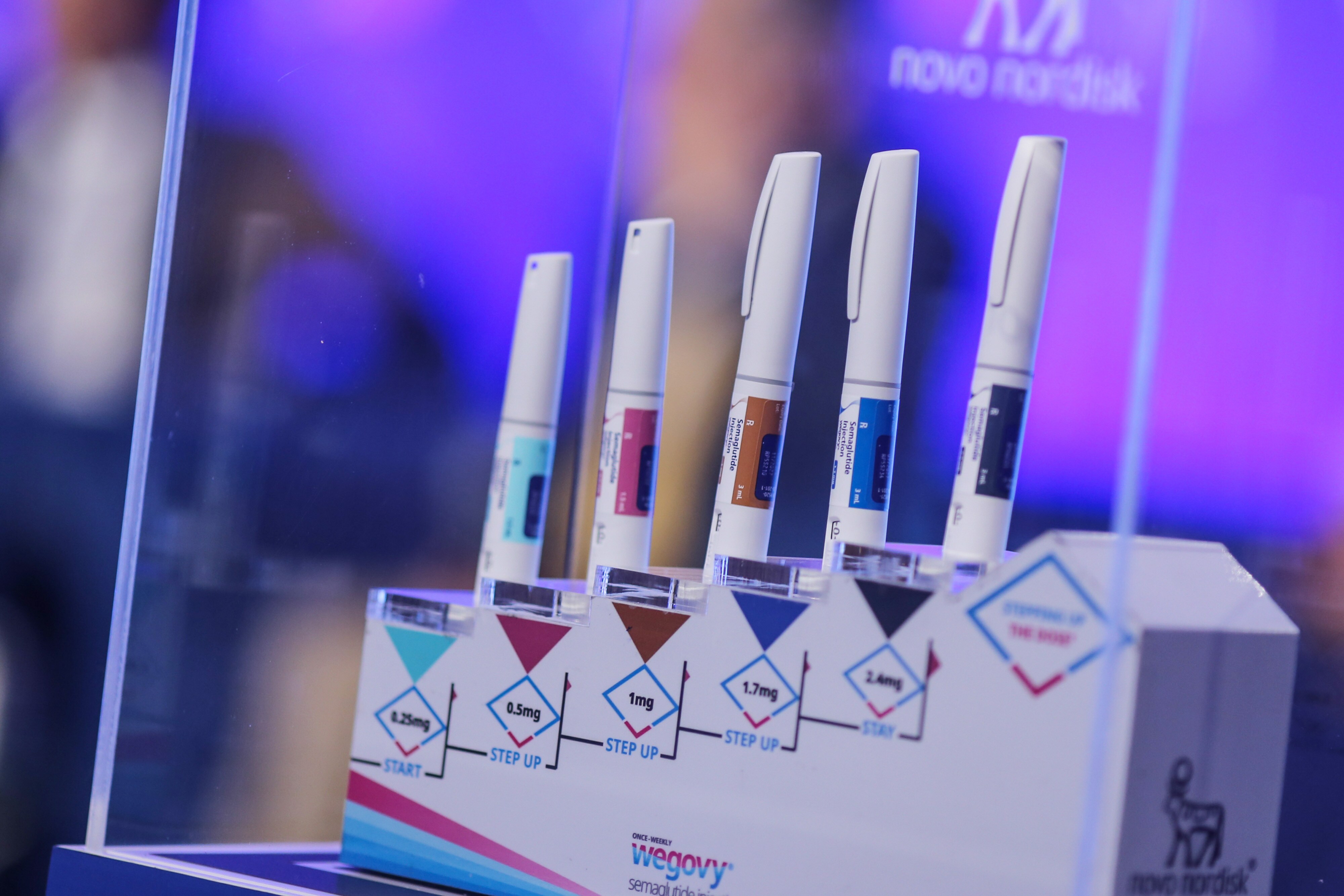
Biocon Ltd. plans to file for regulatory approvals of generic versions of Novo Nordisk A/S's Ozempic and Wegovy in key markets as it races to be among the first few to reap a windfall after patents on the blockbuster weight-loss drugs expire next year.
The Bengaluru-based company is seeking approval of generic Ozempic by September from Canadian authorities, and also in some emerging markets, its managing director, Siddharth Mittal, told Bloomberg News.
“I would say that we have the best chance in Canada” to start launching off-patent semaglutide, he said. “If everything goes seamlessly,” then Biocon can receive an approval to sell sometime in 2026, Mittal added.
The Kiran Mazumdar Shaw-led insulin maker is joining the leagues of the world's largest generic drugmakers, which includes Sandoz Group AG, in eyeing the weight-loss drug market in Canada, where Novo is set to lose patent protection on semaglutide early next year.
The Danish drugmaker, which says it controls about 70% of the global market for these drugs, will forfeit exclusive rights in many other markets from 2026, with patents in India expiring around April of next year. That patent expiration does not include the US, Europe or Japan.
Other firms, including sector giant Teva Pharmaceutical Industries Ltd. and China's Gan & Lee Pharmaceutical Ltd., are gearing up likewise for a slice of the fast-growing global market for generic obesity medicines. But the Indian firm aims to be the first to launch a semaglutide copycat drug in Canada.
“I don't expect many companies to have crossed the finish line by next year,” Mittal said.
The drugmaker also is looking to sell GLP-1 therapies in Latin American countries such as Brazil and Mexico, along with Asia-Pacific markets like Malaysia, Hong Kong, Australia, New Zealand and in its home base of India.
“We definitely see emerging markets where there is still under-penetration,” Mittal said. “There's a huge scope for market expansion.”
Biocon was the first generic drugmaker to receive approval to sell the generic version of liraglutide — Novo's older weight loss and diabetes drug, sold as Victoza and Saxenda — in the UK last year.
India Launch
Novo launched Wegovy in India last month, following Eli Lilly & Co.'s Mounjaro entry, as those Western drugmakers seek to tap the country with the world's third-largest obese population. Eli Lilly's Mounjaro has a longer runway with patent protection, which doesn't expire until at least 2030 in most countries.
Biocon will start phase-3 trials for semaglutide in India “soon,” and plans to file for approval by the end of next year, Mittal said.
Rivals such as Cipla Ltd. and Torrent Pharmaceuticals Ltd. also are in the race to develop and market off-patent versions of Novo's drug in India, which has at least 100 million obese people.
‘Crowded Market'
“It will be a crowded market,” Mittal said, adding that Biocon is relying on its expertise in making insulin to retain an edge over local peers.
The company doesn't expect significant price erosion for Wegovy copies in India since the price point at which Novo launched “is quite reasonable,” he said.
The average price may slip by about a fifth, Mittal estimated, compared with the roughly 90% price erosion typically seen for blockbuster drugs after generic firms rush in.

-
High US Salaries, No Green Card Certainty: The Financial Calculation Facing Indian H-1B Families

The suspension of PERM processing at eight technology employers does not cancel existing H-1B visas. What it does is force a question many Indian families have been avoiding: is the US salary worth tying your career and family plans to one employer?
-
Swiggy vs Eternal: Food Delivery's Two Rivals Are No Longer In The Same Race
Eternal is building a private AI assistant, dark.ai. Swiggy is still working out how to make Instamart pay, with an operating loss of Rs 895 crore in the July-September quarter while Blinkit stayed profitable.
-
Where You Live Shapes How You Get To Work | The Reason Why
Two-wheelers are the most popular way to get to work in India, accounting for nearly 43% of workplace commutes.
-
Unhedged Position: Can India See An Indonesia-Style Time Correction?
The Nifty is trading below levels it first clocked in 2024. Is there, then, as I have suggested in the headline, potential that the current time correction drags on painfully for the next three-five, even ten years?
-
Navigating Friction And Energy Realities: An Analysis Of Marco Rubio's October Visit To India
Occurring at a critical juncture marked by stalled trade negotiations and escalating geopolitical pressures over global energy supplies, the visit offers a profound window into modern US-India relations.
-
India Exports Capital. Why Not Export Trusteeship?
The big question, then, is whether India can build an institution that global borrowers, investors, banks, and lawyers can trust, even without an Indian connection.
-
France's Economy & Politics Are In Crisis | The Reason Why
Let's look at how the French economy and politics evolved under Nicolas Sarkozy, Franois Hollande and Emmanuel Macron.
-
You May Inherit The Business. You Must Earn Its Credibility.
Succession tests the founder's ability to share authority as much as it tests the next generation's readiness to assume it.
-
Signing Deals Is One Thing; Making Them Work Is Another | The Week In Whys
Sometimes, things don't turn out as planned. Indian companies have lost some bids to rivals, some projects won't produce until 2030.
-
FOMC Wall, PERM Suspension, Hospital Stocks | Talking Points This Week
A PERM suspension would directly affect green-card sponsorship rather than H-1B visas, so the near-term earnings impact could remain relatively limited. The key question is whether this marks a new phase in US scrutiny of Indian IT.









