Bikaji Foods IPO: All You Need To Know
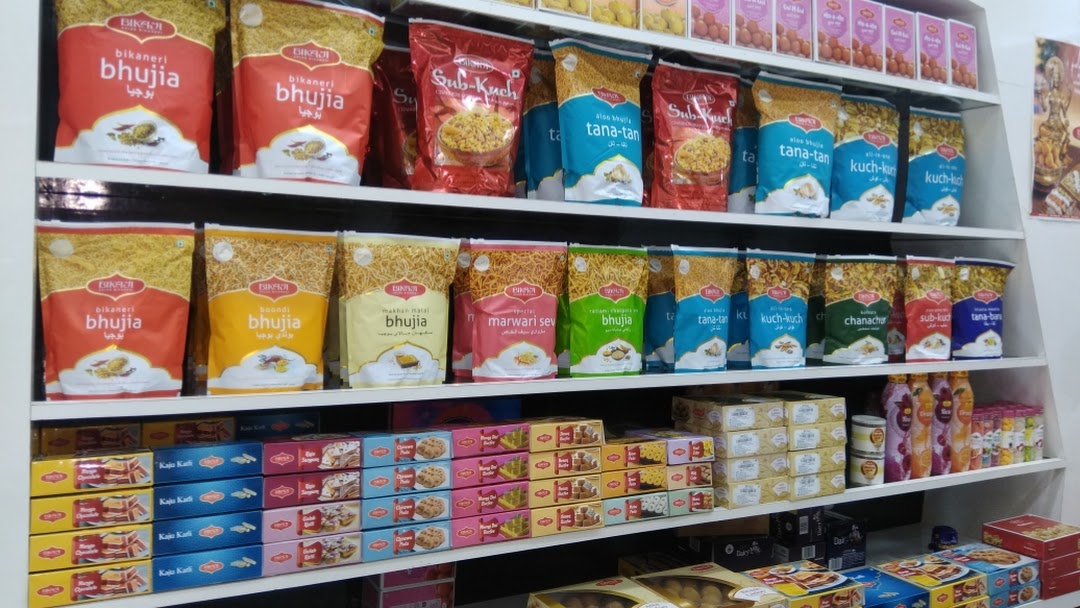
Bikaji Foods International Ltd. is set to launch its five-day initial public offering on Thursday even as the market remains volatile.
The Rajasthan-based sweet and snacks maker is offering around 2.94 crore equity shares at Rs 285-300 apiece in the IPO that closes on Nov. 7.
At the upper end of the price band, the IPO is expected to fetch Rs 881.22 crore.
Both the promoters—Shiv Ratan Agarwal and Deepak Agarwal—are looking to offload up to 25 lakh company shares each, according to the company's draft red herring prospectus.
Promoters and promoter group hold an aggregate of 19,45,43,900 equity shares, aggregating to 77.97% of the pre-offer issued and paid-up equity share capital. Post-IPO, their shareholding is expected to be around 75.97%.
Other entities that will be selling their shares include India 2020 Maharaja Ltd., Intensive Softshare Pvt., IIFL Special Opportunities Fund and Avendus Future Leaders Fund-I.
Since the IPO is a pure offer-for-sale, the company will not directly receive any proceeds from the issue.
The offer constitutes 11.77% of the post-offer paid up capital.
IPO Details
Duration: Nov. 3-7.
Offer for sale: 2.94 crore shares.
Price band: Rs 285-300 per share.
Issue size: Rs 837-881 crore.
Face value: Rs 1 apiece.
Lot size: 50 shares and multiples.
Listing on: BSE and NSE.
Issue break-up: 50% for qualified institutional buyers, 35% for retail investors and 15% for high net worth individuals.
Employee discount: Rs 15 per share.
Lead managers: JM Financial, Axis Capital, IIFL Securities, Intensive Fiscal Services, Kotak Mahindra Capital Company.
Business
Founded in Bikaner in 1986 by Shiv Ratan Agarwal, the grandson of Gangabishan Agarwal, who is the founder of the Haldiram brand, the company now claims to be India's third largest ethnic snack company.
Shiv Agarwal launched the Bikaji brand in 1993. Today, it is the largest manufacturer of Bikaneri bhujia with an annual production of 29,380 tonnes. It also sells namkeen, papad and sweets like packaged rasgulla, soan papdi and gulab jamun, frozen food as well as cookies.
They have engaged actor Amitabh Bachchan as their brand ambassador.
Bikaji reported approximately 1.81% of advertisement expenses in 2022, which on an average is the highest among its competitors in the traditional snacks product category.
Bikaji Foods sold more than 300 products under the Bikaji brand in the three months to June 30, 2022.
General trade comprises 85% of total sales followed by modern trade at 6%. E-commerce is still a small channel comprising 1% of total sales, according to the company's draft prospectus.
Namkeen is the highest-selling category for Bikaji Foods, its DRHP said. It sold 9,103.38 tonnes of namkeen for the three months ended June.
In 2006, the company merged all its arms—Bikaji Foods, Shivdeep Food Products, Bikaji Marketing and Dipu's Foods—under one umbrella entity.
The company currently houses seven manufacturing facilities—four in Bikaner, one in Guwahati, one in Muzaffarpur, Bihar, and one in Tumakuru, Karnataka—held through its subsidiary Petunt Food Processors.
The company has a network of six depots, 38 super stockists, 416 direct and 1,956 indirect distributors that work with super stockists across 23 states and four union territories. Rajasthan, Assam and Bihar are its core markets.
The company intends to expand its distribution network and grow sales in focus markets, which includes Uttar Pradesh, Punjab, Haryana and Delhi in North India, and Karnataka and Telangana in South India.
In the three months ended June 30, 2022, it has exported to 21 countries, including countries in North America, Europe, Africa, the Middle East, and Asia Pacific. Currently, exports represent 5% of total sales of food products.
According to its draft red herring prospectus, Bikaneri bhujia was given the geographical identification tag in 2010, since it is a popular cottage industry of Bikaner, providing employment to a large group of people in the region.
None other than the registered users are allowed to use the name of 'Bikaneri bhujia' as a generic product. The company is also amongst the first to introduce convenient pouch packaging for bhujia.
The company claims to be the market leader in the family pack segment, with 60.57% share of business coming from stock-keeping units other than Rs 5 and Rs 10 packs in FY22.
"We believe this reflects the strength of our brand as a planned purchase product, while most of our competition in the packaged snacks industry in India has significantly higher contribution from small packs that primarily cater to the impulse purchase market," said its DRHP.
The 3.61 lakh crore packaged food market in India is estimated to grow at a CAGR of 11.5% in the next five years to reach Rs 5.58 lakh crore, according to a Frost and Sullivan report.
The country's savoury snacks market is valued at Rs 72,800 crore in 2021, and is projected to reach Rs 1.19 lakh crore by 2025 at a CAGR of 13%.
Financials
The company established a track record of consistent revenue growth and profitability, even during periods impacted by the Covid-19 pandemic. It recorded an increase in sales at a CAGR of 22.25% between FY20 and FY22.
The company's operating profit or Ebitda and profit after tax increased at a CAGR of 21.45% and 16.13%, respectively, over the period.
Peer Comparison
Bikaji faces intense competition in the Indian snack food market from various domestic and multinational companies in India.
Some of the key competitors include Haldiram Foods International Pvt., Bikanerwala, Prataap Snacks Ltd., Balaji Wafers Pvt., ITC Ltd., Britannia Industries Ltd., Nestle India Ltd., Pepsico India Holdings Pvt. and DFM Foods Ltd.
Bikaji enjoys a market share of 9% in the Rs 18,100 crore ethnic snacks market. Haldiram is the biggest player in this segment with a market share of 38.5%, followed by Balaji (9.6%).
In the Rs 24,200 crore western snacks market, it has a market share of 0.8%.
In the Rs 5,800 crore organised sweets segment, Bikaji's market share stands at 6%.
It has a 5.7% share in the Rs 2,600 crore organised papad market.
Risk Factors
The current and continuing impact of the Covid-19 pandemic on the business and operations.
Any disruptions in the company's distribution chain may have an adverse effect on the business prospects and financial performance.
Inadequate or interrupted supply and price fluctuation of raw materials and packaging materials could adversely affect profitability.
The company does not have a formal hedging policy. Any material fluctuation in foreign currency exchange rates may impact operations.
The business is manpower-intensive. Operations may be adversely affected by work stoppages, increased wage demands by employees, or an increase in minimum wages across various states, and if the company is unable to engage new employees at commercially attractive terms.
Competition could intensify with new entrants coming into the FMCG industry. Failure to compete can affect revenues.
The company is significantly dependent on the sale of its bhujia products and family pack stock-keeping units for its revenues. An inability to anticipate and adapt to evolving consumer tastes and preferences may adversely impact demand of its products.
The company's proposed capacity expansion plans relating to its manufacturing facility and contract manufacturing facilities are subject to the risks of unanticipated delays in implementation and cost overruns.
The company has made investments in unsecured debt instruments of Hanuman Agrofood Pvt. in the form of compulsory convertible debentures amounting to Rs 106.23 crore, as of June 30, 2022. In the event that the company is not able to seek a return on such investments in the future, in relation to investments in unsecured debt instruments, it may adversely affect its business.
The company is subject to various contamination-related risks, which typically affect the FMCG industry, including product tampering, relatively short shelf life of certain products, improper storage of products and raw materials, adulteration of products with any substance unfit for human consumption, and labelling and packaging errors.
The company relies on a limited number of super-stockists and direct distributors for a portion of its revenue. A significant decrease in revenue from any of those super-stockists may have an adverse effect on business prospects.
A part of the company's manufacturing operations is dependent on contract manufacturing facilities. Any termination of its agreements in relation to the contract manufacturing facilities may adversely affect business.

-
It's Time To Take The GST Council's Bet On Trust Global

Payment records can prove India's services exports, and clear, proportionate rules can bring foreign digital sellers into the tax net.
-
Opinion | India at 38: From Innovation Overperformer to Innovation Powerhouse
India now has 453 VC-backed deep science startups, 18 of them late-stage, after 117 percent growth since 2020. Laurus Labs, at USD 9.3 billion, is the most valuable deep science company in any middle-income economy outside China.
-
Navigating Energy Crossroads: S Jaishankar's Call For Diversified Supply Chains At G20 Ministerial Meeting
As geopolitical fault lines continue to test maritime trade routes and commodity flows, Jaishankar's message remains pertinent: true economic resilience requires open markets, protected transit lines, and a genuine commitment to multilateral cooperation rather than coercion.
-
Indians Are Travelling, But Not Every Journey Is A Holiday | The Week In Whys
Pilgrims, patients and working women are the real travellers, and the system hasn't quite caught up with them.
-
Getting To Work Costs Women More | The Reason Why
It is not just about women paying more than men. It is about women paying much more in cities than in villages.
-
AI Bias In Investing Cannot Be Eliminated, But It Can Be Governed
Framing is a particularly important example as identical financial information presented in terms of gains rather than losses can lead an LLM to reach a different assessment.
-
Joining The Dots | Dark Skies, Steady Diya: Why Hope Holds This Diwali
With war, a weak rupee and foreign outflows weighing on sentiment, policymakers at the NDTV World Summit and market veterans at NDTV Profit Ignite: Diwali Edition offered the same advice: stay invested and filter out the noise.
-
The Curious Case of Equitas Small Finance Bank And A CEO Who Quit For Stock
PN Vasudevan believes persistent investor concerns over a perceived conflict of interest had become a governance overhang on Equitas Small Finance Bank's stock, even as the lender improved profitability and asset quality.
-
Talking Points This Week: AI Cash Burn, A Tiger Comeback And An India That Still Finds Its Own Path
India is not immune to higher oil or tighter global liquidity, yet its earnings base is broader, its domestic policy levers are still available.










