Bitcoin Price Crashed On Day One As Currency Amid Tech Glitches
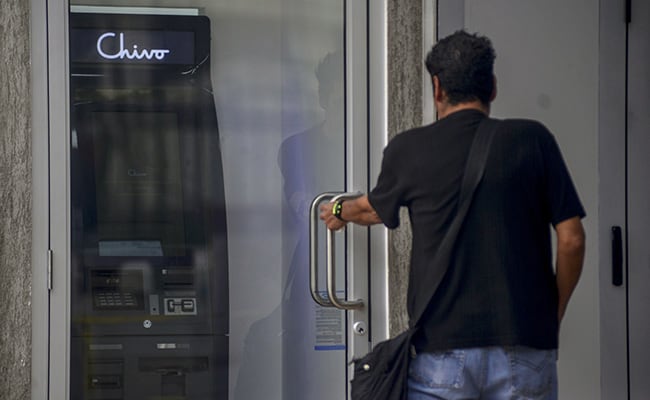
El Salvador's experiment using Bitcoin had a rocky start as its price crashed on its first day as legal tender, while the roll-out was hampered by technical glitches.
The cryptocurrency plunged as much as 17% to its lowest level in a month amid news that the government disconnected its Bitcoin wallet early on Tuesday to fix problems.
By late morning, the issues appeared to have been overcome, and President Nayib Bukele tweeted that the app was again available for download.
Ahora haremos un test a gran escala:
September 7, 2021
Ya pueden descargar @chivowallet en @AppStore de @Apple.
En este link: https://t.co/wgpiR96Jb9
Descárguenla, regístrense y pongan sus comentarios acá ????????The largest cryptocurrency fell as low as $43,050 in New York Tuesday, before paring losses. Bukele said his country had taken advantage of the crash to "buy the dip", adding 150 coins to take its total holding to 550, worth about $26 million.
The Bloomberg Galaxy Crypto Index, which tracks some of the largest cryptos, lost as much as 19%, while other smaller digital assets also sold off.
El Salvador's plan represents the biggest test for Bitcoin in its 12-year history. Both enthusiasts and detractors of cryptocurrencies are monitoring the experiment to see if a significant number of people want to transact with Bitcoin when it circulates alongside the U.S. dollar, and whether it brings any benefits to the violent, impoverished Central American nation.
If the experiment is a success, other countries may follow El Salvador's lead. Its adoption will get an initial boost from the government's Bitcoin wallet Chivo, which comes pre-loaded with $30 worth of the currency for users who register with a Salvadoran national ID number.
Businesses will be required to accept Bitcoin in exchange for goods and services and the government will accept it for tax payments. The plan is the brainchild of El Salvador's 40-year old president, who says it will draw more people into the financial system and make it cheaper to send remittances.
"This is brave new world stuff," said Garrick Hileman, head of research for the London and Miami-based Blockchain.com. "We are in unchartered waters with this launch, but I'm glad to see this experiment happen overall, and I think we'll learn a lot from it."
Bitcoin ATMs
Bukele's administration has installed 200 Bitcoin ATMs around the country that can be used to exchange the cryptocurrency for U.S. dollars. The Finance Ministry created a $150 million fund at state-run bank Banco de Desarrollo de la Republica de El Salvador, Bandesal, to back the transactions.
Twitter users on Tuesday reported being able to pay for services such as breakfast at McDonald's with Bitcoin. Still, the dollar will remain the national currency for public accounting purposes and merchants who are technologically unable to receive the e-currency will be exempt from the law, the government has said.
El Salvador's dollarized economy is heavily reliant on remittances sent home by migrants overseas, which totalled $6 billion last year and account for roughly a fifth of gross domestic product. Bukele says Bitcoin could save Salvadorans $400 million a year in fees for these transactions.
Public Skepticism
While Bukele himself enjoys approval ratings of more than 80%, a poll last week by El Salvador's Universidad Centroamericana Jose Simeon Canas found his Bitcoin law is widely unpopular. Two-thirds of respondents said the law should be repealed while more than 70% said they prefer to use U.S. dollars instead.
The International Monetary Fund warned of the risks of using Bitcoin, which lost nearly half its value from April to May, and the World Bank declined a request from El Salvador's government to help the government adopt it, citing environmental and transparency drawbacks. The Bitcoin news also helped trigger a selloff of El Salvador's dollar bonds, though they have since pared losses.
"Crypto is sexy but untested and complicated especially for a country like El Salvador," Stifel Nicolaus & Co. managing director Nathalie Marshik said. "It's extremely risky, and there is the question of, is the Bandesal fund big enough? The regulations look like the law, put together really quickly. It's a big question mark."
Watching Closely
While the Bahamas launched its own central bank-backed digital currency this year, the Sand Dollar, and Venezuela has its own e-money called the Petro, these are very different from a decentralized cryptocurrency such as Bitcoin, whose users value its independence from governments and central banks.
Other governments in the region will be watching closely. Last month, Cuba moved to legalize cryptocurrency already being used on the island, while lawmakers in other countries such as Panama and Uruguay have proposed similar legislation.
Salvadoran bonds were the worst performers in emerging markets Tuesday, according to data collected by Bloomberg, after the country's top court ruled last week that the president can run for a second term. The U.S. criticized the decision and said it damages bilateral relations between the two nations. Debt due in 2041 fell as much as 5%, the most in four months, to trade at 86.6 cents on the dollar.
(Except for the headline, this story has not been edited by NDTV staff and is published from a syndicated feed.)

-
High US Salaries, No Green Card Certainty: The Financial Calculation Facing Indian H-1B Families

The suspension of PERM processing at eight technology employers does not cancel existing H-1B visas. What it does is force a question many Indian families have been avoiding: is the US salary worth tying your career and family plans to one employer?
-
Swiggy vs Eternal: Food Delivery's Two Rivals Are No Longer In The Same Race
Eternal is building a private AI assistant, dark.ai. Swiggy is still working out how to make Instamart pay, with an operating loss of Rs 895 crore in the July-September quarter while Blinkit stayed profitable.
-
Where You Live Shapes How You Get To Work | The Reason Why
Two-wheelers are the most popular way to get to work in India, accounting for nearly 43% of workplace commutes.
-
Unhedged Position: Can India See An Indonesia-Style Time Correction?
The Nifty is trading below levels it first clocked in 2024. Is there, then, as I have suggested in the headline, potential that the current time correction drags on painfully for the next three-five, even ten years?
-
Navigating Friction And Energy Realities: An Analysis Of Marco Rubio's October Visit To India
Occurring at a critical juncture marked by stalled trade negotiations and escalating geopolitical pressures over global energy supplies, the visit offers a profound window into modern US-India relations.
-
India Exports Capital. Why Not Export Trusteeship?
The big question, then, is whether India can build an institution that global borrowers, investors, banks, and lawyers can trust, even without an Indian connection.
-
France's Economy & Politics Are In Crisis | The Reason Why
Let's look at how the French economy and politics evolved under Nicolas Sarkozy, Franois Hollande and Emmanuel Macron.
-
You May Inherit The Business. You Must Earn Its Credibility.
Succession tests the founder's ability to share authority as much as it tests the next generation's readiness to assume it.
-
Signing Deals Is One Thing; Making Them Work Is Another | The Week In Whys
Sometimes, things don't turn out as planned. Indian companies have lost some bids to rivals, some projects won't produce until 2030.
-
FOMC Wall, PERM Suspension, Hospital Stocks | Talking Points This Week
A PERM suspension would directly affect green-card sponsorship rather than H-1B visas, so the near-term earnings impact could remain relatively limited. The key question is whether this marks a new phase in US scrutiny of Indian IT.









