Biden Set To Meet With Advisers To Discuss Cutting China Tariffs
(Bloomberg) -- President Joe Biden will discuss possible reductions in US tariffs on Chinese goods in a meeting with his advisers set for Friday, according to people familiar with the matter, as his administration nears a closely-watched decision on trade with China.
The White House meeting is the latest in a series Biden has held on the issue, and it's not clear if he intends to decide on a path forward, according to the people, who spoke on the condition of anonymity because the president has yet to reach a decision.
The White House did not immediately respond to a request for comment on Thursday night.
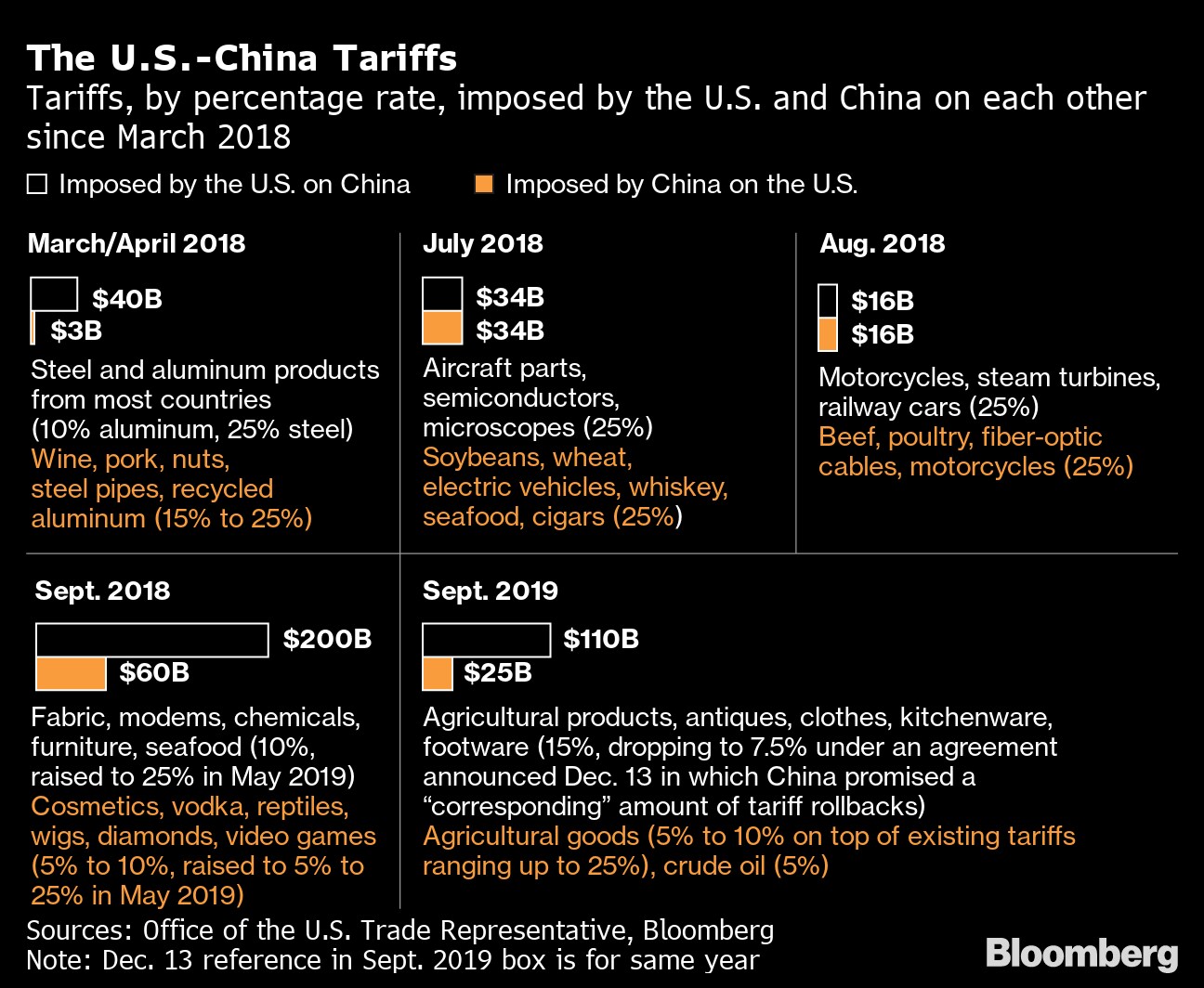
Biden has been weighing whether to remove some of the tariffs on more than $300 billion in Chinese imports imposed by his predecessor, Donald Trump, according to people familiar with the deliberations, as his administration desperately tries to curb fast-rising US inflation.
Trump used section 301 of the Trade Act of 1974 to hit China with the duties starting in July 2018 after an investigation concluded China stole intellectual property from American companies and forced them to transfer technology.
Last month, US Treasury Secretary Janet Yellen said tariff reductions “could help to bring down the prices of things that people buy that are burdensome.”
That's similar to the view held by Commerce Secretary Gina Raimondo, who said removing duties on household goods “may make sense,” but favored keeping tariffs on steel and aluminum products from China as a way to protect American workers and national security.
Still, ending tariffs on merchandise like bicycles and clothing won't help Americans where higher prices hurt most -- food, fuel and housing.
Yellen, Raimondo and US Trade Representative Katherine Tai will not attend the Friday meeting.
Barclays Plc said any rollback of tariffs on Chinese goods would be “a drop in the bucket” for lowering the US inflation rate, which climbed an annual 8.6% in May.
The bank estimated the maximum direct effect of a complete end to the duties is a one-time reduction of 0.3 percentage point, given the relatively small share of Chinese imports in the US consumption basket.
The Biden administration said in May it was taking the first step toward a review of the tariffs, a process required to keep them from starting to expire in July.
Biden runs the risk of irking unions, a crucial source of support in the approaching midterm elections, as he considers the tariff question. Unions have opposed any such move, saying the levies help protect factory jobs.
The White House has also been weighing a new investigation into Chinese subsidies and their damage to the American economy as a way to pressure Beijing on trade.
(Updates with background, more detail, beginning in sixth paragraph.)
More stories like this are available on bloomberg.com
©2022 Bloomberg L.P.

-
A New Samvat Wishlist: Inclusive Prosperity And Human Development

India has strengthened its economic foundations through infrastructure, digital access and enterprise. Its next growth chapter must deepen productivity, create better livelihoods and widen participation in prosperity.
-
Love, Sex Aur Dhokha: The Audacious Plot To Spy On Jensen Huang
A Taipei dinner, a Singapore chip buyer and a suspected Chinese asset: inside the alleged spy operation that got close to NVIDIA's Jensen Huang.
-
Ten Things I Learnt This Samvat
Patience can be a trap. Cheap stocks can stay cheap. Leverage can wipe you out. What did Samvat 2082 teach us? Niraj Shah writes on 10 lessons from the year gone by.
-
Talking Points This Week: Tech Nerves, FII Buying, And A Faraway Banking Shock
The global markets are not shining this Diwali. The exception in the large markets is, India.
-
Midterm Rally Lasted A Day. The Hard Reality Of A Divided US May Last Two Years | Opinion
Between a contested AI boom, a debt ceiling that arrives in 2027 and a president with every incentive to act alone, the next two years may prove more volatile than the first day's rally suggests.
-
Blue Wave Will Derail the AI Trade but Won't Dismantle the AI Era | Unhedged Position
The Democrats' sweep of the US Congress will see politics collide with economic forces both over the long and short term.
-
It's Time To Take The GST Council's Bet On Trust Global
Payment records can prove India's services exports, and clear, proportionate rules can bring foreign digital sellers into the tax net.
-
Opinion | India at 38: From Innovation Overperformer to Innovation Powerhouse
India now has 453 VC-backed deep science startups, 18 of them late-stage, after 117 percent growth since 2020. Laurus Labs, at USD 9.3 billion, is the most valuable deep science company in any middle-income economy outside China.
-
Navigating Energy Crossroads: S Jaishankar's Call For Diversified Supply Chains At G20 Ministerial Meeting
As geopolitical fault lines continue to test maritime trade routes and commodity flows, Jaishankar's message remains pertinent: true economic resilience requires open markets, protected transit lines, and a genuine commitment to multilateral cooperation rather than coercion.









