BHIM App: Here Is Your 10-Point Guide For Using It
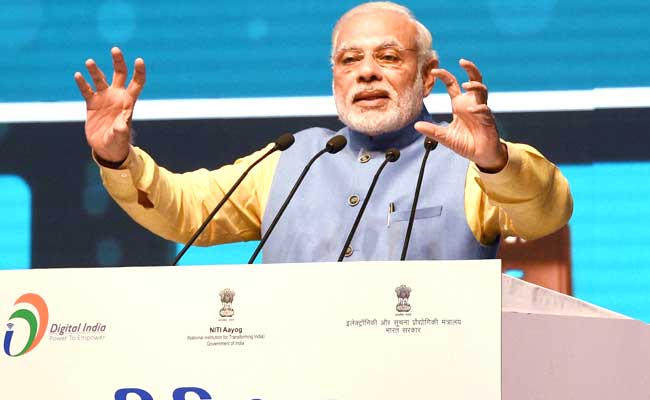
The BHIM app has become India's most downloaded free Android application, just days after its launch by Prime Minister Narendra Modi. To boost digital payments, PM Modi on Friday launched digital payments app 'BHIM', aimed at boosting digital payments in India. BHIM or Bharat Interface for Money is a payment platform that lets you make quick payments using Unified Payment Interface or UPI. “We have been witnessing a surge in downloads. Volume growth would be seen in a few days,” said AP Hota, MD & CEO of NPCI, which has developed the app.
Here are 10 things to know about app BHIM:
1) The BHIM app is currently available on the Android platform. The version for Apple devices or iOS platform is expected to be launched soon. BHIM has been developed by the National Payment Corporation of India (NPCI).
2) BHIM uses the Unified Payment Interface (UPI), which is an instant payment system also developed by the National Payments Corporation of India (NPCI). UPI is built over the IMPS infrastructure and allows you to instantly transfer money between bank accounts.
3) There are no charges for making transactions through the BHIM app. But your bank might levy charge as UPI or IMPS transfer fee.
4) Your bank account need not be enabled for mobile banking for using the BHIM app. However, your mobile number will have to be registered with the bank.
5) Currently, BHIM supports linking of one bank account only. At the time of account setup, you can link your preferred bank account as default account. In case you want to link to another bank account, you have to go to the main menu, choose the bank account as your default account. Any money that is transferred to you using your mobile number or payment address will be credited into your default account.
6) After you download the BHIM app, it will verify your phone number. After the verification it will ask for setting up a BHIM PIN. You need to select the bank pertaining to your account and the app will automatically fetch your bank account details.
7) For sending money, you need to enter the phone number of the person who is going to receive the money. If an UPI/BHIM account has been set up against that number, you can send money to that payment address. If there is no number or UPI ID, you can also send the money using bank account and IFSC code.
8) Besides sending and receiving money, you can also check your bank balance and transactions details through the BHIM app.
9) Customers can also download the QR code corresponding to their payment address. Merchants can easily print their QR Code for display.
10) The maximum limit for single transaction is Rs 10,000 and overall Rs 20,000 within 24 hours.

-
Ten Things I Learnt This Samvat

Patience can be a trap. Cheap stocks can stay cheap. Leverage can wipe you out. What did Samvat 2082 teach us? Niraj Shah writes on 10 lessons from the year gone by.
-
Talking Points This Week: Tech Nerves, FII Buying, And A Faraway Banking Shock
The global markets are not shining this Diwali. The exception in the large markets is, India.
-
Midterm Rally Lasted A Day. The Hard Reality Of A Divided US May Last Two Years | Opinion
Between a contested AI boom, a debt ceiling that arrives in 2027 and a president with every incentive to act alone, the next two years may prove more volatile than the first day's rally suggests.
-
Blue Wave Will Derail the AI Trade but Won't Dismantle the AI Era | Unhedged Position
The Democrats' sweep of the US Congress will see politics collide with economic forces both over the long and short term.
-
It's Time To Take The GST Council's Bet On Trust Global
Payment records can prove India's services exports, and clear, proportionate rules can bring foreign digital sellers into the tax net.
-
Opinion | India at 38: From Innovation Overperformer to Innovation Powerhouse
India now has 453 VC-backed deep science startups, 18 of them late-stage, after 117 percent growth since 2020. Laurus Labs, at USD 9.3 billion, is the most valuable deep science company in any middle-income economy outside China.
-
Navigating Energy Crossroads: S Jaishankar's Call For Diversified Supply Chains At G20 Ministerial Meeting
As geopolitical fault lines continue to test maritime trade routes and commodity flows, Jaishankar's message remains pertinent: true economic resilience requires open markets, protected transit lines, and a genuine commitment to multilateral cooperation rather than coercion.
-
Indians Are Travelling, But Not Every Journey Is A Holiday | The Week In Whys
Pilgrims, patients and working women are the real travellers, and the system hasn't quite caught up with them.
-
Getting To Work Costs Women More | The Reason Why
It is not just about women paying more than men. It is about women paying much more in cities than in villages.









