Billionaire Mittal's Airtel Falters in War With Ambani's Jio
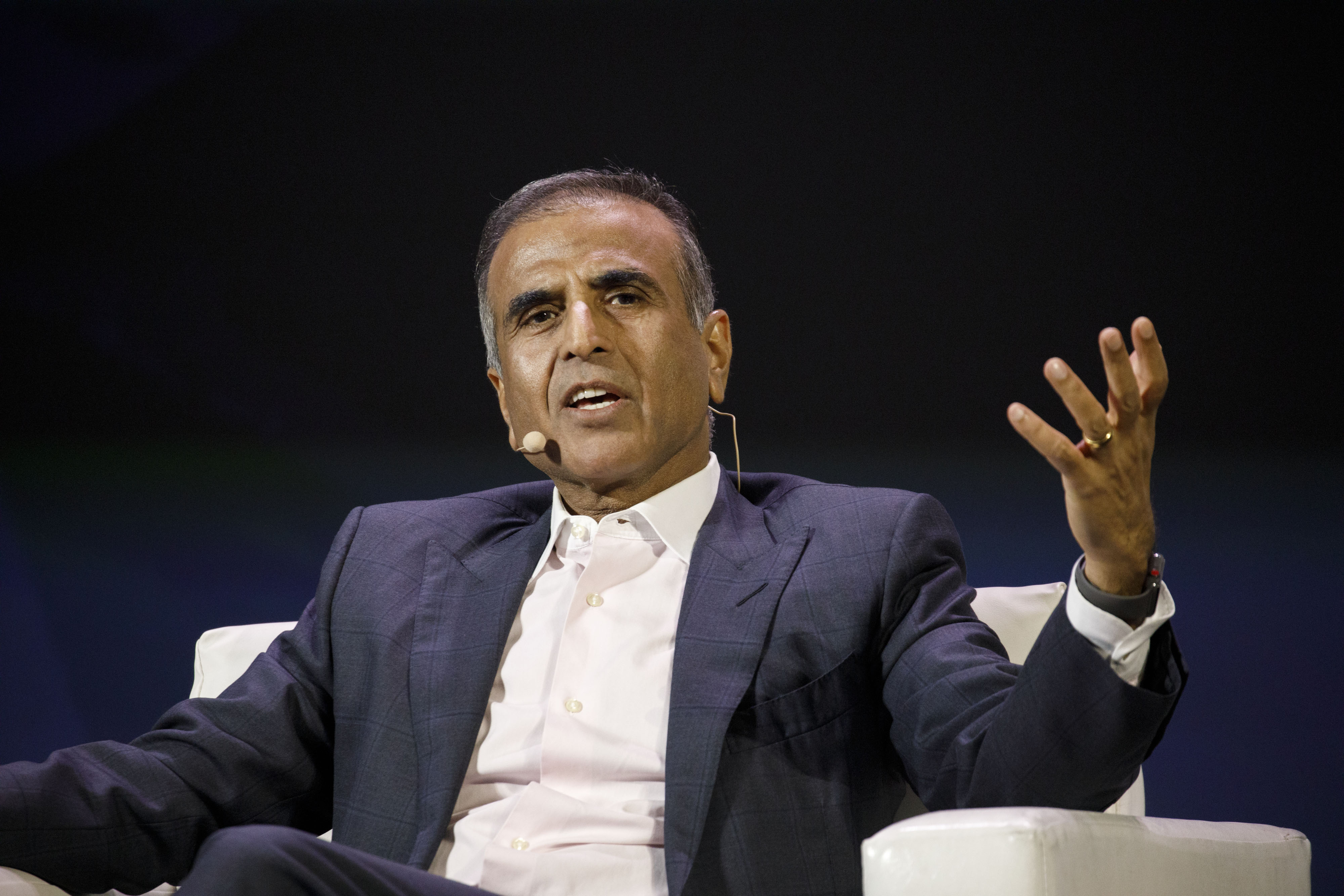
(Bloomberg) -- In a war for the control of India's billion-plus mobile-services market, tycoon Sunil Mittal seems to be floundering in the face of a juggernaut unleashed by Mukesh Ambani.
For at least a fourth quarter in a row, Mittal's Bharti Airtel Ltd. shored up its profits with one-time gains, masking headwinds posed by upstart Reliance Jio Infocomm Ltd. Jio's roll-out, after its 2016 debut, has knocked Airtel from its perch in a consolidation that shrank the industry to three players from about a dozen four years ago.
Airtel is struggling to add subscribers in a saturated market after Jio managed to lure more than 300 million users over the past three years -- a quarter of the world's second-largest market. The aggressive expansion of Jio with free calls and cheaper data, backed by the deep pockets of Asia's richest man, was bad news for highly indebted incumbents engaged in a tariff war that had pushed call rates to less than a cent.
Shriveling earnings portend further trouble for Airtel. Already saddled with more than $17 billion of debt -- the highest among Asian peers -- it is also preparing to spend billions more on 5G airwaves at a government auction in coming months. Adding to its woes, Moody's Investors Service cut its rating to junk earlier this year.
The New Delhi-based company is counting on some asset sales, a rights issue and an initial public offering in London of its Africa unit to bolster its finances.
What Bloomberg Intelligence Says
“Airtel's profit will suffer until Jio is ready to raise prices. It is hard to say when, but Jio may remain aggressive until it achieves the No. 1 spot in mobile revenue. In the meantime, Airtel is trying to weather through by preserving margin at the sacrifice of subscriber loss, divesting assets to ease debt burden, and raising equity to avoid a credit downgrade.”
--Anthea Lai, telecom industry analyst
Shares of Airtel declined 2.2 percent Tuesday in Mumbai, making the stock the worst performer on the benchmark S&P BSE Sensex for the day.
Airtel said in an exchange filing Monday that a one-time net gain of 20.2 billion rupees ($291 million) on account of a credit related to “re-assessment of levies” boosted its net income to 1.1 billion rupees for the quarter through March. Analysts had predicted a loss of 9.66 billion rupees.
Although revenue rose 6 percent to 206 billion rupees in the period, data provided by the Telecom Regulatory Authority of India show Airtel added a net 53,493 subscribers in the first two months of the year, compared with Jio's 17.1 million. While Airtel didn't provide user addition data for the quarter, Jio reported an increase of 26.6 million.
Airtel's average revenue per user in India was better than Jio's, but lagging revenue growth suggests it needs “to revisit its subscriber ramp-up strategy,” according to a research note from Rajiv Sharma and Anshul Agrawal, analysts at SBICAP Securities Ltd.
Bharti Said to Kick Off IPO of $5 Billion Africa Arm in May
In an interview with BloombergQuint earlier this year at the World Economic Forum in Davos, Mittal described conditions in India's hyper-competitive telecommunications market as “dreadful,” predicting a possible turning point this year. “This will be the year of perhaps hemorrhaging stopping,” he said.
Airtel slipped to No. 2 in the industry last year after Idea Cellular Ltd. and the local unit of Vodafone Group Plc closed their merger to become India's largest operator by subscribers.
In February, Airtel unveiled plans to raise as much as 320 billion rupees for a war chest to take on Jio as well as to prepare for the 5G auction. Of that, 250 billion rupees will be from a rights issue due to close May 17 at 220 rupees per share, and the rest from the sale of perpetual bonds with equity credit. Vodafone Idea proposes to raise 250 billion rupees from a rights issue.
--With assistance from Sheenu Gupta.
To contact the reporter on this story: P R Sanjai in Mumbai at psanjai@bloomberg.net
To contact the editors responsible for this story: Sam Nagarajan at samnagarajan@bloomberg.net, Dave McCombs
©2019 Bloomberg L.P.

-
Talking Points This Week: Tech Nerves, FII Buying, And A Faraway Banking Shock

The global markets are not shining this Diwali. The exception in the large markets is, India.
-
Midterm Rally Lasted A Day. The Hard Reality Of A Divided US May Last Two Years | Opinion
Between a contested AI boom, a debt ceiling that arrives in 2027 and a president with every incentive to act alone, the next two years may prove more volatile than the first day's rally suggests.
-
Blue Wave Will Derail the AI Trade but Won't Dismantle the AI Era | Unhedged Position
The Democrats' sweep of the US Congress will see politics collide with economic forces both over the long and short term.
-
It's Time To Take The GST Council's Bet On Trust Global
Payment records can prove India's services exports, and clear, proportionate rules can bring foreign digital sellers into the tax net.
-
Opinion | India at 38: From Innovation Overperformer to Innovation Powerhouse
India now has 453 VC-backed deep science startups, 18 of them late-stage, after 117 percent growth since 2020. Laurus Labs, at USD 9.3 billion, is the most valuable deep science company in any middle-income economy outside China.
-
Navigating Energy Crossroads: S Jaishankar's Call For Diversified Supply Chains At G20 Ministerial Meeting
As geopolitical fault lines continue to test maritime trade routes and commodity flows, Jaishankar's message remains pertinent: true economic resilience requires open markets, protected transit lines, and a genuine commitment to multilateral cooperation rather than coercion.
-
Indians Are Travelling, But Not Every Journey Is A Holiday | The Week In Whys
Pilgrims, patients and working women are the real travellers, and the system hasn't quite caught up with them.
-
Getting To Work Costs Women More | The Reason Why
It is not just about women paying more than men. It is about women paying much more in cities than in villages.
-
AI Bias In Investing Cannot Be Eliminated, But It Can Be Governed
Framing is a particularly important example as identical financial information presented in terms of gains rather than losses can lead an LLM to reach a different assessment.









