Beyond Chalk And Talk: Exploring The Impact Of Smart Technologies On India’s Educational Methods
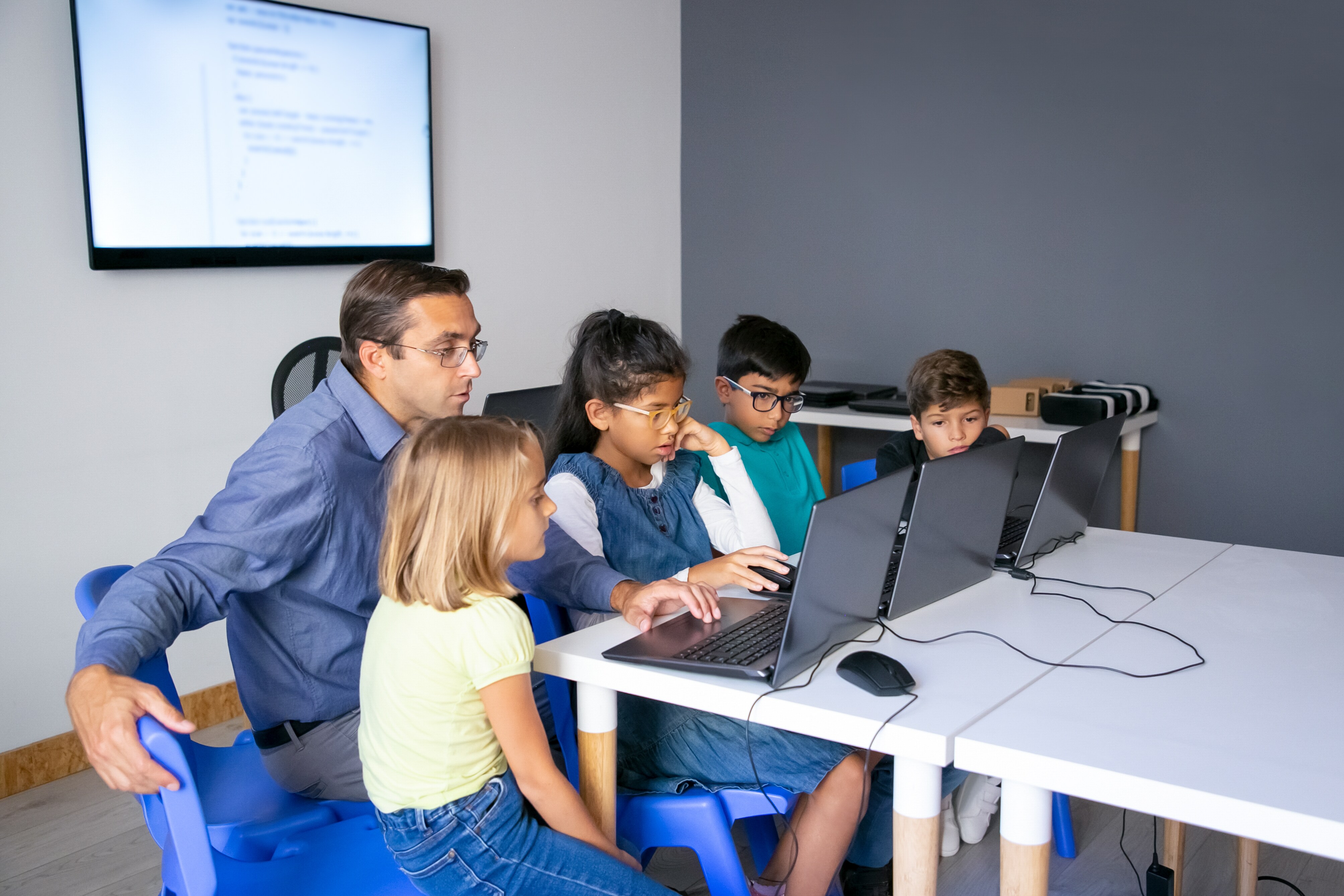
India's education system stands at a crossroads. While the traditional "chalk and talk" method has served us well for generations, a new wave of technological innovation is transforming classrooms across the country. The Covid-19 pandemic significantly altered the educational landscape worldwide, compelling a swift transition to digital learning tools.
In India, this shift was catalysed not only by the necessity of maintaining educational continuity during lockdowns but also by a strong governmental push towards digitising the nation's education system. This presents exciting opportunities to enhance learning experiences, improve student engagement and for educators to create a more dynamic and inclusive learning environment.
Smart Technologies Transforming Learning Experiences
One of the smart technologies that is impacting the education system is the interactive whiteboard. Replacing the limitations of static blackboards, interactive whiteboards allow for a more collaborative learning experience. Imagine a classroom where students cannot only see visuals but also manipulate them directly on the screen.
This fosters deeper engagement with the subject matter, allowing students to explore concepts visually and collaboratively. These interactive displays, often accompanied by intuitive styluses, can be used for real-time brainstorming sessions, exploring virtual models in science or even gamifying lessons to make learning more fun and interactive.
Another transformative technology is the incorporation of digital learning resources. Projectors with high brightness and resolution enable educators to showcase a wealth of multimedia content—from educational documentaries to historical simulations. This not only supplements traditional textbooks but also caters to diverse learning styles.
Students who learn best visually can benefit from captivating videos and animations, while auditory learners can immerse themselves in educational podcasts and audiobooks.
Personalised Learning And Bridging the Gap
However, technology's role goes beyond simple content delivery. Smart classroom solutions, which often integrate interactive displays and projectors with powerful software suites, empower educators to personalise learning experiences.
These solutions can track student progress, identify areas needing improvement and tailor content to individual learning styles and paces. This personalised approach allows educators to provide targeted support to students who are struggling and offer additional challenges to those who excel.
Technology can also bridge the geographical divide and create a more inclusive learning environment. Video conferencing tools can connect students in remote locations with subject matter experts or even classrooms in other parts of the country or even the world. This fosters cultural exchange and broadens students' perspectives.
Furthermore, technologies like assistive listening devices and screen readers can ensure that students with disabilities have equal access to educational resources.
Government's Push For Technological Integration
The Indian government has recognised the transformative potential of smart technologies in education. Initiatives like Pradhan Mantri Schools for Skill Development and Atal Tinkering Labs are equipping schools with advanced equipment and fostering a culture of innovation.
These efforts, coupled with the growing focus on digital literacy in the National Education Policy 2020, pave the way for a future where technology empowers both educators and students.
Of course, integrating technology into classrooms requires careful planning and consideration. Educators need to be adequately trained on using these new tools effectively. Additionally, ensuring equitable access to these technologies across diverse socio-economic backgrounds is crucial.
However, the potential benefits are undeniable. By embracing smart technologies, India can create a new generation of learners who are not only well-equipped with knowledge but also possess the critical thinking and problem-solving skills necessary to thrive in the 21st century.
Enhancing Security And Safety in Digital Classrooms
In the realm of cybersecurity, the importance of robust security measures in educational technologies cannot be overstressed. The integration of advanced security features, like those found in enterprise security systems, into interactive flat panels is critical. These systems provide comprehensive protection, ensuring the safety of student data and the secure operation of educational applications.
Moreover, with the integration of germ-free surfaces and blue light filters, smart devices not only safeguard against digital threats but also protect the physical well-being of students.
The reduction of eye strain and the provision of a sanitary learning environment are essential for maintaining the health and safety of young learners as they engage with digital content for extended periods.
The future of Indian education is not about replacing teachers with technology. Instead, it's about empowering educators to become facilitators of learning, guiding students through a dynamic and interactive educational journey.
Rajeev Singh is Managing Director of BenQ India.
The views expressed here are those of the author and do not necessarily represent the views of NDTV Profit or its editorial team.

-
Opinion | India at 38: From Innovation Overperformer to Innovation Powerhouse

India now has 453 VC-backed deep science startups, 18 of them late-stage, after 117 percent growth since 2020. Laurus Labs, at USD 9.3 billion, is the most valuable deep science company in any middle-income economy outside China.
-
Navigating Energy Crossroads: S Jaishankar's Call For Diversified Supply Chains At G20 Ministerial Meeting
As geopolitical fault lines continue to test maritime trade routes and commodity flows, Jaishankar's message remains pertinent: true economic resilience requires open markets, protected transit lines, and a genuine commitment to multilateral cooperation rather than coercion.
-
Indians Are Travelling, But Not Every Journey Is A Holiday | The Week In Whys
Pilgrims, patients and working women are the real travellers, and the system hasn't quite caught up with them.
-
Getting To Work Costs Women More | The Reason Why
It is not just about women paying more than men. It is about women paying much more in cities than in villages.
-
AI Bias In Investing Cannot Be Eliminated, But It Can Be Governed
Framing is a particularly important example as identical financial information presented in terms of gains rather than losses can lead an LLM to reach a different assessment.
-
Joining The Dots | Dark Skies, Steady Diya: Why Hope Holds This Diwali
With war, a weak rupee and foreign outflows weighing on sentiment, policymakers at the NDTV World Summit and market veterans at NDTV Profit Ignite: Diwali Edition offered the same advice: stay invested and filter out the noise.
-
The Curious Case of Equitas Small Finance Bank And A CEO Who Quit For Stock
PN Vasudevan believes persistent investor concerns over a perceived conflict of interest had become a governance overhang on Equitas Small Finance Bank's stock, even as the lender improved profitability and asset quality.
-
Talking Points This Week: AI Cash Burn, A Tiger Comeback And An India That Still Finds Its Own Path
India is not immune to higher oil or tighter global liquidity, yet its earnings base is broader, its domestic policy levers are still available.
-
Foreign Investors Own Half Of HDFC Bank and ICICI Bank. An LTCG Cut Could Matter Most Here
Foreign portfolio investors have US$115 billion parked in HDFC Bank, ICICI Bank. If the government cuts long-term capital gains tax, Jefferies says returning foreign money could land here first.










