Betting on Boring Brings Stock Outperformance in 2014
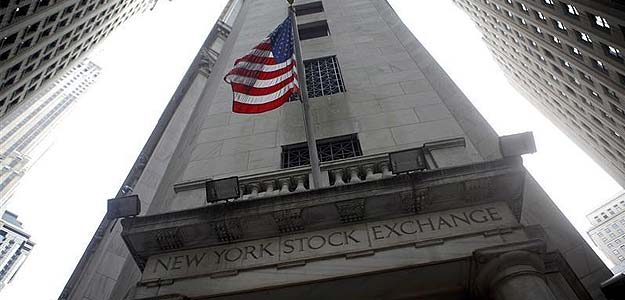
Largely ignored during much of last year's 30 per cent rally in the Standard & Poor's 500 Index, the stocks leading the US market this year rank among its usually sleepiest components.
The best sector in 2014 is utilities, including Consolidated Edison, about as staid a group as one can get. They're up 14.5 per cent on a total return basis this year, compared with 6.4 per cent for the S&P 500 as a whole.
What's happening is the opposite of what ordinarily happens in a moving market. It relates to an investing concept known as "beta", which refers to the amount of risk a particular stock adds to a portfolio. Stocks that tend to rise or fall with the market - but in a more pronounced way - are called "high beta". They generally outperform in up markets and fall the most in down markets.
Best Buy and Priceline, two discretionary stocks that were among the S&P's strongest in 2013, are good examples because their sales and profits rise along with the economy, and they led the way last year.
This year, those stocks are lagging the more boring "low beta" stocks - those that tend to move less dramatically than the market. It's a signal that investors are worried about earnings growth and US economic demand, and don't want to bet as heavily on the types of stocks that generally qualify as "high beta" - often cyclical names in the technology, discretionary and energy sectors.
To be sure, this may change if growth picks up, but after US gross domestic product contracted in the first quarter for the first time in three years, investors are cautious.
"You see this all over the place -- people are still scared," said Richard Bernstein, CEO of Richard Bernstein Advisors in New York. "They're still more worried about protecting to the downside than accentuating the upside".
That's helped drive equities' rotation into the more defensive, high-dividend paying names, also typically part of the low-beta camp.
So far this year, the 50 stocks in the S&P 500 with the lowest beta scores - a group that includes ConEd and McDonald's are up on average by 12 per cent. Meanwhile, the 50 highest beta stocks, which include Citigroup and Best Buy , are up an average of 7 per cent.
In 2013, the 50 highest-beta S&P 500 stocks rose an average of 51.4 per cent, compared with 21.3 per cent for the 50 lowest-beta stocks.
Investors who have pursued the high-beta contingent have suffered. Among them are hedge funds, which kept a heavy exposure to momentum-type names and the "beta"strategy.
Hedge funds now have 3.8 times more net cyclical exposure to defensive stocks, said Jon Kinderlerer, a managing director at Credit Suisse. In January, that measure was 4.7 times - bets that went sour as the market corrected through the first quarter.
"Once that trade began to break, that also accelerated a rotation back into more value-oriented names and sectors", said Mark Luschini, chief investment strategist at Janney Montgomery Scott in Philadelphia.
BIGGER DIVIDENDS, HIGHER VALUATIONS
This year's winners deliver nearly twice the dividend yield than their high-beta counterparts. Stocks with the lowest betas have an average dividend yield of 3.1 per cent compared with 1.7 per cent for high-beta stocks, Thomson Reuters data shows.
What's unusual is that S&P's high-beta stocks are at some of their cheapest valuations ever relative to the S&P 500, said Bernstein, whose data goes back to 1986.
To Bernstein, that's a positive sign for the market's long-term health as it shows investors aren't overpaying for growth. "Find me a market peak where investors have been scared of beta", he said.
He noted, however, that there are plenty of high-beta names among the broader stock universe like the Russell 2000 with rich valuations -companies like Monster Worldwide - which aren't in the S&P 500.
Among stocks with the highest betas in the S&P 500, Seagate Technology has a P/E of just 10.6, while Hartford Financial Services Group has a P/E of 10.9.
The high beta stocks currently have a median P/E of 15.2 versus a median P/E of 16.4 for all of the S&P 500 stocks with beta scores. The low beta names have a median P/E of 16.1.
Growth sectors have rebounded in recent sessions as the earnings outlook has improved, with calendar year 2014 estimates rising to 9.1 per cent as of June 6 from 8.7 per cent on April 1, according to Thomson Reuters data.
"Everything is hanging on the estimates for growth in the second half. How that plays out will determine whether higher beta or low beta outperform for the year", said Bucky Hellwig, senior vice president at BB&T Wealth Management in Birmingham, Alabama.
Copyright: Thomson Reuters 2014

-
Navigating Energy Crossroads: S Jaishankar's Call For Diversified Supply Chains At G20 Ministerial Meeting

As geopolitical fault lines continue to test maritime trade routes and commodity flows, Jaishankar's message remains pertinent: true economic resilience requires open markets, protected transit lines, and a genuine commitment to multilateral cooperation rather than coercion.
-
Indians Are Travelling, But Not Every Journey Is A Holiday | The Week In Whys
Pilgrims, patients and working women are the real travellers, and the system hasn't quite caught up with them.
-
Getting To Work Costs Women More | The Reason Why
It is not just about women paying more than men. It is about women paying much more in cities than in villages.
-
AI Bias In Investing Cannot Be Eliminated, But It Can Be Governed
Framing is a particularly important example as identical financial information presented in terms of gains rather than losses can lead an LLM to reach a different assessment.
-
Joining The Dots | Dark Skies, Steady Diya: Why Hope Holds This Diwali
With war, a weak rupee and foreign outflows weighing on sentiment, policymakers at the NDTV World Summit and market veterans at NDTV Profit Ignite: Diwali Edition offered the same advice: stay invested and filter out the noise.
-
The Curious Case of Equitas Small Finance Bank And A CEO Who Quit For Stock
PN Vasudevan believes persistent investor concerns over a perceived conflict of interest had become a governance overhang on Equitas Small Finance Bank's stock, even as the lender improved profitability and asset quality.
-
Talking Points This Week: AI Cash Burn, A Tiger Comeback And An India That Still Finds Its Own Path
India is not immune to higher oil or tighter global liquidity, yet its earnings base is broader, its domestic policy levers are still available.
-
Foreign Investors Own Half Of HDFC Bank and ICICI Bank. An LTCG Cut Could Matter Most Here
Foreign portfolio investors have US$115 billion parked in HDFC Bank, ICICI Bank. If the government cuts long-term capital gains tax, Jefferies says returning foreign money could land here first.
-
'Never Seen This Level Of Negativity': Sandeep Tandon Says The Next Rally May Be Closer Than You Think
Veteran investor Sandeep Tandon says foreign selling is easing, large-caps are due a comeback and mid-caps are crowded, while he turns positive on gold, power and pharma this Diwali.
-
Indians Stay With Family, Not In Hotels | The Reason Why
India still lacks enough clean, reliable and affordable hotels for budget-conscious travellers.










