Battle Lines Forming For Tata Legal Showdown
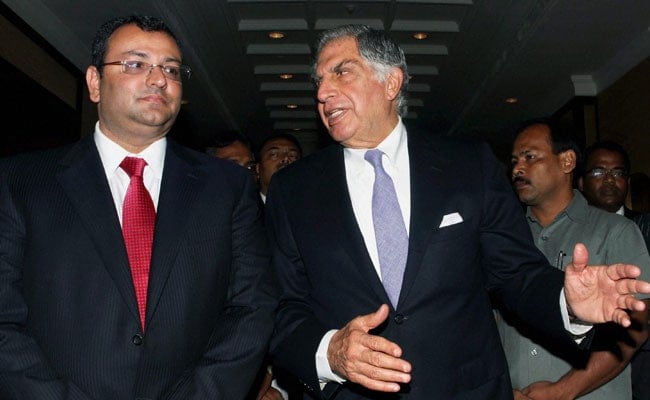
New Delhi/Mumbai: As India's biggest corporate showdown heads from the boardroom to the courtroom and brings in a Who's Who of the country's legal profession, ousted Tata Sons chairman Cyrus Mistry vows a multi-layered battle for governance reforms at the $100 billion conglomerate, people close to him say.
Mistry, who was dismissed from his post in October and has since left boards at other Tata group companies, will step up his legal fight with patriarch Ratan Tata and others and make his case in any regulatory investigations into the Tata group, three people familiar with Mistry's strategy said.
Mistry has so far broadly laid out three sets of allegations: breaches of governance within the Tata group; misconduct at Tata ventures; and the illegality of his ouster.
"If all of those are put together, it paints a picture - of mis-governance and misappropriation," said one of those people. "I think there will be different elements, which will all be looked at in different forums."
Tata Sons, the holding company with stakes in listed firms operating in a range of industries, denies Mistry's allegations and says it has followed the highest standards of corporate governance.
Two lawyers representing Tata said the group is ready to defend itself and will challenge the merits of any legal action Mistry takes.
In his first salvo, Mistry last week filed a petition at the National Company Law Tribunal (NCLT), a quasi-judicial body that deals with corporate grievances in India, alleging mismanagement and shareholder oppression by Tata Sons, and seeking the replacement of the group's board of directors.
On Tuesday, Tata hit back, filing a legal notice against Mistry, accusing him of breaching confidentiality rules, and alleging he shared "confidential data, business strategies, financial information" related to Tata Sons.
BURDEN OF PROOF
Tata legal advisers say the burden of proof is on Mistry, who will need to prove his assertions that decisions taken by Tata Sons were not in the interest of all shareholders, and it mismanaged group companies' affairs.
"He will first have to substantiate that something wrong happened and that there were actions intended to oppress him," Tata group counsel Mohan Parasaran said before the Tata filing.
Parasaran said Mistry would need to prove that certain decisions taken by Tata Sons - such as the $12 billion purchase of steelmaker Corus' assets in Europe or the decision to continue making the loss-making Nano car - were oppressive to the interest of minority shareholders in Tata Steel and Tata Motors.
"Only proving that these were bad decisions does not amount to anything," Parasaran said. "Broadly, we have a strong legal case."
Responding to Mistry's petition, the NCLT stopped short of granting his request to prevent the Tata Group from issuing new securities that would dilute his stakeholding. It will hear the petition again on Jan. 31.
Lawyers not involved in the proceedings say the legal battle could stretch from the Bombay High Court to the Securities Appellate Tribunal, and even to the Indian Supreme Court.
Both the Tata and Mistry camps have hired some of India's top legal brains.
"The stage seems set for the next round where courts and regulators will be involved," said Vaneesa Agrawal, a securities lawyer at Suvan Law Advisors.
Mistry alleges misconduct in the way some Tata companies awarded contracts, and fraud at one of its aviation ventures.
He also alleges some trustees of Tata Trusts - charitable trusts that own two-thirds of Tata Sons - undermined the boards of Tata Sons and group companies by demanding a say in key internal matters - in breach of securities rules.
"The make or break will be whether Mistry can prove that the Trusts used their powers in the interest of their personal whims," said a Mumbai-based lawyer, who asked not to be named.

-
High US Salaries, No Green Card Certainty: The Financial Calculation Facing Indian H-1B Families

The suspension of PERM processing at eight technology employers does not cancel existing H-1B visas. What it does is force a question many Indian families have been avoiding: is the US salary worth tying your career and family plans to one employer?
-
Unhedged Position: Can India See An Indonesia-Style Time Correction?
The Nifty is trading below levels it first clocked in 2024. Is there, then, as I have suggested in the headline, potential that the current time correction drags on painfully for the next three-five, even ten years?
-
Navigating Friction And Energy Realities: An Analysis Of Marco Rubio's October Visit To India
Occurring at a critical juncture marked by stalled trade negotiations and escalating geopolitical pressures over global energy supplies, the visit offers a profound window into modern US-India relations.
-
India Exports Capital. Why Not Export Trusteeship?
The big question, then, is whether India can build an institution that global borrowers, investors, banks, and lawyers can trust, even without an Indian connection.
-
France's Economy & Politics Are In Crisis | The Reason Why
Let's look at how the French economy and politics evolved under Nicolas Sarkozy, Franois Hollande and Emmanuel Macron.
-
You May Inherit The Business. You Must Earn Its Credibility.
Succession tests the founder's ability to share authority as much as it tests the next generation's readiness to assume it.
-
Signing Deals Is One Thing; Making Them Work Is Another | The Week In Whys
Sometimes, things don't turn out as planned. Indian companies have lost some bids to rivals, some projects won't produce until 2030.
-
FOMC Wall, PERM Suspension, Hospital Stocks | Talking Points This Week
A PERM suspension would directly affect green-card sponsorship rather than H-1B visas, so the near-term earnings impact could remain relatively limited. The key question is whether this marks a new phase in US scrutiny of Indian IT.
-
Everything, Everywhere, All At Once: Dalal Street's Week To Forget | Joining The Dots
Visa curbs, a Starlink spat and cancer drug caps: what connects this week's shocks for Indian markets
-
India Is Going Abroad For Critical Minerals. But It May Take Years To Pay Off | The Reason Why
Although India's steps are in the right direction, they remain modest compared with India's growing dependence.









