Barclays Beats July-September Profit Forecasts As CEO Jes Staley Aims To Stay On
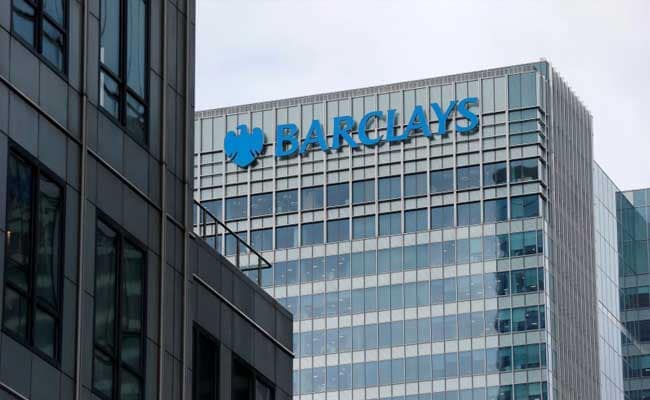
Barclays on Friday reported stronger than expected third-quarter results thanks to a return to profit for the bank's consumer businesses and chief executive Jes Staley said he aimed to stay on for two more years.
There has been speculation over Staley's future since Barclays disclosed in February that British regulators had launched an investigation into Staley's past connections to the late financier and convicted sex offender Jeffrey Epstein, which is yet to conclude.
British media reports around the same time said the bank's board had appointed a headhunter to search for a successor and that Staley himself had indicated internally that he would leave by 2021.
Staley, who was appointed CEO in 2015, has said he regrets having had any relationship with Epstein.
"I think we'll be here for another couple of years," Staley told reporters on a conference call on Friday.
Barclays is the first major British bank to publish third-quarter earnings and analysts and investors are watching results for any signs of an expected wave of bad loans due to the fallout from COVID-19 pandemic.
Barclays reported profit before tax of 1.1 billion pounds ($1.4 billion) for the three months to the end of September, almost double the 507 million pounds analysts had forecast.
The bank's shares jumped following its results and were up nearly 7 per cent at 0855 GMT (2:25 pm in India), the strongest performer in the benchmark FTSE 100 index.
“While these results aren't exactly pretty, they're far less ugly than we had feared they might be," said Nicholas Hyett, equity analyst at Hargreaves Lansdown.
The bank booked 608 million pounds in provisions for bad loans and other charges, down 63 per cent from the previous quarter and well below the 1 billion pounds analysts had expected.
However, Barclays said it was considering further cost-cutting measures, which could result in more charges.
Staley said these could include reductions in office space and other such overheads as the bank learns lessons from employees' ability to work from home or at branches during the coronavirus pandemic.
The bank's consumer, cards and payments business made a profit of 165 million pounds in the quarter after a loss in the second quarter as U.S. credit card spending recovered.
The stronger-than-expected results boosted the bank's core capital ratio, a key measure of its financial strength, to 14.6 per cent, which was also above forecasts for 14 per cent.
Investment Bank Shines
The lender's investment bank supported its results, as it has done in recent quarters, in a fillip for Staley who has staked much of his credibility on the business at a time when some shareholders want it cut back.
Revenue from its markets division, which has benefited from frenzied trading amid volatile markets worldwide, rose 29 per cent from a year earlier to 1.69 billion pounds. Equities trading jumped 40 per cent to 691 million pounds while fixed income, currencies and commodities rose 23 per cent to 1 billion pounds.
Like its rivals, Barclays has halted dividend payments at the request of Britain's regulators. It said it would give an update on its payout policy when it reports full-year results.
Barclays downgraded its baseline economic forecast for the United Kingdom this year as local lockdowns kick in to control a second wave of COVID-19 heading into the winter months.
The bank now expects gross domestic product to fall 10.3 per cent this year, versus its June forecast of an 8.7 per cent drop, but it said there had been no significant rise in bad loans so far due to government financial support for jobs and companies.
US banks, which reported earnings earlier this month, gave a muddied picture of what to expect, with balance sheets looking healthier than expected but executives forecasting a gloomy outlook for losses from loans.
Barclays' British rivals all report earnings next week, with HSBC on Tuesday, Standard Chartered and Lloyds Banking Group on Thursday and NatWest Group on Friday.
($1 = 0.7656 pounds)

-
Swiggy vs Eternal: Food Delivery's Two Rivals Are No Longer In The Same Race

Eternal is building a private AI assistant, dark.ai. Swiggy is still working out how to make Instamart pay, with an operating loss of Rs 895 crore in the July-September quarter while Blinkit stayed profitable.
-
Where You Live Shapes How You Get To Work | The Reason Why
Two-wheelers are the most popular way to get to work in India, accounting for nearly 43% of workplace commutes.
-
High US Salaries, No Green Card Certainty: The Financial Calculation Facing Indian H-1B Families
The suspension of PERM processing at eight technology employers does not cancel existing H-1B visas. What it does is force a question many Indian families have been avoiding: is the US salary worth tying your career and family plans to one employer?
-
Unhedged Position: Can India See An Indonesia-Style Time Correction?
The Nifty is trading below levels it first clocked in 2024. Is there, then, as I have suggested in the headline, potential that the current time correction drags on painfully for the next three-five, even ten years?
-
Navigating Friction And Energy Realities: An Analysis Of Marco Rubio's October Visit To India
Occurring at a critical juncture marked by stalled trade negotiations and escalating geopolitical pressures over global energy supplies, the visit offers a profound window into modern US-India relations.
-
India Exports Capital. Why Not Export Trusteeship?
The big question, then, is whether India can build an institution that global borrowers, investors, banks, and lawyers can trust, even without an Indian connection.
-
France's Economy & Politics Are In Crisis | The Reason Why
Let's look at how the French economy and politics evolved under Nicolas Sarkozy, Franois Hollande and Emmanuel Macron.
-
You May Inherit The Business. You Must Earn Its Credibility.
Succession tests the founder's ability to share authority as much as it tests the next generation's readiness to assume it.
-
Signing Deals Is One Thing; Making Them Work Is Another | The Week In Whys
Sometimes, things don't turn out as planned. Indian companies have lost some bids to rivals, some projects won't produce until 2030.
-
FOMC Wall, PERM Suspension, Hospital Stocks | Talking Points This Week
A PERM suspension would directly affect green-card sponsorship rather than H-1B visas, so the near-term earnings impact could remain relatively limited. The key question is whether this marks a new phase in US scrutiny of Indian IT.









