Banks Pile Pressure on Vijay Mallya Over Airline Loans
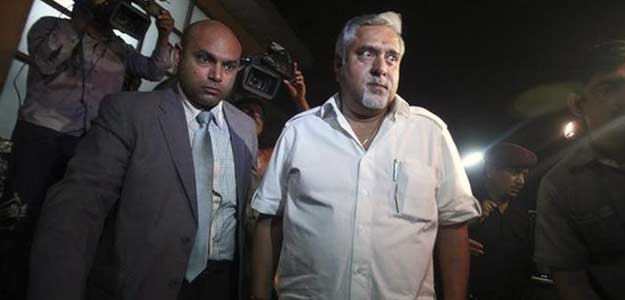
Lenders are increasing pressure on Vijay Mallya to facilitate repayment of the debts of his Kingfisher Airlines, which has not flown since 2012 and owes more than $1 billion to a consortium of mostly state-run banks.
The airline founded by Mr Mallya failed to make a profit during the eight years from launch to the grounding of its fleet in October 2012 and has been unsuccessful in efforts to find new investors to revive operations.
IDBI Bank is considering declaring Mr Mallya a "wilful defaulter", which in Indian law would mean that he could be forced to stand down from any corporate posts and could damage the fundraising prospects of businesses with which he is associated, the bank's chairman M.S. Raghavan said.
Fellow state lender United Bank of India, among more than a dozen banks owed money by Kingfisher, has already made such a declaration as the nation's banks seek to address criticism over their failure to crack down on bad debt.
Mr Mallya has until Friday to appear before an IDBI committee to explain why he should not be declared a "wilful defaulter", Mr Raghavan told Reuters.
Key Roles
"If he is declared a wilful defaulter, then he has to resign from all boards," Mr Raghavan said. "... there will be lot of pressure on him ... The companies with which he is associated as a director cannot borrow from any bank."
Kingfisher owes Rs 750 crore ($123.6 million) to IDBI Bank, Mr Raghavan said.
Besides heading Kingfisher Airlines and his UB Group, Mr Mallya is chairman of United Breweries, the Kingfisher beer maker now 38 per cent owned by Heineken, and United Spirits, which is majority owned by Diageo.
"It is not possible for a bank to simply declare anybody as a wilful defaulter without following due process," said Prakash Mirpuri, a spokesman for Mallya's UB Group.
"We have robust and comprehensive answers backed by documentation to challenge any such move."
The Reserve Bank of India defines a wilful defaulter as a borrower that is able but unwilling to pay, has diverted loan proceeds for other than their initially stated use or has overstated profits to obtain a loan.
Government policymakers have voiced concern about the problem in recent months and are urging banks to get tough on borrowers as bad loans pile up in an economy experiencing its longest spell of growth below 5 per cent in 25 years.
Copyright: Thomson Reuters 2014

-
Where You Live Shapes How You Get To Work | The Reason Why

Two-wheelers are the most popular way to get to work in India, accounting for nearly 43% of workplace commutes.
-
High US Salaries, No Green Card Certainty: The Financial Calculation Facing Indian H-1B Families
The suspension of PERM processing at eight technology employers does not cancel existing H-1B visas. What it does is force a question many Indian families have been avoiding: is the US salary worth tying your career and family plans to one employer?
-
Unhedged Position: Can India See An Indonesia-Style Time Correction?
The Nifty is trading below levels it first clocked in 2024. Is there, then, as I have suggested in the headline, potential that the current time correction drags on painfully for the next three-five, even ten years?
-
Navigating Friction And Energy Realities: An Analysis Of Marco Rubio's October Visit To India
Occurring at a critical juncture marked by stalled trade negotiations and escalating geopolitical pressures over global energy supplies, the visit offers a profound window into modern US-India relations.
-
India Exports Capital. Why Not Export Trusteeship?
The big question, then, is whether India can build an institution that global borrowers, investors, banks, and lawyers can trust, even without an Indian connection.
-
France's Economy & Politics Are In Crisis | The Reason Why
Let's look at how the French economy and politics evolved under Nicolas Sarkozy, Franois Hollande and Emmanuel Macron.
-
You May Inherit The Business. You Must Earn Its Credibility.
Succession tests the founder's ability to share authority as much as it tests the next generation's readiness to assume it.
-
Signing Deals Is One Thing; Making Them Work Is Another | The Week In Whys
Sometimes, things don't turn out as planned. Indian companies have lost some bids to rivals, some projects won't produce until 2030.
-
FOMC Wall, PERM Suspension, Hospital Stocks | Talking Points This Week
A PERM suspension would directly affect green-card sponsorship rather than H-1B visas, so the near-term earnings impact could remain relatively limited. The key question is whether this marks a new phase in US scrutiny of Indian IT.
-
Everything, Everywhere, All At Once: Dalal Street's Week To Forget | Joining The Dots
Visa curbs, a Starlink spat and cancer drug caps: what connects this week's shocks for Indian markets









