Banks May Need To Report HDIL's Dues, Provisioning Status: Report
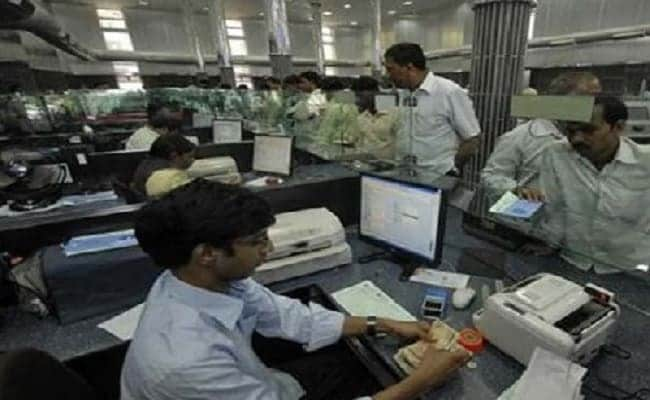
Public sector banks having fund exposure to the bankrupt real estate firm HDIL may have to classify the loans given to it as non-performing assets (NPA or bad loans) under the RBI norms, make provisions for them and report these to the exchanges, according to official sources.
So far, the Reserve Bank of India (RBI) has not given any directions in this regard as fund exposure of individual banks are their autonomous commercial decisions even when an account has gone default and the promoter of the defaulting company is arrested.
The sources, however, said that RBI norms on NPA classifications and provisioning are clear and public sector banks (PSBs) must know when to implement these.
Though PSBs are yet to reveal their exposures in HDIL, the real estate firm's annual report says it has a debt of Rs 1,500 crore and mentions Allahabad Bank, Andhra Bank, Bank of India, UCO Bank, Union Bank of India, Central Bank of India, LIC and IDBI Bank among its lenders.
Some private banks are also believed to have lent to HDIL and the loans were raised by the company on the personal guarantee of the Chairman and MD, who has been arrested.
Last week, Mumbai Police arrested HDIL directors, Rakesh Wadhawan and his son Sarang Wadhawan, in relation to the Rs 4,355-crore fraud at the Punjab and Maharashtra Cooperative (PMC) Bank .
The RBI guidelines on NPAs state mandates lenders to start the resolution process even if there was a one-day default.
HDIL is currently in default with various banks and Bank of India had taken the real estate firm to the National Company Law Tribunal (NCLT) for recovering dues of Rs 522 crore before the alleged role of HDIL in the Punjab and Maharashtra Cooperative Bank fradulent deals came to light. The case is currently under insolvency and Bankruptcy Code (IBC).
According to an official source, multiple investigative agencies probing the company also limits the recovery prospects for banks of their loans to HDIL as it limits their rights to the assets of the defaulting company.
On the impact of the concurrent processes of the NCLT and the Enforcement Directorate (ED) on banks recovering their loans, disputes practitioner and Partner at Khaitan and Company, Diwakar Maheshwari, said. "NCLT's mandate under the insolvency law is to judicially determine the aspect of default on part of the debtor to its financial creditors. Any antecedent wrongdoing amounting to attracting any criminal proceedings is the exclusive domain of the respective agency, be it CBI, ED or SFIO or NCLT, does not seem to have much of a say in this aspect under the insolvency law".
"It is imperative to have a high degree of coherence between the various independent investigating bodies and the judicial process under the insolvency law to obviate any inter se conflict of interest. This can largely be achieved either by legislative guidance or by judicial determination," he added.
Regarding the duty of banks to provide details to exchanges on their amount of dues pending, Maheshwari said that "banks should completely adhere to all its reporting requirements mandated by law as breaching of the same has severe legal consequences".

-
Talking Points This Week: Tech Nerves, FII Buying, And A Faraway Banking Shock

The global markets are not shining this Diwali. The exception in the large markets is, India.
-
Midterm Rally Lasted A Day. The Hard Reality Of A Divided US May Last Two Years | Opinion
Between a contested AI boom, a debt ceiling that arrives in 2027 and a president with every incentive to act alone, the next two years may prove more volatile than the first day's rally suggests.
-
Blue Wave Will Derail the AI Trade but Won't Dismantle the AI Era | Unhedged Position
The Democrats' sweep of the US Congress will see politics collide with economic forces both over the long and short term.
-
It's Time To Take The GST Council's Bet On Trust Global
Payment records can prove India's services exports, and clear, proportionate rules can bring foreign digital sellers into the tax net.
-
Opinion | India at 38: From Innovation Overperformer to Innovation Powerhouse
India now has 453 VC-backed deep science startups, 18 of them late-stage, after 117 percent growth since 2020. Laurus Labs, at USD 9.3 billion, is the most valuable deep science company in any middle-income economy outside China.
-
Navigating Energy Crossroads: S Jaishankar's Call For Diversified Supply Chains At G20 Ministerial Meeting
As geopolitical fault lines continue to test maritime trade routes and commodity flows, Jaishankar's message remains pertinent: true economic resilience requires open markets, protected transit lines, and a genuine commitment to multilateral cooperation rather than coercion.
-
Indians Are Travelling, But Not Every Journey Is A Holiday | The Week In Whys
Pilgrims, patients and working women are the real travellers, and the system hasn't quite caught up with them.
-
Getting To Work Costs Women More | The Reason Why
It is not just about women paying more than men. It is about women paying much more in cities than in villages.
-
AI Bias In Investing Cannot Be Eliminated, But It Can Be Governed
Framing is a particularly important example as identical financial information presented in terms of gains rather than losses can lead an LLM to reach a different assessment.









