Bankers Send A To-Do List To New RBI Governor
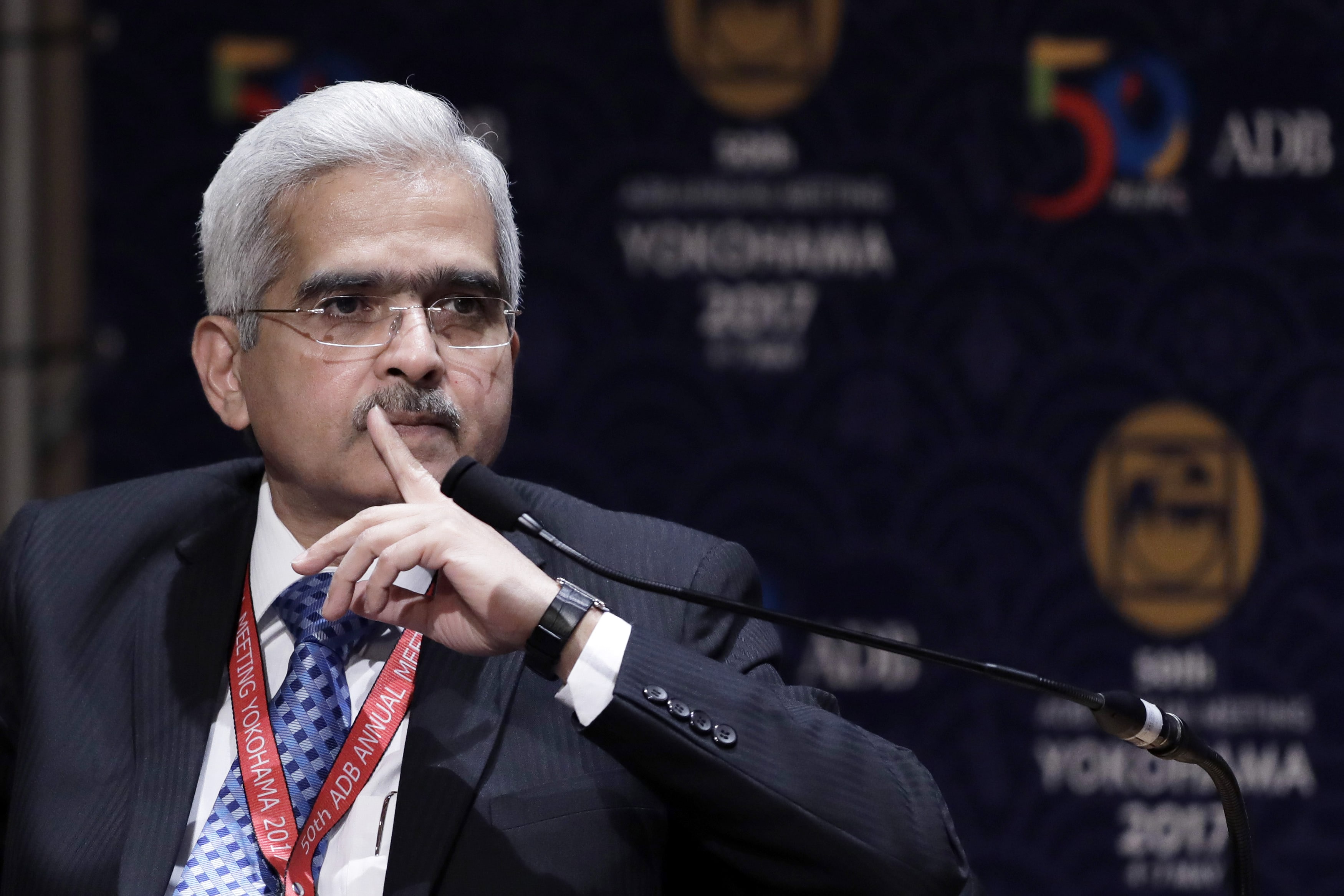
Hopeful that the Reserve Bank of India, under new Governor Shaktikanta Das, will be more receptive to their concerns, the country's top bankers have shot off a letter with a list of requests. Among them is an appeal to dilute the tough Feb.12 circular for stressed asset management and a plea to allow banks to retain exposure to Infrastructure Leasing & Financial Services as a standard asset.
Two bankers in the know who spoke on condition of anonymity confirmed the key contents of the letter which was sent in the second half of December. BloombergQuint has not reviewed a copy of the letter. Cogencis had first reported this on Dec. 20.
Dilution Of Feb.12 Circular
One key demand of bankers continues to be a dilution of the Feb.12 circular, which toughened the framework within which stressed assets are managed. This included a provision which asked banks to initiate a resolution plan for assets even if they are in default for one day.
Bankers are requesting the RBI to roll-back some of these clauses. According to the bankers quoted above, in the letter to the Governor, lenders have asked that they should be required to initiate action only after 60 days of default by a borrower.
The Feb.12 circular gives banks 180 days from the first date of default to finalise a resolution. If they fail to do this, the account must be referred for insolvency. The provision is applicable to large accounts.
Till before this circular, banks would typically not initiate any action until an account was overdue by 90 days and, hence, classified as an NPA. According to the RBI, this had led to a lack of discipline in the loan market as the borrower could simply pay their dues any time before the 90 day mark and protect themselves from any action.
So far, there has been no indication that the regulator is willing to yield on this request.
Special Dispensation For IL&FS
Bankers are also seeking special dispensation for classification of loans to IL&FS. They want to retain these loans as ‘standard assets' while increasing provisions against them.
According to the first banker quoted above, classifying the account as NPA at a time when the National Company Law Tribunal (NCLT) has given a moratorium on debt repayments to the company, could be detrimental to the recovery efforts of the banking sector.
Should the RBI not agree to this demand, a number of banks will need to classify exposure to IL&FS as an NPA when they report earnings for the December-quarter. Lenders to IL&FS are owed around Rs 60,000 crore.
Relief For SME Restructuring
One of the requests put forth by banks was for easier restructuring rules for borrowers from the micro, small and medium enterprises (MSMEs) segment, according to the second banker. This, the banker said, has already been approved by the RBI in the form of a one-time restructuring scheme introduced on January 1. The scheme allows banks to restructure an account with loans below Rs 25 crore without any downgrade on asset classification, which market watchers believe is akin to forbearance.
Banks are also seeking some leeway in RBI guidelines around risk weights on corporate and retail loans, as well as guidelines on upgradation of automated teller machines (ATMs).
The RBI Governor will meet with representatives of non-banking finance companies and certain MSME associations on January 17, as part of his initial dialogue with those impacted by the RBI's regulations, the bankers quoted above said. He has already met representatives of most large banks since he took over in December.
Will hold meetings with MSME associations and representatives of NBFCs next week.
January 2, 2019

-
High US Salaries, No Green Card Certainty: The Financial Calculation Facing Indian H-1B Families

The suspension of PERM processing at eight technology employers does not cancel existing H-1B visas. What it does is force a question many Indian families have been avoiding: is the US salary worth tying your career and family plans to one employer?
-
Swiggy vs Eternal: Food Delivery's Two Rivals Are No Longer In The Same Race
Eternal is building a private AI assistant, dark.ai. Swiggy is still working out how to make Instamart pay, with an operating loss of Rs 895 crore in the July-September quarter while Blinkit stayed profitable.
-
Where You Live Shapes How You Get To Work | The Reason Why
Two-wheelers are the most popular way to get to work in India, accounting for nearly 43% of workplace commutes.
-
Unhedged Position: Can India See An Indonesia-Style Time Correction?
The Nifty is trading below levels it first clocked in 2024. Is there, then, as I have suggested in the headline, potential that the current time correction drags on painfully for the next three-five, even ten years?
-
Navigating Friction And Energy Realities: An Analysis Of Marco Rubio's October Visit To India
Occurring at a critical juncture marked by stalled trade negotiations and escalating geopolitical pressures over global energy supplies, the visit offers a profound window into modern US-India relations.
-
India Exports Capital. Why Not Export Trusteeship?
The big question, then, is whether India can build an institution that global borrowers, investors, banks, and lawyers can trust, even without an Indian connection.
-
France's Economy & Politics Are In Crisis | The Reason Why
Let's look at how the French economy and politics evolved under Nicolas Sarkozy, Franois Hollande and Emmanuel Macron.
-
You May Inherit The Business. You Must Earn Its Credibility.
Succession tests the founder's ability to share authority as much as it tests the next generation's readiness to assume it.
-
Signing Deals Is One Thing; Making Them Work Is Another | The Week In Whys
Sometimes, things don't turn out as planned. Indian companies have lost some bids to rivals, some projects won't produce until 2030.
-
FOMC Wall, PERM Suspension, Hospital Stocks | Talking Points This Week
A PERM suspension would directly affect green-card sponsorship rather than H-1B visas, so the near-term earnings impact could remain relatively limited. The key question is whether this marks a new phase in US scrutiny of Indian IT.









