Bajaj Auto, Hero MotoCorp Shares Slump As CLSA Sees Recovery Momentum Slowing
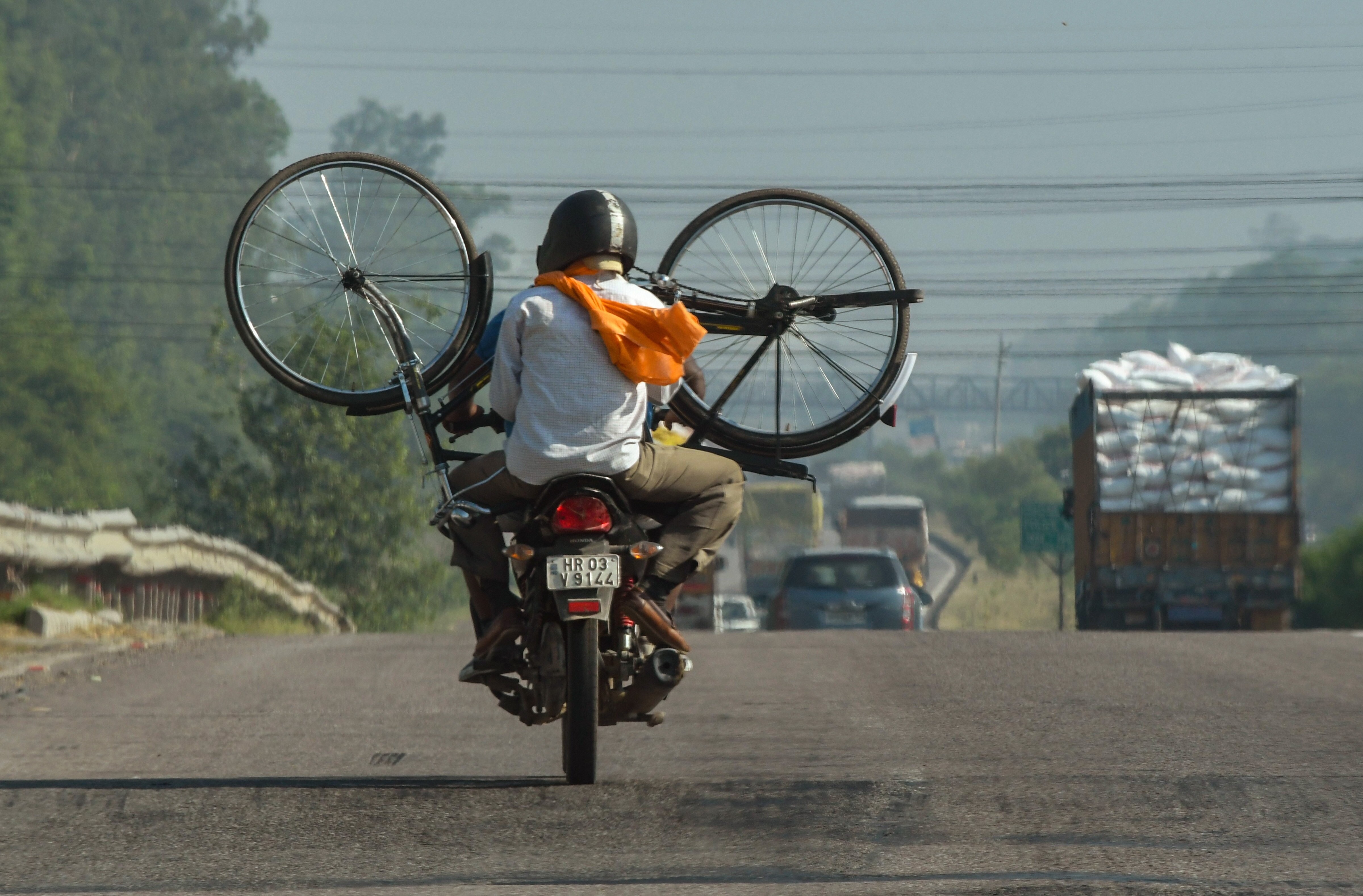
Shares of Hero MotoCorp Ltd. and Bajaj Auto Ltd. declined after CLSA said it expects two-wheeler makers' recovery to lag other automotive segments.
“While FY22 volume growth will look strong optically, it comes on the back of a 29% cumulative decline over FY19-21. We do not expect two-wheelers to reach their FY19 peak even by FY23 (unlike passenger vehicles),” the research firm said in a note. “The rapid rise in commodity prices will also pressure two-wheeler OEMs to choose between customer affordability (volume) and margins.”
Bajaj Auto's stock declined as much as 5.2% to Rs 3,445.9 apiece, making it the worst performer on the Nifty Auto Index. Peers Hero MotoCorp, Eicher Motors Ltd. and TVS Motor Co. too dropped as much as 3.6%.
Two-wheeler affordability, according to CLSA, has been adversely impacted over the past three years due to regulatory changes (insurance, safety and emissions). “Our channel checks indicate that pent-up demand is largely behind us. In addition, demand from segments such as high school and college students as well as urban semi-skilled professionals (retail, hospitality and small traders) continues to be pushed forward,” it said.
We downgrade our ratings on Hero and Bajaj from ‘outperform' to ‘underperform' but upgrade Eicher from ‘sell' to ‘underperform' to account for recent stock performance. We maintain our ‘outperform' rating on TVS as it continues to improve its market share and grow its exports.Amyn Pirani, Analyst, CLSA
India's hinterland was expected to drive two-wheeler sales, buoyed by a good monsoon, a bumper crop, increased government spending to boost the economy and less severe Covid-19 curbs compared to urban centres. But a series of price hikes prior to the pandemic, followed by a lockdown, caused sales to tumble. Besides, the transition to BS-VI emission standards hurt. Sales of entry-level or budget motorcycles, according to Crisil, fell nearly 27% in the last year—the highest for a segment that accounts for about 60% of total motorcycle volumes and 36% of overall two-wheeler volumes.
CLSA's highlights
Cuts FY22/23 industry volume forecasts by 1%-3% primarily led by a 4% cut in motorcycle volume forecasts.
“Rural demand should perform relatively better than urban but we need to watch trends during the April and May wedding season.”
“We forecast Q4 FY21 Ebitda margins to decline by 70-220 basis points quarter-on-quarter across our two-wheeler coverage. We expect FY22 margins to be slightly lower than Q4 FY21.”
CLSA's stance on two-wheeler makers
Hero: Cuts target price to Rs 3,040 from Rs 3,610 apiece. Its wholesale and retail market share gains have begun to taper as the entry/executive motorcycle segments have started to underperform other categories.
Bajaj: Cuts target price to Rs 3,750 from Rs 3,915 apiece. While exports are doing relatively better for Bajaj, it will likely face headwinds in domestic two-wheelers and three-wheelers.
Eicher: Target price unchanged at Rs 2,450 apiece. Its wholesale and retail market share has begun to improve as premium segments have started to outperform.
TVS: Target price unchanged at Rs 600 apiece.

-
High US Salaries, No Green Card Certainty: The Financial Calculation Facing Indian H-1B Families

The suspension of PERM processing at eight technology employers does not cancel existing H-1B visas. What it does is force a question many Indian families have been avoiding: is the US salary worth tying your career and family plans to one employer?
-
Swiggy vs Eternal: Food Delivery's Two Rivals Are No Longer In The Same Race
Eternal is building a private AI assistant, dark.ai. Swiggy is still working out how to make Instamart pay, with an operating loss of Rs 895 crore in the July-September quarter while Blinkit stayed profitable.
-
Where You Live Shapes How You Get To Work | The Reason Why
Two-wheelers are the most popular way to get to work in India, accounting for nearly 43% of workplace commutes.
-
Unhedged Position: Can India See An Indonesia-Style Time Correction?
The Nifty is trading below levels it first clocked in 2024. Is there, then, as I have suggested in the headline, potential that the current time correction drags on painfully for the next three-five, even ten years?
-
Navigating Friction And Energy Realities: An Analysis Of Marco Rubio's October Visit To India
Occurring at a critical juncture marked by stalled trade negotiations and escalating geopolitical pressures over global energy supplies, the visit offers a profound window into modern US-India relations.
-
India Exports Capital. Why Not Export Trusteeship?
The big question, then, is whether India can build an institution that global borrowers, investors, banks, and lawyers can trust, even without an Indian connection.
-
France's Economy & Politics Are In Crisis | The Reason Why
Let's look at how the French economy and politics evolved under Nicolas Sarkozy, Franois Hollande and Emmanuel Macron.
-
You May Inherit The Business. You Must Earn Its Credibility.
Succession tests the founder's ability to share authority as much as it tests the next generation's readiness to assume it.
-
Signing Deals Is One Thing; Making Them Work Is Another | The Week In Whys
Sometimes, things don't turn out as planned. Indian companies have lost some bids to rivals, some projects won't produce until 2030.
-
FOMC Wall, PERM Suspension, Hospital Stocks | Talking Points This Week
A PERM suspension would directly affect green-card sponsorship rather than H-1B visas, so the near-term earnings impact could remain relatively limited. The key question is whether this marks a new phase in US scrutiny of Indian IT.









