Bad Loans Of Top Six Private Banks Exceed Rs 1 Lakh Crore
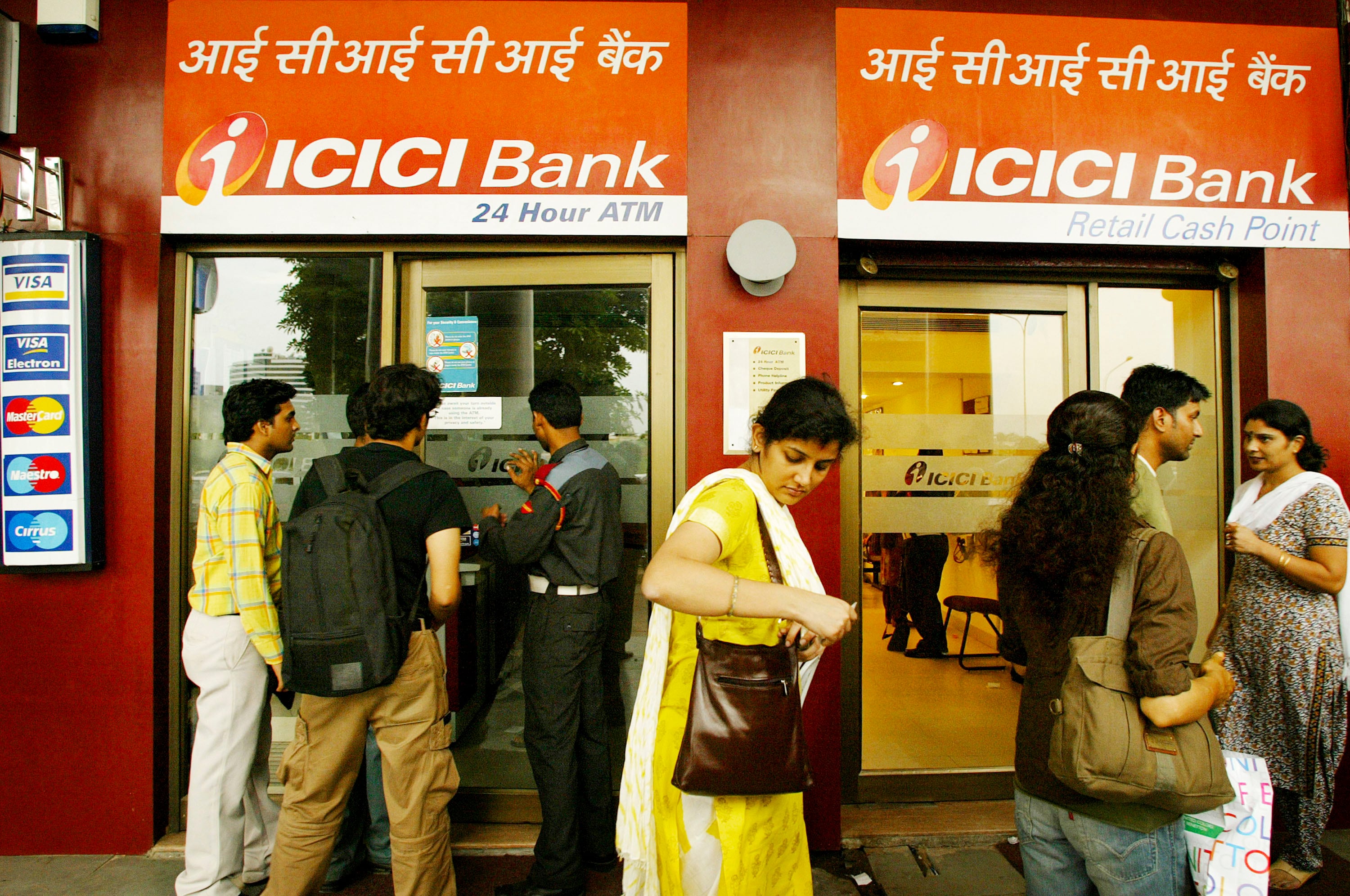
Two years into the bad loan clean-up cycle, private banks may have fared better than their public sector peers but they have been far from unscathed.
Corporate lenders like ICICI Bank, Axis Bank and Yes Bank, which have seen gross non-performing assets rise following the asset quality review conducted by the Reserve Bank of India in 2015, saw another spurt in bad loans in the quarter ended March 2018 as these banks adjusted to the Reserve Bank of India's new stressed asset framework.
Total gross NPAs of the top six private banks rose to over Rs 1 lakh crore as of the end of March, compared to Rs 28,033.61 crore in September 2015 when the RBI initiated the asset quality review of bank balancesheets.
The banks included in the comparison are HDFC Bank, ICICI Bank, Axis Bank, Kotak Mahindra Bank, Yes Bank and IndusInd Bank.
For the entire banking system the total gross NPA stood at Rs 8.8 lakh crore at the end of the December quarter. The number is likely to be much higher after all banks have reported their March 2018 quarter results.

Not surprisingly, ICICI Bank and Axis Bank, which took the largest bets on corporate lending, have contributed the most to this jump in bad loans.
ICICI Bank has seen its gross NPAs rise 238 percent to hit Rs. 54,063 crore at the end of March 2018. Axis Bank has seen seen a bigger jump of 670 percent in bad loans, which now add up to Rs. 34,249 crore.
Both these banks have also seen the biggest jump in their gross NPA ratios. While ICICI Bank's gross NPA ratio has risen from 3.26 percent in September 2015 to nearly 10 percent in March 2018, for Axis Bank, this figure rose from 1.38 percent to 6.7 percent now.
Siddharth Purohit, analyst at Angel Broking noted that the continued increased in bad loans in the January-March 2018 quarter was a consequence of RBI's new stressed asset framework.
The new rules released by the RBI in February withdrew all existing stressed asset schemes and asked lenders to classify loans where such schemes will under implementation as NPAs. The new framework asks lenders to finalise a resolution plan within 180 days starting from the first day of default. Should they fail to do so, the account must be referred for insolvency proceedings.
Overall, as a direct repercussion of the RBI's notification, ICICI Bank and Axis Bank have reclassified several accounts as NPAs. Banks should have a resolution plan for these accounts by September 2018, when the six month deadline lapses, making the next two quarters crucial as well.Siddharth Purohit, Analyst, Angel Broking
Purohit, however, added that the RBI's new framework and the decision by banks to accelerate bad loan recognition has “brought confidence and immense clarity for the next fiscal.”

Loan Disbursements & Bad Loan Ratios
Since the gross NPA ratio is a factor of bad loans and the pace of growth in the underlying loan book, some banks have managed to contain their bad loan ratios better than others.
For instance, ICICI Bank has chosen to consolidate its loan book as it moves away from riskier corporate loans. The bank added just Rs. 7,008 crores in fresh loans in the fiscal year ending 31st March 2018, bringing outstanding advances to Rs. 5.12 lakh crore. Over the past three years, the bank's loan book has grown at a compounded annual growth rate (CAGR) of just 3.3 percent. That's one reason why its bad loan ratios have spiked more than others.
At the other end of the spectrum, Yes Bank has seen its loan disbursements grow at 27.4 percent on a CAGR basis. The bank added Rs 71,200 crore to its advances base in 2017-18, nearly twice as much as in the previous fiscal year. Advances rose by 53.9 percent in 2017-18 alone. Yes Bank now has an advances book exceeding Rs 2 lakh crore. This was partly responsible for keeping bad loan ratios in check. In absolute terms, Yes Bank has also seen a sharp increase of 434 percent in gross NPAs since the asset quality review of 2015.

Most the loan book growth, even for previously corporate lending focused banks, has come from retail loans.
Axis Bank's retail loan book has increased from Rs 1.1 lakh crore in March 2015 to over Rs 2 lakh crore in March 2018. It now constitutes 47 percent of the loan book.
This shift is even more evident for ICICI Bank, which has seen retail advances rise from 42.4 percent of the total loan book in March 2015 to 56.6 percent at the end of FY18. By 2020, the bank is targeting a loan book where 60 percent of the loans come from the retail segment.
The strong growth in retail loans, along with steady asset quality in this segment, has been a silver lining for these banks, said Kartik Srinivasan, senior vice president at rating agency ICRA.
Banks with high corporate lending have unarguably registered high gross NPAs. As they divest their portfolio, they will benefit from retail lending growing at over 20 percent even as corporate lending grows in single digits.Karthik Srinivasan, Senior VP, ICRA

-
High US Salaries, No Green Card Certainty: The Financial Calculation Facing Indian H-1B Families

The suspension of PERM processing at eight technology employers does not cancel existing H-1B visas. What it does is force a question many Indian families have been avoiding: is the US salary worth tying your career and family plans to one employer?
-
Swiggy vs Eternal: Food Delivery's Two Rivals Are No Longer In The Same Race
Eternal is building a private AI assistant, dark.ai. Swiggy is still working out how to make Instamart pay, with an operating loss of Rs 895 crore in the July-September quarter while Blinkit stayed profitable.
-
Where You Live Shapes How You Get To Work | The Reason Why
Two-wheelers are the most popular way to get to work in India, accounting for nearly 43% of workplace commutes.
-
Unhedged Position: Can India See An Indonesia-Style Time Correction?
The Nifty is trading below levels it first clocked in 2024. Is there, then, as I have suggested in the headline, potential that the current time correction drags on painfully for the next three-five, even ten years?
-
Navigating Friction And Energy Realities: An Analysis Of Marco Rubio's October Visit To India
Occurring at a critical juncture marked by stalled trade negotiations and escalating geopolitical pressures over global energy supplies, the visit offers a profound window into modern US-India relations.
-
India Exports Capital. Why Not Export Trusteeship?
The big question, then, is whether India can build an institution that global borrowers, investors, banks, and lawyers can trust, even without an Indian connection.
-
France's Economy & Politics Are In Crisis | The Reason Why
Let's look at how the French economy and politics evolved under Nicolas Sarkozy, Franois Hollande and Emmanuel Macron.
-
You May Inherit The Business. You Must Earn Its Credibility.
Succession tests the founder's ability to share authority as much as it tests the next generation's readiness to assume it.
-
Signing Deals Is One Thing; Making Them Work Is Another | The Week In Whys
Sometimes, things don't turn out as planned. Indian companies have lost some bids to rivals, some projects won't produce until 2030.
-
FOMC Wall, PERM Suspension, Hospital Stocks | Talking Points This Week
A PERM suspension would directly affect green-card sponsorship rather than H-1B visas, so the near-term earnings impact could remain relatively limited. The key question is whether this marks a new phase in US scrutiny of Indian IT.









