Bad Debt Situation Not That Grim, Recovery Hopes Intact, Says SBI Chairman
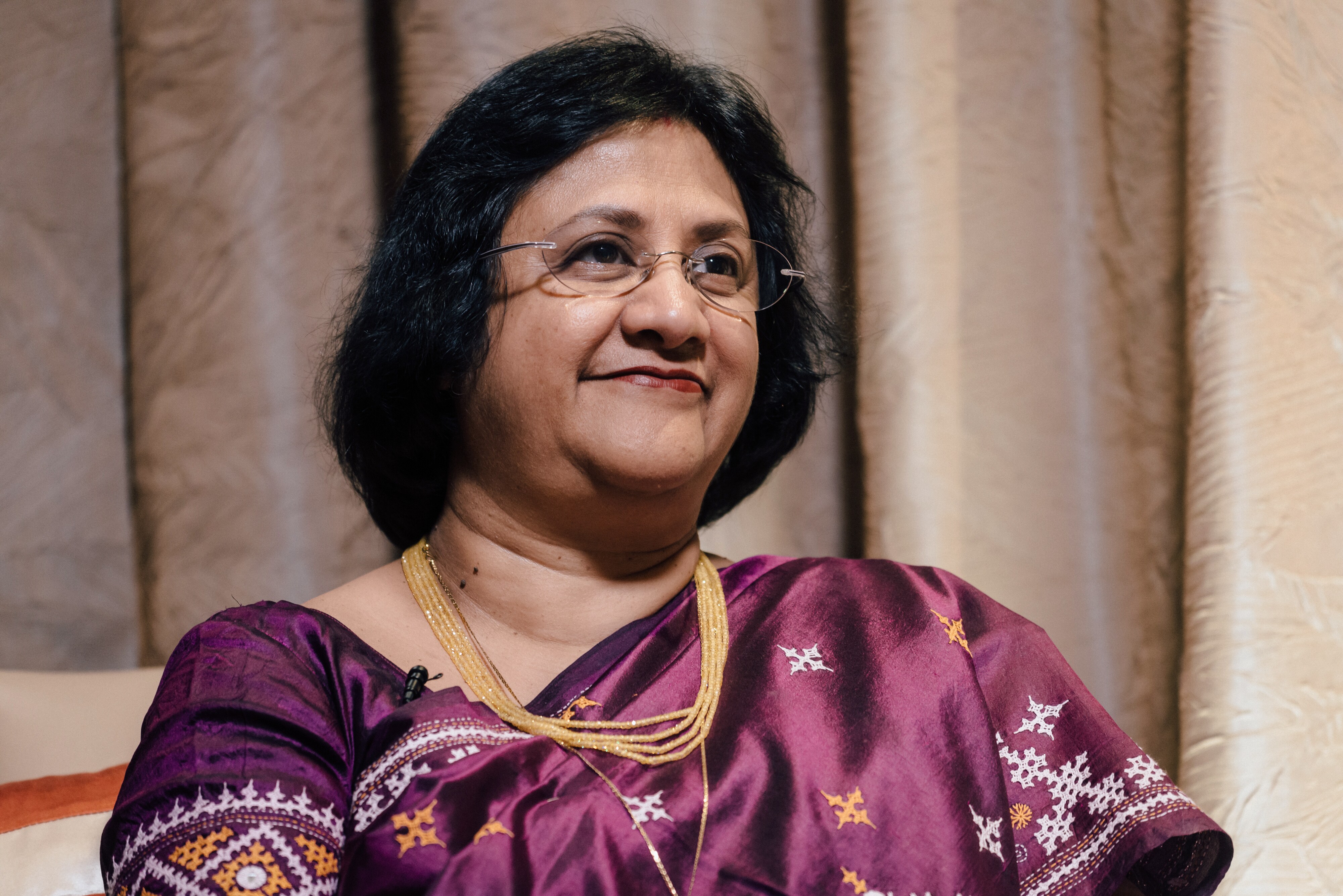
State Bank of India, the country's largest lender, said most of the nation's bad loans belong to industries that are still in business and banks will probably recover the write-downs when growth turns up and they perform again.
Speaking at a seminar on ‘Asian Banking in Challenging Times,' SBI Chairman and Managing Director Arundhati Bhattacharya said the loans which have turned bad are because they are not producing enough money to cover their interest liability. And the reasons for that have been huge time overruns, leading to cost overruns, which lead to over leveraged positions, she said.
About 16.6 percent of loans to corporates - or about 8.4 percent of the GDP - had been declared non-performing, according to Credit Suisse. Banks are straddled with anywhere between Rs 9 lakh crore to Rs 12 lakh crore of stressed assets - made up of bad loans, restructured debt and advances to companies that cannot meet servicing obligations.
The government yesterday through an ordinance amended a law to give powers to the Reserve Bank of India (RBI) to order banks to initiate insolvency proceedings against defaulters and to create committees to advise them on recovering non- performing loans.
Also Read: RBI Steps Into The Bad Loan Minefield
“I still believe we have huge potential in the country. The difference of the NPLs (non-performing loans) this time around is the fact that many of the NPLs are assets that are still working,” she said at the seminar held on the sidelines of annual meeting of the Asian Development Bank.
To set this NPL cycle right would need dilution of equity, paring down of debt and finally leaving the asset with debt that ensures that it can be sustainably serviced, Bhattacharya said, adding this will ensure that these units get the support to enable them to raise their capacity utilisation.
“In view of the fact that our economy is still growing so there is demand over there which has to be properly nurtured and may be also channelised. If you do that, many of these units will probably come back and the write-downs that we will take will probably, not surely, but probably, we will be able to claw back at some point of time,” Bhattacharya said. She said the Indian banking sector faces headwinds both in respect of over-leveraged corporate debt and ‘stiffer' regulatory requirements.
The biggest challenges faced by the regulators, was how to handle the bad debt situation to ensure that the resources are not wasted. “On the other hand they have to ensure that they are perceived as being conservative and they are perceived as doing the right thing for right reasons. So I think this is the challenge that we as a country have and the regulators have as well,” Bhattacharya said.

-
Why Amazon And Flipkart Are Struggling To Beat Meesho In India's Smaller Cities

With 274 million users and lowest-cost logistics, Meesho is defending its value commerce crown against giants like Amazon and Flipkart.
-
High US Salaries, No Green Card Certainty: The Financial Calculation Facing Indian H-1B Families
The suspension of PERM processing at eight technology employers does not cancel existing H-1B visas. What it does is force a question many Indian families have been avoiding: is the US salary worth tying your career and family plans to one employer?
-
Swiggy vs Eternal: Food Delivery's Two Rivals Are No Longer In The Same Race
Eternal is building a private AI assistant, dark.ai. Swiggy is still working out how to make Instamart pay, with an operating loss of Rs 895 crore in the July-September quarter while Blinkit stayed profitable.
-
Where You Live Shapes How You Get To Work | The Reason Why
Two-wheelers are the most popular way to get to work in India, accounting for nearly 43% of workplace commutes.
-
Unhedged Position: Can India See An Indonesia-Style Time Correction?
The Nifty is trading below levels it first clocked in 2024. Is there, then, as I have suggested in the headline, potential that the current time correction drags on painfully for the next three-five, even ten years?
-
Navigating Friction And Energy Realities: An Analysis Of Marco Rubio's October Visit To India
Occurring at a critical juncture marked by stalled trade negotiations and escalating geopolitical pressures over global energy supplies, the visit offers a profound window into modern US-India relations.
-
India Exports Capital. Why Not Export Trusteeship?
The big question, then, is whether India can build an institution that global borrowers, investors, banks, and lawyers can trust, even without an Indian connection.
-
France's Economy & Politics Are In Crisis | The Reason Why
Let's look at how the French economy and politics evolved under Nicolas Sarkozy, Franois Hollande and Emmanuel Macron.
-
You May Inherit The Business. You Must Earn Its Credibility.
Succession tests the founder's ability to share authority as much as it tests the next generation's readiness to assume it.
-
Signing Deals Is One Thing; Making Them Work Is Another | The Week In Whys
Sometimes, things don't turn out as planned. Indian companies have lost some bids to rivals, some projects won't produce until 2030.










