Average Salary Hike of 10.8% Likely for Indian Employees: Survey
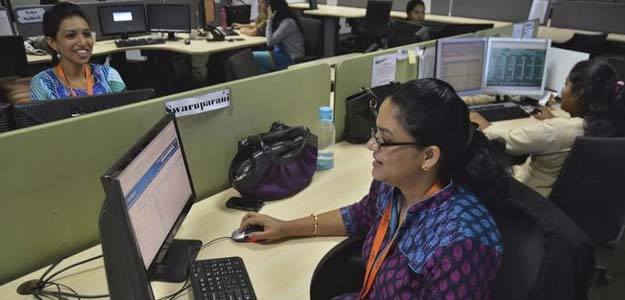
New Delhi: Indian companies are expected to offer their employees an average salary hike of 10.8 per cent this year, the highest in the Asia Pacific, and for top performers, it can be 12 per cent, says a report.
According to 2015-16 Asia Pacific Salary Budget Planning report by Towers Watson, a global professional services company, India is clearly the front-runner with a 10.8 per cent average salary increase, ahead of countries like Indonesia (9.5 per cent), China (8.6 per cent) and the Philippines (6.7 per cent).
"We anticipate the wage bill for companies in India to go up by an average of 10.8 per cent in 2015. Favourable economic sentiment and a comparative decrease in inflation and oil prices contribute to the real salary increase being at 5 per cent," Sambhav Rakyan, data services practice leader, Asia Pacific at Towers Watson said.
In 2014, the overall salary rise was 10.5 per cent and factoring in inflation at 7.2 per cent, the real salary increase stood at 3.3 per cent.
In 2015, the real salary increase is likely to jump to 5 per cent from the 3.3 per cent last year, which in turn would bring much cheer to Indian employees.
"While it's too early to predict increases for 2016, the general sense is companies will budget in the same range as 2015, perhaps the net increase will be a tad lower, given the moderating inflation levels," Mr Rakyan added.
The survey noted that across all industries in India, almost 87 per cent of respondents plan to allocate a larger portion of their budget to high performers.
In India, salary rise for 'highest-performing' employees averages 12 per cent, which is 30 per cent higher than 'average' performers and nearly twice the regional average.
Available pointers indicate that India's moving towards pay for performance and pay for risk culture, and variable pay is likely to move up, going forward. Real salary is also expected to increase in light of decreasing inflationary pressures.
"People in India still like more guaranteed base pay.
This is especially true for individuals at entry to mid-level where hard cash is what they seek," Mr Rakyan said.
He added: "We do foresee a trend where a larger portion of the total compensation, as compared with current levels, would be paid as variable pay, thereby rewarding employee performance and contribution towards improved company productivity and profitability."
The survey was conducted in February 2015. Some 2,000 responses were received from companies across 19 countries in the Asia Pacific.

-
Navigating Friction And Energy Realities: An Analysis Of Marco Rubio's October Visit To India

Occurring at a critical juncture marked by stalled trade negotiations and escalating geopolitical pressures over global energy supplies, the visit offers a profound window into modern US-India relations.
-
India Exports Capital. Why Not Export Trusteeship?
The big question, then, is whether India can build an institution that global borrowers, investors, banks, and lawyers can trust, even without an Indian connection.
-
France's Economy & Politics Are In Crisis | The Reason Why
Let's look at how the French economy and politics evolved under Nicolas Sarkozy, Franois Hollande and Emmanuel Macron.
-
You May Inherit The Business. You Must Earn Its Credibility.
Succession tests the founder's ability to share authority as much as it tests the next generation's readiness to assume it.
-
Signing Deals Is One Thing; Making Them Work Is Another | The Week In Whys
Sometimes, things don't turn out as planned. Indian companies have lost some bids to rivals, some projects won't produce until 2030.
-
FOMC Wall, PERM Suspension, Hospital Stocks | Talking Points This Week
A PERM suspension would directly affect green-card sponsorship rather than H-1B visas, so the near-term earnings impact could remain relatively limited. The key question is whether this marks a new phase in US scrutiny of Indian IT.
-
Everything, Everywhere, All At Once: Dalal Street's Week To Forget | Joining The Dots
Visa curbs, a Starlink spat and cancer drug caps: what connects this week's shocks for Indian markets
-
India Is Going Abroad For Critical Minerals. But It May Take Years To Pay Off | The Reason Why
Although India's steps are in the right direction, they remain modest compared with India's growing dependence.
-
When Everyone Has AI, What Gives You An Edge?
India's young workforce is entering an uncertain world of work where powerful AI tools are becoming widely accessible. The advantage will belong to those who combine deep expertise with digital fluency, and the distinctly human capabilities that technology cannot manufacture.
-
Wrong Labels, High Pesticide Residues Holding Back Agri Exports | The Reason Why
India needs stronger domestic food-safety and labelling standards, with best practices becoming part of everyday business for farmers, traders and food companies.