Auto Industry Suggests One-Time Incentive For Replacing Old Vehicles
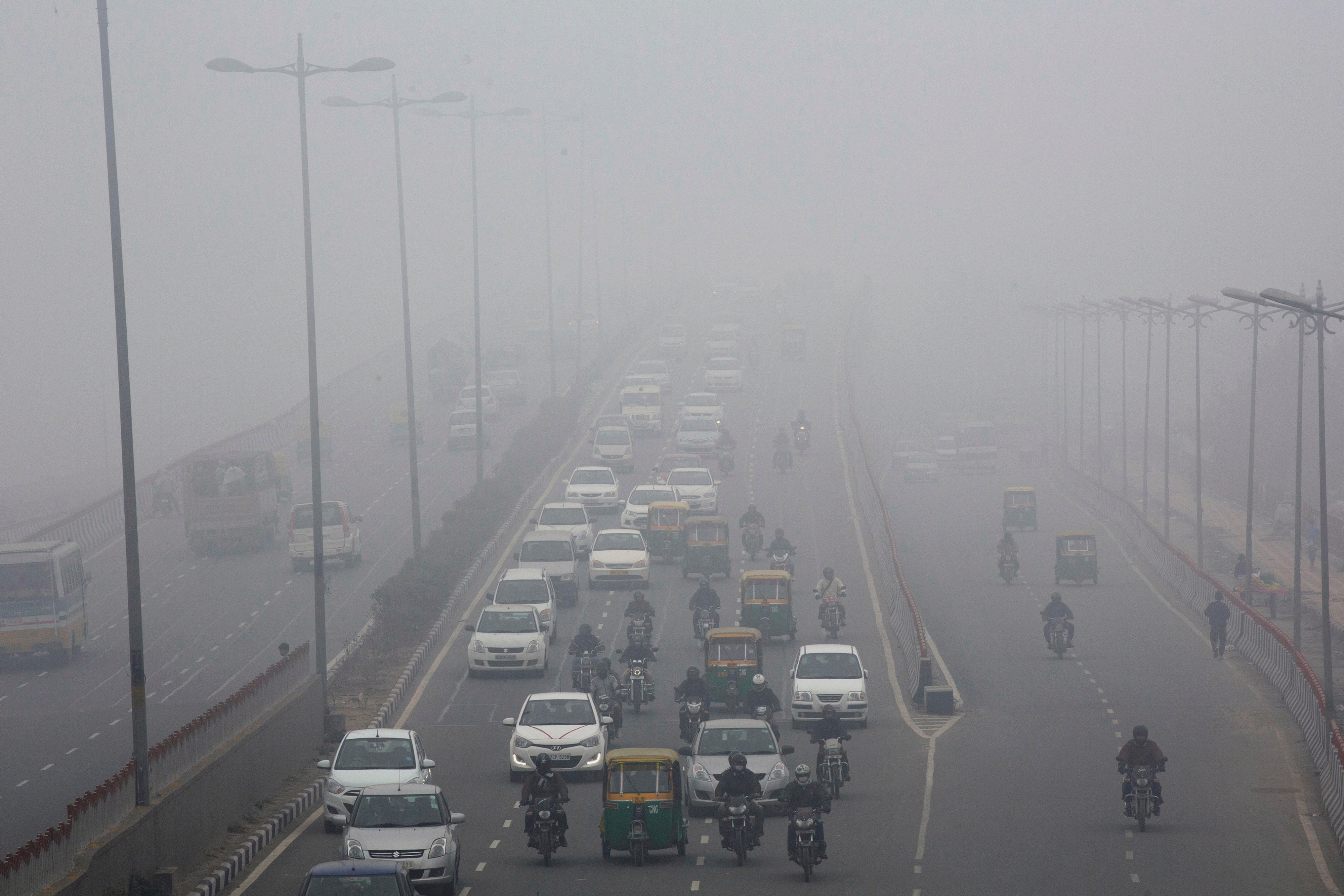
Automakers have proposed a one-time incentive in the form of rebate in taxes for replacing pre-2000 registered vehicles to facilitate taking them off the roads, industry sources said.
In a pre-budget meeting with the heavy industries ministry, the industry has also asked the government to do away with multiple tax rates for passenger cars while mooting a special rate for electrification of vehicles. The suggestions were made in a recent meeting between representatives of the auto industry and officials of department of heavy industry.
According to sources, the auto industry impressed upon the government that keeping in mind pollution and safety issues in India, there was a need to replace old vehicles. Around 80 percent of pollution and accidents were caused by old ill-maintained vehicles which are mostly more than 15 years old.
To facilitate the replacement of these vehicles, it has been suggested that the government should offer a one-time incentive to replace the old vehicles, which were registered before the year 2000, when the first emission norms were introduced. “The incentives could be in the form of rebate in GST, road tax, subsidised finance like what happened in Delhi for public transport vehicles,” a source said.
Moreover, a robust inspection and certification regime has been suggested to be put in place to control such vehicles, added the source.
In other pre-budget wish list, it is understood that the auto industry also asked for moderation and rationalisation of taxes.
“What was requested was that there should not be more than two rates for cars in place of multiple tax rates at present. Additionally, a special rate for electrification of vehicles was suggested considering the journey towards electric vehicles that the country has embarked on,” another source said.
In the last five years, the auto industry has been subjected to multiple increases in taxes. From 10 percent in 2011-12 on small vehicles, commercial vehicles, two and three wheelers, it has gone up to 12.5 percent in 2015-16, whereas on larger cars it has increased from 22 percent to 30 percent during the same period.
Additionally, infrastructure cess ranging between 1 percent and 4 percent was imposed in 2016-17, industry representatives are understood to have pointed to the government officials in the meeting.
Under the current system, automobiles fall in the highest GST slab of 28 percent with additional cess ranging between 1 percent to 15 percent depending on specifications and engine size.
The industry also suggested that in the long-run taxes on vehicles need to be rationalised, the source said, adding that the auto sector understood that reduction in taxes for vehicles could not happen immediately as GST revenue was yet to achieve targeted levels. According to sources, the industry also sought increase in customs duty for completely built-up units of commercial vehicles to 40 percent from 20 percent currently.
It was also suggested to the government to restore 200 percent weighted deduction on research and development expenditure. The benefit was reduced to 150 percent in April 2017 and is to be completely eliminated by April 2020.

-
High US Salaries, No Green Card Certainty: The Financial Calculation Facing Indian H-1B Families

The suspension of PERM processing at eight technology employers does not cancel existing H-1B visas. What it does is force a question many Indian families have been avoiding: is the US salary worth tying your career and family plans to one employer?
-
Unhedged Position: Can India See An Indonesia-Style Time Correction?
The Nifty is trading below levels it first clocked in 2024. Is there, then, as I have suggested in the headline, potential that the current time correction drags on painfully for the next three-five, even ten years?
-
Navigating Friction And Energy Realities: An Analysis Of Marco Rubio's October Visit To India
Occurring at a critical juncture marked by stalled trade negotiations and escalating geopolitical pressures over global energy supplies, the visit offers a profound window into modern US-India relations.
-
India Exports Capital. Why Not Export Trusteeship?
The big question, then, is whether India can build an institution that global borrowers, investors, banks, and lawyers can trust, even without an Indian connection.
-
France's Economy & Politics Are In Crisis | The Reason Why
Let's look at how the French economy and politics evolved under Nicolas Sarkozy, Franois Hollande and Emmanuel Macron.
-
You May Inherit The Business. You Must Earn Its Credibility.
Succession tests the founder's ability to share authority as much as it tests the next generation's readiness to assume it.
-
Signing Deals Is One Thing; Making Them Work Is Another | The Week In Whys
Sometimes, things don't turn out as planned. Indian companies have lost some bids to rivals, some projects won't produce until 2030.
-
FOMC Wall, PERM Suspension, Hospital Stocks | Talking Points This Week
A PERM suspension would directly affect green-card sponsorship rather than H-1B visas, so the near-term earnings impact could remain relatively limited. The key question is whether this marks a new phase in US scrutiny of Indian IT.
-
Everything, Everywhere, All At Once: Dalal Street's Week To Forget | Joining The Dots
Visa curbs, a Starlink spat and cancer drug caps: what connects this week's shocks for Indian markets
-
India Is Going Abroad For Critical Minerals. But It May Take Years To Pay Off | The Reason Why
Although India's steps are in the right direction, they remain modest compared with India's growing dependence.









