Auto Industry Seeks 10% GST Rate Cut As Cleaner, Safer Vehicles Push Up Costs
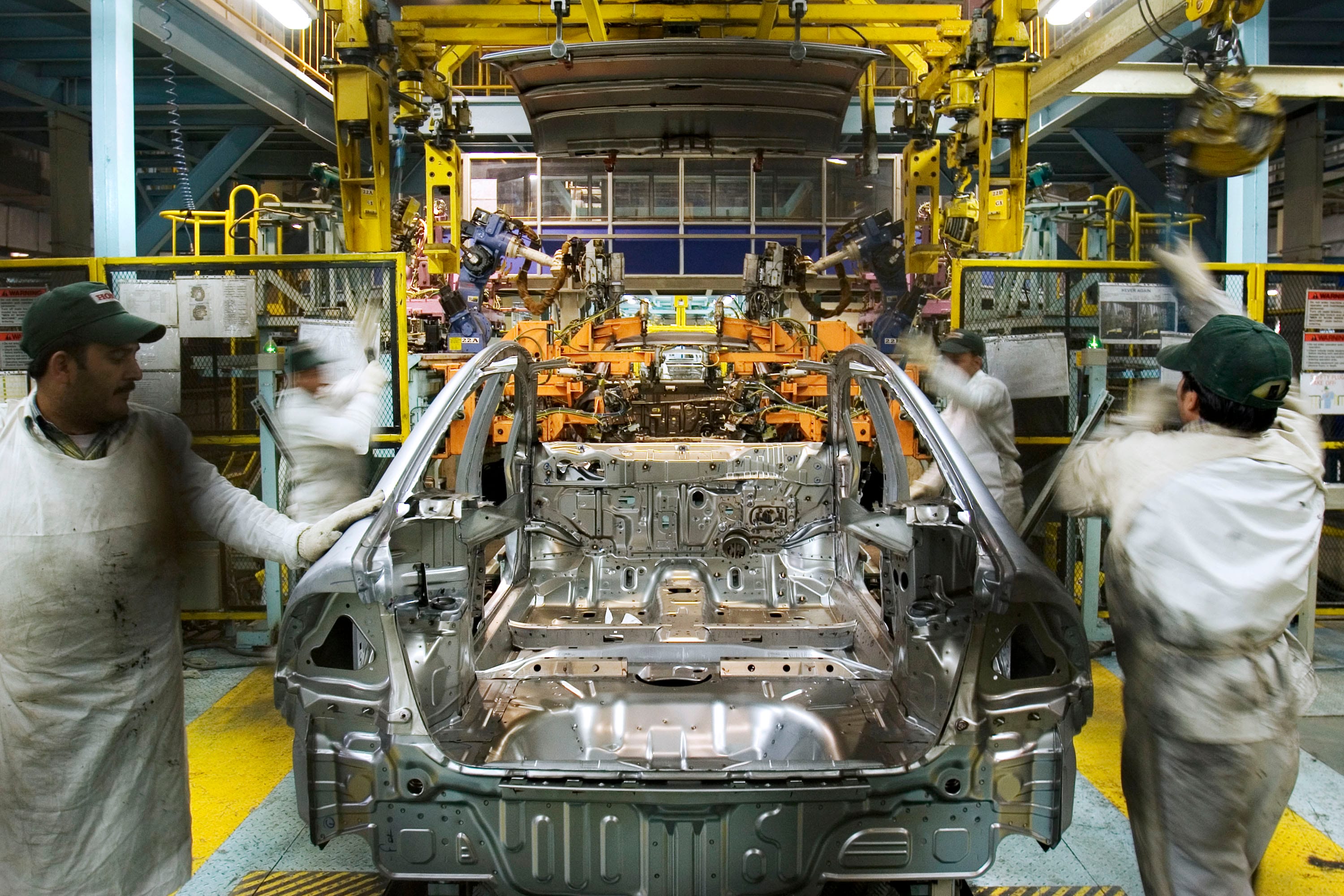
Battling a slowdown, the automotive industry has urged the government to reduce the goods and services tax to offset higher costs of rolling out stricter safety features and cleaner Bharat Stage VI emissions standards.
“Various regulatory changes, including mandatory safety features like ABS (anti-lock braking system), CBS (combined braking system) and airbags have led to an increase in the cost of vehicles,” Rajan Wadhera, president of the Society of Indian Automobile Manufacturers, told BloombergQuint. 28 percent GST is levied on vehicles, while auto companies are hardly making 7-8 percent, he said. “The reduction in tax will help the auto industry offset some impact of the safety and regulatory changes.”
Automobiles sales have slowed down since the festive season last year as increased upfront insurance costs and higher fuel prices kept buyers away. That caused the inventory to pile up at dealerships. Discounts failed to lift demand, forcing automakers to cut production. The new emission norms threaten to amplify the industry's problems.
The government had announced in 2016 that India would skip BS V norms and adopt BS VI norms by April 2020 to move to cleaner fuels, helping curb the world's most toxic air. Maruti Suzuki India Ltd. and Tata Motors Ltd. have already said that they would stop making diesel cars by 2020 as the increased costs would have made the vehicles unviable for them and consumers.
YS Guleria, senior vice president of sales & marketing at Honda Motorcycle & Scooter India Pvt. Ltd., estimated that the new safety and emission norms would increase the costs of motorcycles and scooters by on an average 15-20 percent. “The impact of the slowdown in the auto sector and declining capacity utilisation is visible on several organised and unorganised players,” Guleria told BloombergQuint. Contractual workers in the supply chain have been laid off, he said, adding the government should review the GST slabs to restore growth as demanded by some SIAM members.
Will A GST Cut Help?
The government, according to an analysis by Nomura, will have to forego Rs 30,000 crore in tax revenue if GST on auto parts is reduced from 28 percent to 18 percent. The analysis assumes a volume recovery of 5-10 percent across the sector. “A GST rate cut could lead to 10 percent increase in volume estimates and 15 percent increase in operating profits to current estimates due to lower discounting pressures on segments where it's implemented.”
And lower tax rates have helped in the past, the brokerage said in a note. A 6 percent tax cut in December 2009 led to 25 percent volume growth in automobile companies between FY10 and FY12, according to Nomura. A duty cut of 4 percent in February-December 2014, its said, aided volume growth.

-
High US Salaries, No Green Card Certainty: The Financial Calculation Facing Indian H-1B Families

The suspension of PERM processing at eight technology employers does not cancel existing H-1B visas. What it does is force a question many Indian families have been avoiding: is the US salary worth tying your career and family plans to one employer?
-
Swiggy vs Eternal: Food Delivery's Two Rivals Are No Longer In The Same Race
Eternal is building a private AI assistant, dark.ai. Swiggy is still working out how to make Instamart pay, with an operating loss of Rs 895 crore in the July-September quarter while Blinkit stayed profitable.
-
Where You Live Shapes How You Get To Work | The Reason Why
Two-wheelers are the most popular way to get to work in India, accounting for nearly 43% of workplace commutes.
-
Unhedged Position: Can India See An Indonesia-Style Time Correction?
The Nifty is trading below levels it first clocked in 2024. Is there, then, as I have suggested in the headline, potential that the current time correction drags on painfully for the next three-five, even ten years?
-
Navigating Friction And Energy Realities: An Analysis Of Marco Rubio's October Visit To India
Occurring at a critical juncture marked by stalled trade negotiations and escalating geopolitical pressures over global energy supplies, the visit offers a profound window into modern US-India relations.
-
India Exports Capital. Why Not Export Trusteeship?
The big question, then, is whether India can build an institution that global borrowers, investors, banks, and lawyers can trust, even without an Indian connection.
-
France's Economy & Politics Are In Crisis | The Reason Why
Let's look at how the French economy and politics evolved under Nicolas Sarkozy, Franois Hollande and Emmanuel Macron.
-
You May Inherit The Business. You Must Earn Its Credibility.
Succession tests the founder's ability to share authority as much as it tests the next generation's readiness to assume it.
-
Signing Deals Is One Thing; Making Them Work Is Another | The Week In Whys
Sometimes, things don't turn out as planned. Indian companies have lost some bids to rivals, some projects won't produce until 2030.
-
FOMC Wall, PERM Suspension, Hospital Stocks | Talking Points This Week
A PERM suspension would directly affect green-card sponsorship rather than H-1B visas, so the near-term earnings impact could remain relatively limited. The key question is whether this marks a new phase in US scrutiny of Indian IT.









