AstraZeneca Rejects Pfizer's Raised Bid of $106 Billion
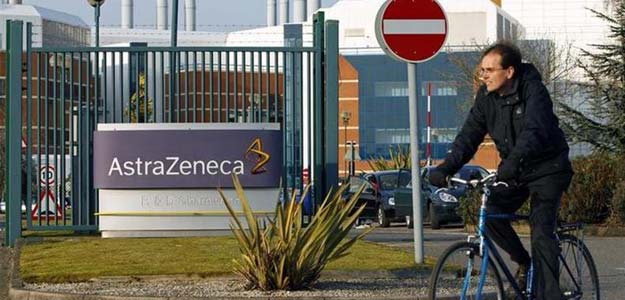
US drugmaker Pfizer Inc raised its offer for AstraZeneca Plc to 63 billion pounds ($106 billion) on Friday, but the British company promptly rejected the proposal, which would create the world's biggest pharmaceuticals company.
Pfizer's pursuit of AstraZeneca, which would boost the American company's pipeline of cancer drugs, cut its tax bill and create significant cost savings, comes amid a wave of deal-making in the healthcare sector.
AstraZeneca's board said it had "no hesitation" in rejecting the proposals, which it believed "substantially undervalue" the company and were not an adequate basis on which to engage with its suitor.
The US group would much prefer an agreed deal with its rival, since hostile takeovers typically take longer, require a higher final price and carry more risks because the bidder cannot access the target's books to assess its business.
Friday's 50 pounds ($84.47) a share indicative offer follows AstraZeneca's decision to rebuff an earlier proposal that valued it at 58.8 billion pounds, or 46.61 pounds per share.
"Given where the shares have come from, this doesn't look unreasonable," said one fund manager whose institution is among the 10 biggest investors in AstraZeneca.
AstraZeneca shares were trading at around 30 pounds a year ago, but confidence in the company's cancer drug pipeline has built up strongly since then.
"We expect Pfizer ultimately to have to sweeten its offer based on discussions we have had with investors, many citing a price within the 52-55 pounds range and some above this, and our analysis of the EPS accretion for Pfizer," said Mark Clark, an analyst at Deutsche Bank.
Investors had previously said they were looking for at least 50 pounds a share and also wanted more cash in the mix. The latest deal would offer 32 per cent cash and 68 percent shares, little different from the 30-70 split offered originally.
After the initial 46.61 pounds approach, made in January, was disclosed earlier this week, AstraZeneca said that offer fell "very significantly" short and the small cash component would leave investors exposed to the risks faced by Pfizer in executing an ambitious mega-merger.
Some analysts are convinced Pfizer will raise its offer again, not least because it wants to get the deal done before any possible change in US tax rules that might prevent it moving its tax base to Britain.
Pfizer's latest proposal would have seen shareholders receiving, for each AstraZeneca share, 1.845 shares in the combined company and 15.98 pounds in cash.
Political storm
Shares in the British group slipped back 0.4 per cent to 47.99 pounds on Friday morning. The stock had already gained ground in late trading on Thursday on speculation that Pfizer would come back with an improved offer, including a larger cash element, and there was some disappointment that the cash component had not increased more.
The takeover, which would be the largest acquisition of a British company by a foreign business, has stirred political controversy in Britain.
In an attempt to smooth relations with the government, Pfizer chief executive Ian Read wrote to Prime Minister David Cameron, promising to complete a substantial new research centre planned by AstraZeneca in Cambridge and retain a manufacturing plant in Macclesfield.
The Cambridge site, in particular, is viewed as important to the development of the so-called "golden triangle" of Britain's life sciences industry, spanning Oxford, Cambridge and London.
Mr Read also said that 20 per cent of the enlarged group's research and development workforce would be in Britain.
"We make these commitments for a minimum of five years, recognising our ability, consistent with our fiduciary duties, to adjust these obligations should circumstances significantly change," Mr Read added in a letter to Mr Cameron.
Science minister David Willetts said Pfizer had moved a long way in its commitments to British science and research, but the opposition Labour party was scathing about the potential deal.
"Pfizer has a very poor record on previous acquisitions. Do we really want a jewel in the crown of British industry, our second biggest pharmaceutical firm, to basically be seen as an instrument of tax planning?" said business spokesman Chuka Umunna.
Pfizer's reputation is under a cloud in Britain following a decision three years ago to shut most of its research work at a large R&D centre in Sandwich, southern England, where Viagra was invented, with the loss of nearly 2,000 jobs.
($1 = 0.5919 British pounds)
Copyright @ Thomson Reuters 2014

-
Opinion | India at 38: From Innovation Overperformer to Innovation Powerhouse

India now has 453 VC-backed deep science startups, 18 of them late-stage, after 117 percent growth since 2020. Laurus Labs, at USD 9.3 billion, is the most valuable deep science company in any middle-income economy outside China.
-
Navigating Energy Crossroads: S Jaishankar's Call For Diversified Supply Chains At G20 Ministerial Meeting
As geopolitical fault lines continue to test maritime trade routes and commodity flows, Jaishankar's message remains pertinent: true economic resilience requires open markets, protected transit lines, and a genuine commitment to multilateral cooperation rather than coercion.
-
Indians Are Travelling, But Not Every Journey Is A Holiday | The Week In Whys
Pilgrims, patients and working women are the real travellers, and the system hasn't quite caught up with them.
-
Getting To Work Costs Women More | The Reason Why
It is not just about women paying more than men. It is about women paying much more in cities than in villages.
-
AI Bias In Investing Cannot Be Eliminated, But It Can Be Governed
Framing is a particularly important example as identical financial information presented in terms of gains rather than losses can lead an LLM to reach a different assessment.
-
Joining The Dots | Dark Skies, Steady Diya: Why Hope Holds This Diwali
With war, a weak rupee and foreign outflows weighing on sentiment, policymakers at the NDTV World Summit and market veterans at NDTV Profit Ignite: Diwali Edition offered the same advice: stay invested and filter out the noise.
-
The Curious Case of Equitas Small Finance Bank And A CEO Who Quit For Stock
PN Vasudevan believes persistent investor concerns over a perceived conflict of interest had become a governance overhang on Equitas Small Finance Bank's stock, even as the lender improved profitability and asset quality.
-
Talking Points This Week: AI Cash Burn, A Tiger Comeback And An India That Still Finds Its Own Path
India is not immune to higher oil or tighter global liquidity, yet its earnings base is broader, its domestic policy levers are still available.
-
Foreign Investors Own Half Of HDFC Bank and ICICI Bank. An LTCG Cut Could Matter Most Here
Foreign portfolio investors have US$115 billion parked in HDFC Bank, ICICI Bank. If the government cuts long-term capital gains tax, Jefferies says returning foreign money could land here first.










