Astellas Pharma To Buy Iveric Bio For $5.9 Billion
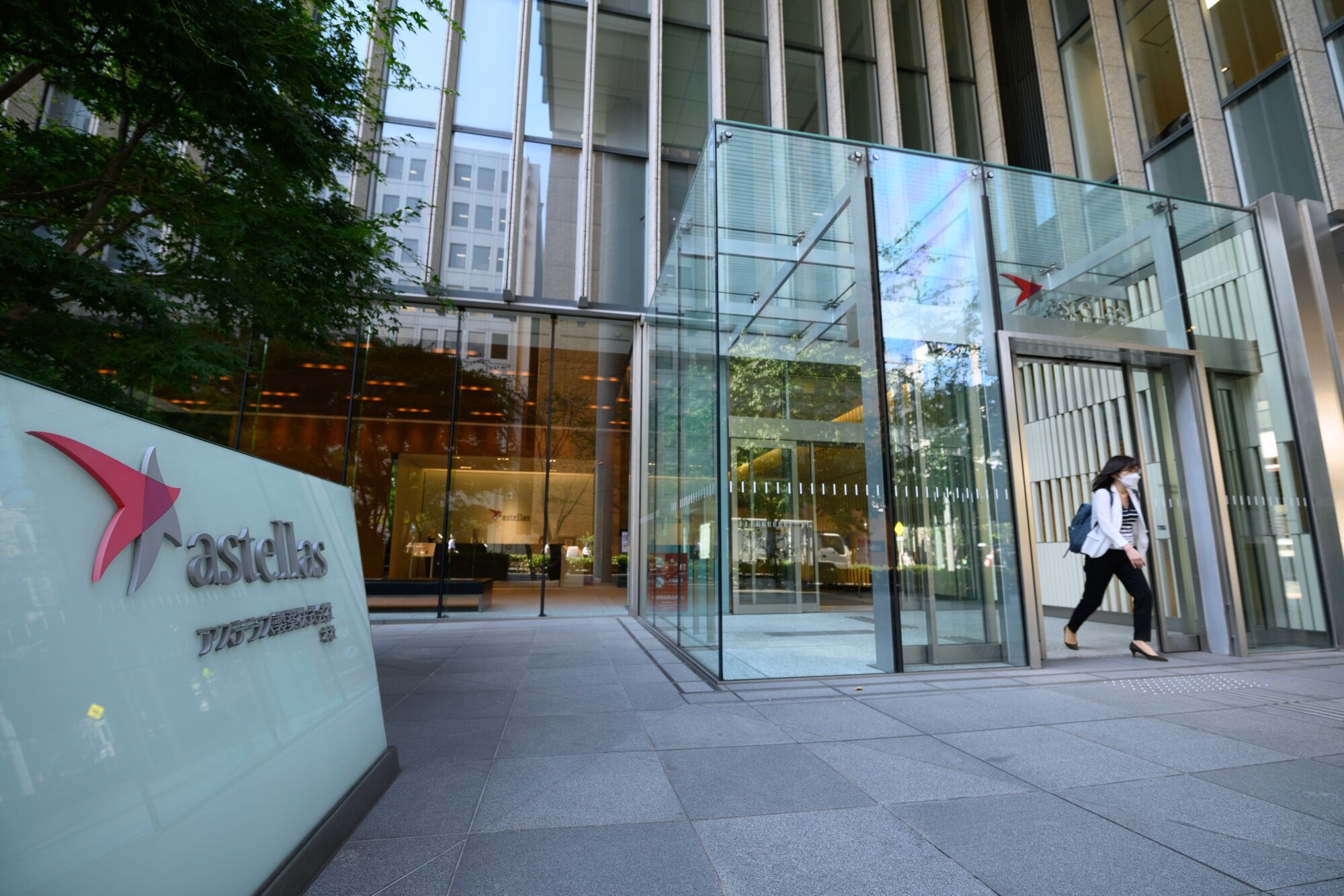
(Bloomberg) -- Japanese drugmaker Astellas Pharma Inc. has agreed to acquire Iveric Bio Inc., which develops drugs to treat age-related blindness, for about $5.9 billion.
The deal, which will be funded by cash and debt, is for 100% of Iveric Bio for $40 per share, a premium of 75% to the drugmaker's 30-day volume-weighted average price through end-March 31, the companies said in a statement on Monday. Iveric Bio shares closed at $32.89 on Friday.
The acquisition gives Astellas a key product to offer therapies for blindness and eye conditions, a growth area identified by the company as it seeks to make up for declining sales of other products. Iveric Bio is developing a drug to treat geographic atrophy, a condition that leads to the loss of retinal tissue in the eye.
“The drug has a potential to be the standard of care” for a leading cause of blindness, where 40% of those afflicted end up losing their sight, Naoki Okamura, Astellas's chief executive officer, said in a briefing. The acquisition will help Astellas enter a large market where patients have long waited for treatments and boost its presence there, he added.
Shares in Astellas rose 2.2% on Monday, leaving them up 4.3% this year.
Astellas said it will pay for the deal with bank loans and by issuing commercial paper of about ¥800 billion yen total, in addition to cash on hand. The debt will be repaid within five to seven years, the company said, adding that there will be no change to its dividend policy.
The drug will be a pillar for growth to buffer a decline in sales when Astellas's biggest-selling cancer drug Xtandi faces generic competition in the US from 2027, Okamura said.
“Astellas has a mixed record when it comes to M&A,” Stephen Barker and Naoya Miura, analysts at Jefferies Japan Ltd., wrote in a note following the announcement of the Iveric Bio deal. They cited the successful 2016 acquisition of Ganymede, and the 2019 purchase of gene therapy company Audentes, which generated “a lot of impairment.”
“This deal, however, is mainly about a soon-to-approved asset, and seems less likely to generate impairment losses,” the Jefferis analysts wrote.
(Updates with detail of deal.)
More stories like this are available on bloomberg.com
©2023 Bloomberg L.P.

-
Ten Things I Learnt This Samvat

Patience can be a trap. Cheap stocks can stay cheap. Leverage can wipe you out. What did Samvat 2082 teach us? Niraj Shah writes on 10 lessons from the year gone by.
-
Talking Points This Week: Tech Nerves, FII Buying, And A Faraway Banking Shock
The global markets are not shining this Diwali. The exception in the large markets is, India.
-
Midterm Rally Lasted A Day. The Hard Reality Of A Divided US May Last Two Years | Opinion
Between a contested AI boom, a debt ceiling that arrives in 2027 and a president with every incentive to act alone, the next two years may prove more volatile than the first day's rally suggests.
-
Blue Wave Will Derail the AI Trade but Won't Dismantle the AI Era | Unhedged Position
The Democrats' sweep of the US Congress will see politics collide with economic forces both over the long and short term.
-
It's Time To Take The GST Council's Bet On Trust Global
Payment records can prove India's services exports, and clear, proportionate rules can bring foreign digital sellers into the tax net.
-
Opinion | India at 38: From Innovation Overperformer to Innovation Powerhouse
India now has 453 VC-backed deep science startups, 18 of them late-stage, after 117 percent growth since 2020. Laurus Labs, at USD 9.3 billion, is the most valuable deep science company in any middle-income economy outside China.
-
Navigating Energy Crossroads: S Jaishankar's Call For Diversified Supply Chains At G20 Ministerial Meeting
As geopolitical fault lines continue to test maritime trade routes and commodity flows, Jaishankar's message remains pertinent: true economic resilience requires open markets, protected transit lines, and a genuine commitment to multilateral cooperation rather than coercion.
-
Indians Are Travelling, But Not Every Journey Is A Holiday | The Week In Whys
Pilgrims, patients and working women are the real travellers, and the system hasn't quite caught up with them.
-
Getting To Work Costs Women More | The Reason Why
It is not just about women paying more than men. It is about women paying much more in cities than in villages.









