Asia's Factory Activity Slumps On China's COVID-19 Curbs, US Recession Fears
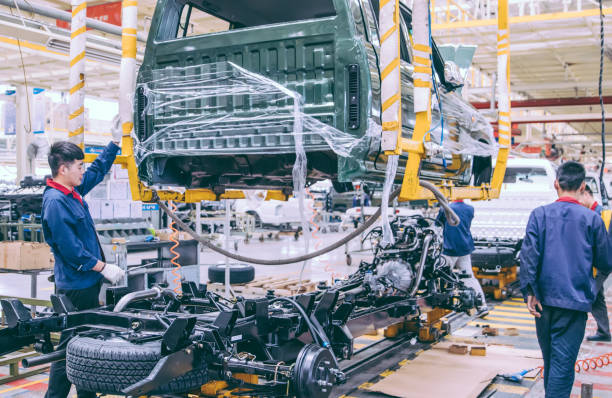
Asia's factory activity slumped in August as China's zero COVID curbs and cost pressures continued to hurt businesses, surveys showed on Thursday, darkening the outlook for the region's fragile economic recovery.
Manufacturing activity was weak in countries ranging from Japan, China, South Korea to Taiwan in a sign sluggish demand was adding to headaches for companies already suffering from lingering supply constraints.
The US Federal Reserve's resolve to continue aggressive interest rate hikes is also dampening the business mood by stoking fears of recession in one of Asia's biggest export markets, analysts say.
"China's pandemic curbs and geo-political tensions with the United States continue to disrupt supply chains. Rising inflation is also hurting domestic demand across Asia," said Toru Nishihama, chief economist at Dai-ichi Life Research Institute in Tokyo.
"Fears of US recession also aren't helping. U.S. and Chinese economies are engines of global growth so when both of them are wobbling, that spells trouble for businesses."
China's private Caixin/Markit manufacturing purchasing managers' index (PMI) contracted for the first time in three months in August, data showed on Thursday, as soft demand, power shortages and fresh COVID-19 flare-ups disrupting production.
The unexpectedly weak reading echoed China's official PMI released on Wednesday, which was also below the 50-point mark that separates growth from contraction on a monthly basis.
Export powerhouses were equally weak. Japan's factory activity grew at its slowest rate in nearly a year in August, while that of South Korea shrank by the sharpest pace in two years, PMIs for both countries showed.
Manufacturing activity also deteriorated sharply in Taiwan, with production and new orders both falling at the quickest pace since the initial wave of the pandemic in May 2020.
"The marked deterioration in demand also meant that firms cut back on buying activity and inventories, as more firms anticipate production levels to decline further over the coming year," Annabel Fiddes, economics associate director at S&P Global, said on Taiwan's output outlook.
The final au Jibun Bank Japan Manufacturing Purchasing Managers' Index (PMI) fell to 51.5 in August from 52.1 in the prior month, marking the weakest growth rate since September 2021.
South Korea's PMI fell to 47.6 in August from 49.8 in July, remaining below the 50-threshold for a second month and hitting the lowest since July 2020.
Taiwan's PMI hit 42.7 in August, down from 44.6 in July.
Weakening demand, however, is having the side-effect of easing price pressures. South Korean manufacturers saw input prices rise in August by the slowest rate in 19 months.
The average input costs faced by Taiwanese goods producers fell for the first time since May 2020, as prices of some raw material like steel and oil have started to fall.
Southeast Asia remained a bright spot in the region with manufacturing activity growth in Indonesia, the Philippines and Thailand accelerating, while Malaysia's growth slowed slightly, the PMIs showed.

-
Unhedged Position: Can India See An Indonesia-Style Time Correction?

The Nifty is trading below levels it first clocked in 2024. Is there, then, as I have suggested in the headline, potential that the current time correction drags on painfully for the next three-five, even ten years?
-
Navigating Friction And Energy Realities: An Analysis Of Marco Rubio's October Visit To India
Occurring at a critical juncture marked by stalled trade negotiations and escalating geopolitical pressures over global energy supplies, the visit offers a profound window into modern US-India relations.
-
India Exports Capital. Why Not Export Trusteeship?
The big question, then, is whether India can build an institution that global borrowers, investors, banks, and lawyers can trust, even without an Indian connection.
-
France's Economy & Politics Are In Crisis | The Reason Why
Let's look at how the French economy and politics evolved under Nicolas Sarkozy, Franois Hollande and Emmanuel Macron.
-
You May Inherit The Business. You Must Earn Its Credibility.
Succession tests the founder's ability to share authority as much as it tests the next generation's readiness to assume it.
-
Signing Deals Is One Thing; Making Them Work Is Another | The Week In Whys
Sometimes, things don't turn out as planned. Indian companies have lost some bids to rivals, some projects won't produce until 2030.
-
FOMC Wall, PERM Suspension, Hospital Stocks | Talking Points This Week
A PERM suspension would directly affect green-card sponsorship rather than H-1B visas, so the near-term earnings impact could remain relatively limited. The key question is whether this marks a new phase in US scrutiny of Indian IT.
-
Everything, Everywhere, All At Once: Dalal Street's Week To Forget | Joining The Dots
Visa curbs, a Starlink spat and cancer drug caps: what connects this week's shocks for Indian markets
-
India Is Going Abroad For Critical Minerals. But It May Take Years To Pay Off | The Reason Why
Although India's steps are in the right direction, they remain modest compared with India's growing dependence.
-
When Everyone Has AI, What Gives You An Edge?
India's young workforce is entering an uncertain world of work where powerful AI tools are becoming widely accessible. The advantage will belong to those who combine deep expertise with digital fluency, and the distinctly human capabilities that technology cannot manufacture.









