Asian Stocks Rise, Brent Crude At Seven-Year High On Recovery Hope
Most Asian equities rallied Tuesday and Brent crude hit a more than seven-year high as optimism over the global recovery returned to trading floors, though concerns about the end of long-running central bank support tempered sentiment.
After an almost uninterrupted rally from the dark early days of the pandemic, world markets are showing signs of levelling out as global finance chiefs shift from economy-boosting largesse to measures aimed at reining in inflation.
Still, there is an expectation that stocks will continue to enjoy further gains this year as countries reopen and people grow more confident to travel, especially as studies suggest the now more prevalent Omicron coronavirus variant appears to be milder and as vaccines are rolled out.
Analysts are also keeping an eye on the corporate earnings season that is getting under way, with hopes that firms can match their stellar performances last year.
With Wall Street closed, Asian markets recovered slightly from Monday's travails as investors took some of their lead from Europe, where London, Paris and Frankfurt put in strong performances.
Tokyo was among the best performers, rallying 0.9 per cent in the morning, while Hong Kong, Shanghai, Sydney, Singapore, Taipei and Manila were also up.
Seoul, Jakarta and Wellington dipped slightly.
Crude supply concerns
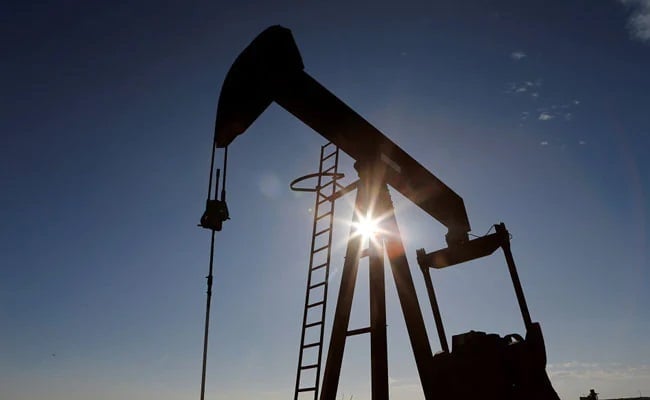
The broadly positive start to the day was matched by oil, with Brent climbing past $87 a barrel for the first time since October 2014, thanks to demand optimism as the world reopens and easing concerns about Omicron.
The easing of travel restrictions in several countries has seen jet fuel costs soar.
Hopes for more monetary easing measures by key consumer China to support its stuttering economy were also seen as a key support for the oil market.
Another factor in the latest bump was the claim of an attack by Yemen's Huthi rebels in Abu Dhabi that triggered a fuel tank blast killing three people Monday, with the group warning civilians and foreign firms in the United Arab Emirates to avoid "vital installations".
The news fuelled concerns about supplies from the crude-rich region.
"Sentiment in the market remains constructive, and the attack on the UAE has offered only a further boost to prices," Warren Patterson, at ING Groep, said.
"Supply disruptions coupled with firm demand has meant that the oil market is tighter than expected."
Meanwhile, OANDA's Craig Erlam said trouble among OPEC and other key producers to meet targets to lift output by 400,000 barrels a month was adding to upward pressure.
"The evidence suggests it's not that straightforward and the group is missing the targets by a large margin after a period of underinvestment and outages," he said in a note.
"That should continue to be supportive for oil and increase talk of triple-figure prices."
Goldman Sachs has forecast the rally in oil prices to continue, with the Wall Street titan saying it could break $100 next year for the first time since July 2014.
(This story has not been edited by NDTV staff and is auto-generated from a syndicated feed.)

-
High US Salaries, No Green Card Certainty: The Financial Calculation Facing Indian H-1B Families

The suspension of PERM processing at eight technology employers does not cancel existing H-1B visas. What it does is force a question many Indian families have been avoiding: is the US salary worth tying your career and family plans to one employer?
-
Unhedged Position: Can India See An Indonesia-Style Time Correction?
The Nifty is trading below levels it first clocked in 2024. Is there, then, as I have suggested in the headline, potential that the current time correction drags on painfully for the next three-five, even ten years?
-
Navigating Friction And Energy Realities: An Analysis Of Marco Rubio's October Visit To India
Occurring at a critical juncture marked by stalled trade negotiations and escalating geopolitical pressures over global energy supplies, the visit offers a profound window into modern US-India relations.
-
India Exports Capital. Why Not Export Trusteeship?
The big question, then, is whether India can build an institution that global borrowers, investors, banks, and lawyers can trust, even without an Indian connection.
-
France's Economy & Politics Are In Crisis | The Reason Why
Let's look at how the French economy and politics evolved under Nicolas Sarkozy, Franois Hollande and Emmanuel Macron.
-
You May Inherit The Business. You Must Earn Its Credibility.
Succession tests the founder's ability to share authority as much as it tests the next generation's readiness to assume it.
-
Signing Deals Is One Thing; Making Them Work Is Another | The Week In Whys
Sometimes, things don't turn out as planned. Indian companies have lost some bids to rivals, some projects won't produce until 2030.
-
FOMC Wall, PERM Suspension, Hospital Stocks | Talking Points This Week
A PERM suspension would directly affect green-card sponsorship rather than H-1B visas, so the near-term earnings impact could remain relatively limited. The key question is whether this marks a new phase in US scrutiny of Indian IT.
-
Everything, Everywhere, All At Once: Dalal Street's Week To Forget | Joining The Dots
Visa curbs, a Starlink spat and cancer drug caps: what connects this week's shocks for Indian markets
-
India Is Going Abroad For Critical Minerals. But It May Take Years To Pay Off | The Reason Why
Although India's steps are in the right direction, they remain modest compared with India's growing dependence.









