Asian Shares Mixed Ahead Of Fed Rates Decision; Oil Soars
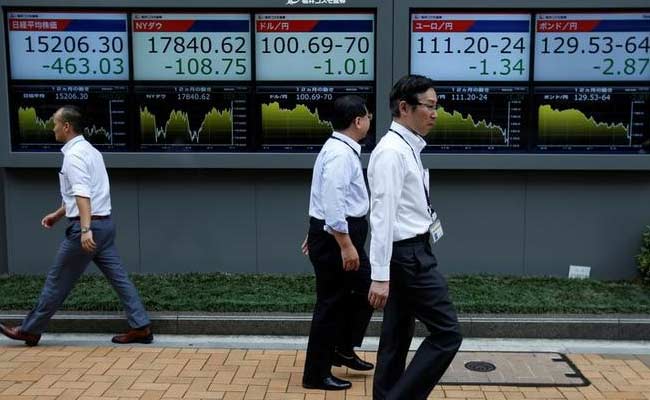
Beijing: Asian markets were mixed Monday ahead of a Federal Reserve meeting that is widely expected to raise US interest rates and oil prices soared after producers agreed to reduce output. South Korean stocks were little changed following the impeachment of the country's president.
The Shanghai Composite Index lost 2 per cent to 3,167.37 while Tokyo's Nikkei 225 gained 0.4 per cent to 19,073.52. Hong Kong's Hang Seng shed 1.1 per cent to 22,511.85 and Seoul's Kospi was off 0.1 per cent at 2,023.94. Sydney's S&P-ASX 200 was flat while benchmarks in New Zealand, Singapore and Manila declined.
Fed watch
Investors expect Fed governors, meeting Thursday, to raise rates for only the second time in a decade. The Fed has kept rates close to zero since the 2008 global crisis but its leaders have indicated the US economy has strengthened enough to start gradually returning to normal policy. The election of Donald Trump, who has promised tax cuts and higher spending, has raised questions about whether the US central bank will delay future moves to see how that plays out. Investors are expected to look closely at the Fed's comments on its economic outlook for clues to its next move on rates.
"A quarter-point rate hike looks almost certain," said Jim O'Sullivan of High Frequency Economics in a report. "The tone of the statement will probably be a more upbeat than last time, but we don't expect projections to change significantly."
Oil market
The club of major oil exporters persuaded 11 non-members to cut oil production, a move aimed at draining a worldwide oil glut and boosting low prices that have squeezed government finances in Russia and Saudi Arabia.
The Organization of Petroleum Exporting Countries said non-members agreed to cut 558,000 barrels per day for six months starting January 1. Those non-member cuts come on top of an OPEC decision November 30 to reduce member output by 1.2 million barrels a day.
Saudi oil minister Khalid Al-Falih said Saturday's deal would stabilize the market through next year and encourage industry investment. Mr Al-Falih said the deal "is meant to accelerate the natural process of rebalancing" the oil market.
The opposition-controlled legislature passed an impeachment motion Friday against President Park Geun-hye following accusations by prosecutors that she colluded with a longtime friend to extort money and favors from South Korea's biggest companies and gave that confidante influence over government decisions. Prime Minster Hwang Kyo-ahn is to lead a caretaker government while a court weighs Park's fate. Ms Park has apologised for putting trust into her friend, Choi Soon-sil, but has denied any legal wrongdoing.
US stocks rose for a sixth day Friday. Big gains went to companies that have been mostly left out of the post-election rally, including health care companies and makers of household goods. Coca-Cola and Pfizer both gained 2.5 per cent. Investors have mostly avoided consumer goods makers and health companies in recent weeks. Instead they have bought banks and machinery companies, which could benefit more from a faster-growing economy.
The Dow Jones industrial average climbed 142.04 points, or 0.7 per cent, to 19,756.85. The Standard & Poor's 500 index rose 13.34 points, or 0.6 per cent, to 2,259.53. The Nasdaq composite gained 27.14 points, or 0.5 per cent, to 5,444.50.
Benchmark US crude surged $2.44 to $53.94 per barrel in electronic trading on the New York Mercantile Exchange. The contract rose 66 cents on Friday to $51.50. Brent crude, used to price international oils, jumped $2.30 to $56.63 in London. The contract added 44 cents the previous session to $54.33.

-
Talking Points This Week: Tech Nerves, FII Buying, And A Faraway Banking Shock

The global markets are not shining this Diwali. The exception in the large markets is, India.
-
Midterm Rally Lasted A Day. The Hard Reality Of A Divided US May Last Two Years | Opinion
Between a contested AI boom, a debt ceiling that arrives in 2027 and a president with every incentive to act alone, the next two years may prove more volatile than the first day's rally suggests.
-
Blue Wave Will Derail the AI Trade but Won't Dismantle the AI Era | Unhedged Position
The Democrats' sweep of the US Congress will see politics collide with economic forces both over the long and short term.
-
It's Time To Take The GST Council's Bet On Trust Global
Payment records can prove India's services exports, and clear, proportionate rules can bring foreign digital sellers into the tax net.
-
Opinion | India at 38: From Innovation Overperformer to Innovation Powerhouse
India now has 453 VC-backed deep science startups, 18 of them late-stage, after 117 percent growth since 2020. Laurus Labs, at USD 9.3 billion, is the most valuable deep science company in any middle-income economy outside China.
-
Navigating Energy Crossroads: S Jaishankar's Call For Diversified Supply Chains At G20 Ministerial Meeting
As geopolitical fault lines continue to test maritime trade routes and commodity flows, Jaishankar's message remains pertinent: true economic resilience requires open markets, protected transit lines, and a genuine commitment to multilateral cooperation rather than coercion.
-
Indians Are Travelling, But Not Every Journey Is A Holiday | The Week In Whys
Pilgrims, patients and working women are the real travellers, and the system hasn't quite caught up with them.
-
Getting To Work Costs Women More | The Reason Why
It is not just about women paying more than men. It is about women paying much more in cities than in villages.
-
AI Bias In Investing Cannot Be Eliminated, But It Can Be Governed
Framing is a particularly important example as identical financial information presented in terms of gains rather than losses can lead an LLM to reach a different assessment.









