Asia Steadies After Rally, Dollar Buoyant Before Jackson Hole
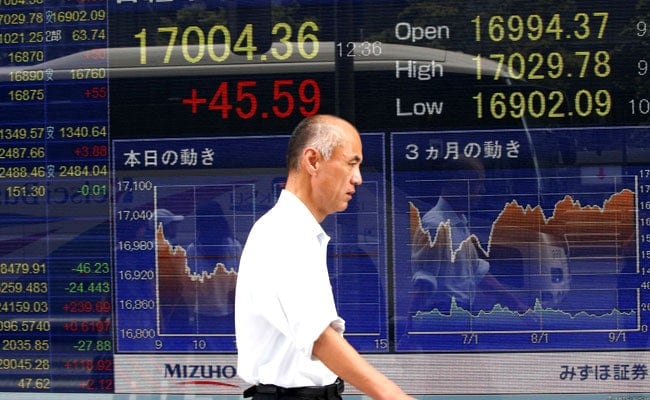
Tokyo: Asian stocks steadied on Wednesday, taking a breather after the previous day's surge and unable to keep up with a global rally spurred by gains for tech shares on Wall Street and miners in Europe.
The dollar was buoyant against the euro and yen ahead of a meeting of central bankers later in the week.
MSCI's broadest index of Asia-Pacific shares outside Japan, which initially inched up to a two-week high, pulled back to stand little changed following a 0.7 percent rally on Tuesday.
Australian stocks were down 0.4 percent and South Korea's KOSPI gave back earlier modest gains to stand flat.
Japan's Nikkei bucked the trend and rose 0.5 percent, lifted as the dollar strengthened against the yen.
The Nikkei took its cues from Wall Street, which saw the Dow rise 0.9 percent, the S&P 500 climb 1 percent and the Nasdaq gain 1.4 percent on Tuesday as technology shares rallied.
European stocks had also risen overnight, supported by upbeat results from miners and a weaker euro.
Financial markets have been buffeted in recent weeks by heightened tensions on the Korean peninsula, turmoil in the White House and growing doubts about President Donald Trump's ability to fulfil his economic agenda.
Stocks, however, continue to attract buyers in an environment where bond yields remain relatively low and companies have largely notched up strong earnings.
"The return of bargain hunters after a shallow correction in U.S. markets again demonstrates that investors are reluctant to reduce exposure to equity markets given low bond yields, solid profit growth and a lower US$," said Ric Spooner, chief market analyst at CMC Markets in Sydney.
"In a situation where earnings yields on stocks remain attractive in relation to bond yields, investors are reluctant to respond too negatively to 'risk events' unless they represent a clear and present short term danger."
The dollar was 0.1 percent higher at 109.630 yen, putting some distance between a four-month low of 108.605 plumbed last week, when turmoil in the White House and geopolitical tensions took a toll on the greenback.
"The dollar had been caught in a downtrend amid ebbing expectations towards U.S. inflation. It requires a surge in U.S. shares to break this pattern and that is what happened as Wall Street rallied," said Junichi Ishikawa, senior FX strategist at IG Securities in Tokyo.
The dollar also drew support as U.S. Treasury yields rose and pulled away from two-month lows as some of the risk aversion that gripped the broader markets last week began to ebb.
The dollar index against a basket of six major currencies was little changed at 93.522 after rising 0.5 percent the previous day.
The euro was steady at $1.1762 after slipping about 0.5 percent overnight following weaker-than-expected German investor confidence.
A gathering of global central bankers on Friday in Jackson Hole, Wyoming has also prompted investors to rebalance their currency positions ahead of the event, leading them to reduce some of their short dollar bets.
Speeches from Fed Chair Janet Yellen and European Central Bank President Mario Draghi will headline the event, although neither are is expected to announce any significant policy messages.
In commodities, U.S. crude futures slipped 0.25 percent to $47.72 a barrel after data from the American Petroleum Institute showed a crude stockpile decline largely in line with expectations and a surprise build in gasoline inventories.
Copper retreated from a three-year high, and other base metals also fell or trimmed gains, as speculators and funds locked in some profits after a steep rally.
Copper on the London Metal Exchange was down 0.6 percent at $6,539.00 per tonne after striking $6,649 on Tuesday, the highest since November 2014.
Spot gold was a shade lower at $1,284.29 an ounce, extending overnight losses as the precious metal felt pressure from a stronger dollar. Spot gold had reached a nine-month high above $1,300.00 an ounce on Friday.
(This story has not been edited by NDTV staff and is auto-generated from a syndicated feed.)

-
Talking Points This Week: Tech Nerves, FII Buying, And A Faraway Banking Shock

The global markets are not shining this Diwali. The exception in the large markets is, India.
-
Midterm Rally Lasted A Day. The Hard Reality Of A Divided US May Last Two Years | Opinion
Between a contested AI boom, a debt ceiling that arrives in 2027 and a president with every incentive to act alone, the next two years may prove more volatile than the first day's rally suggests.
-
Blue Wave Will Derail the AI Trade but Won't Dismantle the AI Era | Unhedged Position
The Democrats' sweep of the US Congress will see politics collide with economic forces both over the long and short term.
-
It's Time To Take The GST Council's Bet On Trust Global
Payment records can prove India's services exports, and clear, proportionate rules can bring foreign digital sellers into the tax net.
-
Opinion | India at 38: From Innovation Overperformer to Innovation Powerhouse
India now has 453 VC-backed deep science startups, 18 of them late-stage, after 117 percent growth since 2020. Laurus Labs, at USD 9.3 billion, is the most valuable deep science company in any middle-income economy outside China.
-
Navigating Energy Crossroads: S Jaishankar's Call For Diversified Supply Chains At G20 Ministerial Meeting
As geopolitical fault lines continue to test maritime trade routes and commodity flows, Jaishankar's message remains pertinent: true economic resilience requires open markets, protected transit lines, and a genuine commitment to multilateral cooperation rather than coercion.
-
Indians Are Travelling, But Not Every Journey Is A Holiday | The Week In Whys
Pilgrims, patients and working women are the real travellers, and the system hasn't quite caught up with them.
-
Getting To Work Costs Women More | The Reason Why
It is not just about women paying more than men. It is about women paying much more in cities than in villages.
-
AI Bias In Investing Cannot Be Eliminated, But It Can Be Governed
Framing is a particularly important example as identical financial information presented in terms of gains rather than losses can lead an LLM to reach a different assessment.









