China Manufacturing Slump Weighs On Asia Factory Activity
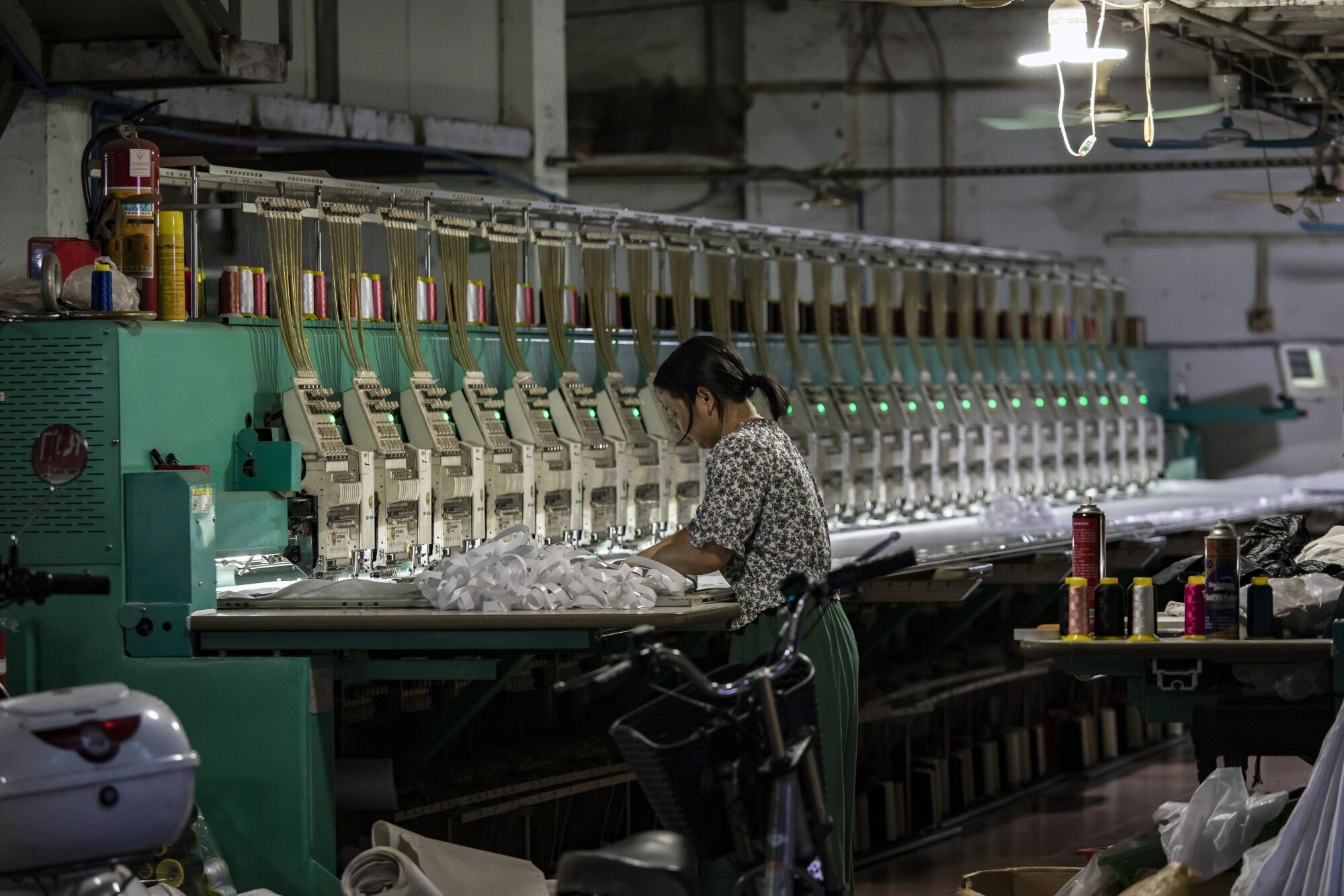
(Bloomberg) -- China's factory activity shrank for the fifth straight month in February, with weak demand in the world's No. 2 economy weighing on manufacturers across Asia.
The official manufacturing purchasing managers index for China came in at 49.1 last month, the National Bureau of Statistics said Friday. However, the Caixin PMI — a private survey that focuses on smaller firms — improved to 50.9.
Surveys of factory managers from elsewhere showed manufacturers in North Asia cut output and new orders last month amid subdued customer spending both from domestic and international markets.

S&P Global data showed Taiwan's PMI edging down to 48.6 in February from 48.8 the month prior, keeping it below the 50 waterline that separates expansion and contraction. It's the 21st straight month that manufacturing conditions have stayed in contraction territory in the trade-reliant economy.
Japan's PMI also fell to 47.2 from 48, dragged down by its sharpest decline in exports in 11 months, according to data published by au Jibun Bank. Mainland China was cited as a key source of reduced international sales, along with weak orders in US and Europe. As a result, factories also cut employment levels and purchasing activity.
“Supply pressures were also evident, as delivery times reportedly lengthened to the greatest extent since February 2023,” said S&P Global Market Intelligence's Usamah Bhatti about the Japan data. “Anecdotal evidence suggest that logistical disruption caused by the situation in the Red Sea and the residual impacts of the Noto Peninsula earthquake weighed on suppliers.”
In Southeast Asia, Thailand was the laggard with its PMI worsening to 45.3 last month from 46.7 in January. New orders also declined at their sharpest pace since the pandemic. Malaysia and Myanmar remained in contraction territory. Only Indonesia, the Philippines and Vietnam posted above-50 readings in February.
The region saw inflationary pressures flare up anew. Factories were squeezed by rising prices of raw materials but were unable to pass on costs in full against the backdrop of tepid demand.
“Manufacturers will need to see stronger and sustained growth of new business before they can be confident enough to invest in inputs and start to raise their selling prices more in line with their own cost burdens,” said S&P Global's Andrew Harker of the Vietnam release.
The latest data comes amid fresh warnings from the World Trade Organization that global commerce is performing weaker than expected this year after unexpected economic headwinds and the reemergence of protectionism. Demand remains modest among major economies, while shipping is disrupted as conflict and drought hit the key waterways of the Red Sea and the Panama Canal.
Merchandise trade likely fell short of the WTO's forecast of 0.8% growth in 2023, and this year's estimate of 3.3% gain this year may prove to be too optimistic as well.
(Updates with China data, regional context.)
More stories like this are available on bloomberg.com
©2024 Bloomberg L.P.

-
Love, Sex Aur Dhokha: The Audacious Plot To Spy On Jensen Huang

A Taipei dinner, a Singapore chip buyer and a suspected Chinese asset: inside the alleged spy operation that got close to NVIDIA's Jensen Huang.
-
Ten Things I Learnt This Samvat
Patience can be a trap. Cheap stocks can stay cheap. Leverage can wipe you out. What did Samvat 2082 teach us? Niraj Shah writes on 10 lessons from the year gone by.
-
Talking Points This Week: Tech Nerves, FII Buying, And A Faraway Banking Shock
The global markets are not shining this Diwali. The exception in the large markets is, India.
-
Midterm Rally Lasted A Day. The Hard Reality Of A Divided US May Last Two Years | Opinion
Between a contested AI boom, a debt ceiling that arrives in 2027 and a president with every incentive to act alone, the next two years may prove more volatile than the first day's rally suggests.
-
Blue Wave Will Derail the AI Trade but Won't Dismantle the AI Era | Unhedged Position
The Democrats' sweep of the US Congress will see politics collide with economic forces both over the long and short term.
-
It's Time To Take The GST Council's Bet On Trust Global
Payment records can prove India's services exports, and clear, proportionate rules can bring foreign digital sellers into the tax net.
-
Opinion | India at 38: From Innovation Overperformer to Innovation Powerhouse
India now has 453 VC-backed deep science startups, 18 of them late-stage, after 117 percent growth since 2020. Laurus Labs, at USD 9.3 billion, is the most valuable deep science company in any middle-income economy outside China.
-
Navigating Energy Crossroads: S Jaishankar's Call For Diversified Supply Chains At G20 Ministerial Meeting
As geopolitical fault lines continue to test maritime trade routes and commodity flows, Jaishankar's message remains pertinent: true economic resilience requires open markets, protected transit lines, and a genuine commitment to multilateral cooperation rather than coercion.
-
Indians Are Travelling, But Not Every Journey Is A Holiday | The Week In Whys
Pilgrims, patients and working women are the real travellers, and the system hasn't quite caught up with them.









