Why Biden Skipping the Asean Summit Is a Mistake
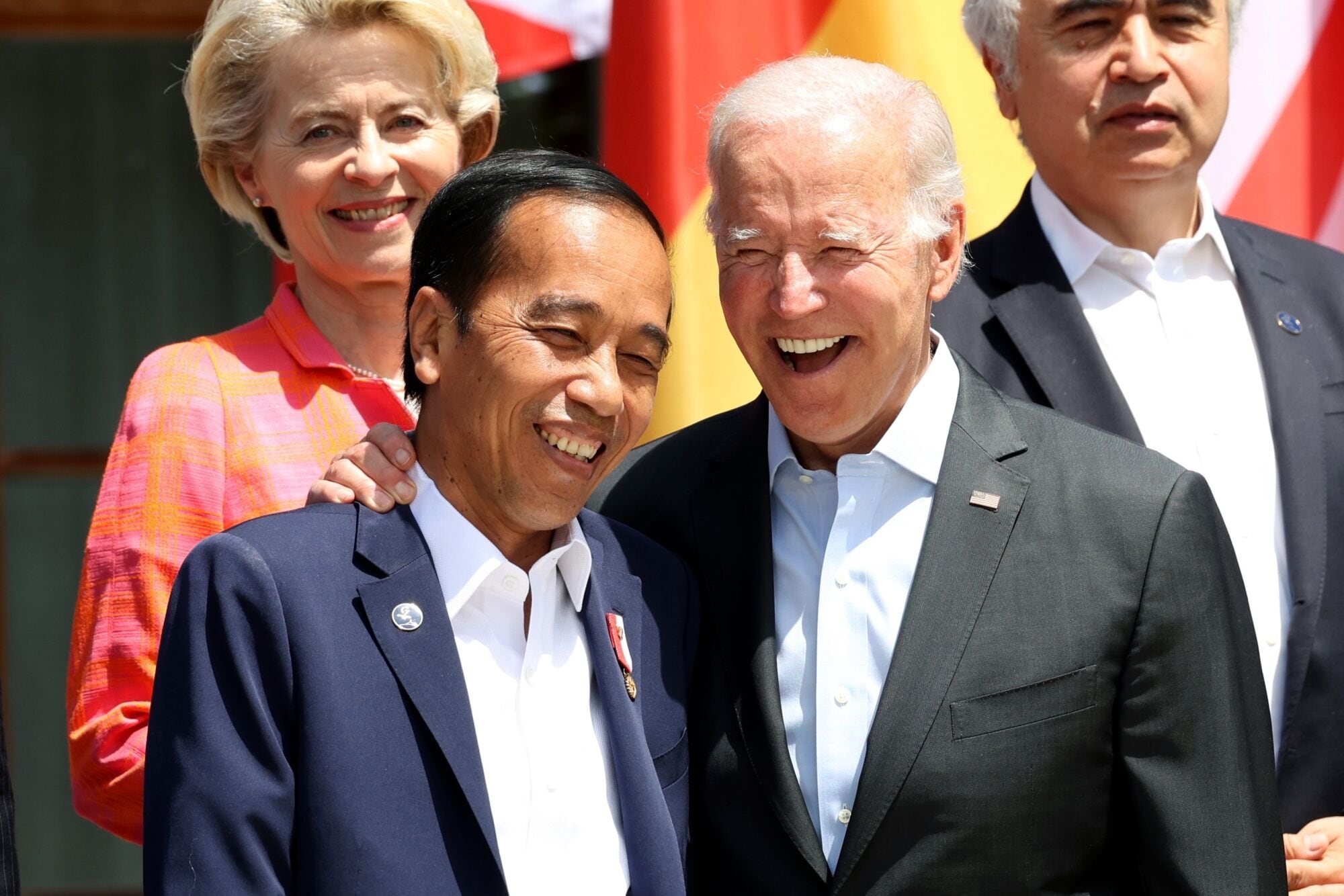
(Bloomberg Opinion) -- Delhi, Hanoi, but not Jakarta. US President Biden is skipping the Asean meeting this week, and sending Vice President Kamala Harris instead. The optics aren't great, especially as Biden is going to be in the region: He's travelling to Delhi for the Group of 20 summit and Hanoi right after.
No matter what anyone says, getting the consolation prize is never fun. And that's what it must feel like for Indonesia, the host of the Association of Southeast Asian Nations gathering. Not only is Biden not attending, he's snubbing a major regional power — and given that the US has consistently said it wants to build a stronger relationship with Asia, it feels a little like an own goal.
Ultimately, though, actions speak louder than words. And when someone shows you who they are in a relationship, believe them. The harsh reality is that some Asian countries are simply more important to the US than others.
“It is a cold, calculated decision to reinforce the ongoing stress on consolidating individual allies and partners like Japan, South Korea, the Philippines and now Vietnam,” says Michael Vatikiotis, author of several books on Asia, including . “It's all about spooking China — and picking each of these countries off one by one is easier, rather than in a multilateral forum where Beijing will be present.”
The deliberate cherry picking of allies and partners is the brainchild, insiders tell me, of Biden's key Asia policy czar, Kurt Campbell. It is likely to continue, as Campbell has pointed out in a discussion earlier this year at the Washington-based Center for Strategic and International Studies.
The strategy is to create a network around China — a carefully strung together geographic necklace of countries that all see Beijing as a mutual threat.
The recently convened Camp David meeting between the US, South Korea and Japan is an example of that. So are Aukus, the multibillion-dollar partnership the US unveiled with Australia and the UK, and the Quad grouping made up of India, Australia, Japan and the US, all ostensibly designed to combat China's growing assertiveness in the South China Sea and around Taiwan.
It's not so simple. Not everyone sees the world with the same black-and-white, us-and-them polarized prism that the US has begun to point at Beijing. For a lot of countries, China has been a lifeline and will continue to be economically, despite the current slowdown. And that includes some of those the US is trying to court.
Indonesia should, in theory, be a natural partner for Washington. It is a large, vibrant democracy with historically strong military ties to the US. But in recent years, under President Joko Widodo, the archipelago has been receptive to the economic overtures from Beijing.
Allowing China's influence to continue would be a mistake for the US. The ambivalence from Jakarta is understandable given it is the largest economy in Southeast Asia, with relatively strong prospects. And it no longer feels that it needs to kowtow to either Beijing or Washington to ensure its relevance.
It's clear that multilateralism has become far less important to both the US and China. The US sees its strategy of going after countries one by one in the region as successful and efficient. And if the attempt is to counter its chief competitor's role in Asia, then signing a major upgrade in the partnership with Vietnam is far more useful than spending a day in Jakarta.
Still, Biden's snub is shortsighted. There is an election in the US year next year, so he is unlikely to turn up at the Asean meeting that will be held in Laos either. The Trump era of pulling out of trade deals and America First has not been forgotten, and while Biden has succeeded in convincing some Asian partners that the US is back and is engaging in the region, others don't feel the same way.
Relationships — good ones at least — take time, effort and work. Building trust means being sincere and genuine in those attempts. A Jakarta stopover would have been an easy win for Biden at a time of an economically weaker China. Skipping it makes the US look like it just wants a marriage of convenience with Asia, rather than a partnership of any real substance.
More From Bloomberg Opinion:
- Is China a Developing Nation? I Don't Think So: Mihir Sharma
- Why Talking Tough on China Is a Risky Move: Karishma Vaswani
- How Japan Can Make Itself America's Best Ally: Hal Brands
This column does not necessarily reflect the opinion of the editorial board or Bloomberg LP and its owners.
Karishma Vaswani is a Bloomberg Opinion columnist covering Asia politics with a special focus on China. Previously, she was the BBC's lead Asia presenter and worked for the BBC across Asia and South Asia for two decades.
More stories like this are available on bloomberg.com/opinion
©2023 Bloomberg L.P.

-
Navigating Energy Crossroads: S Jaishankar's Call For Diversified Supply Chains At G20 Ministerial Meeting

As geopolitical fault lines continue to test maritime trade routes and commodity flows, Jaishankar's message remains pertinent: true economic resilience requires open markets, protected transit lines, and a genuine commitment to multilateral cooperation rather than coercion.
-
Indians Are Travelling, But Not Every Journey Is A Holiday | The Week In Whys
Pilgrims, patients and working women are the real travellers, and the system hasn't quite caught up with them.
-
Getting To Work Costs Women More | The Reason Why
It is not just about women paying more than men. It is about women paying much more in cities than in villages.
-
AI Bias In Investing Cannot Be Eliminated, But It Can Be Governed
Framing is a particularly important example as identical financial information presented in terms of gains rather than losses can lead an LLM to reach a different assessment.
-
Joining The Dots | Dark Skies, Steady Diya: Why Hope Holds This Diwali
With war, a weak rupee and foreign outflows weighing on sentiment, policymakers at the NDTV World Summit and market veterans at NDTV Profit Ignite: Diwali Edition offered the same advice: stay invested and filter out the noise.
-
The Curious Case of Equitas Small Finance Bank And A CEO Who Quit For Stock
PN Vasudevan believes persistent investor concerns over a perceived conflict of interest had become a governance overhang on Equitas Small Finance Bank's stock, even as the lender improved profitability and asset quality.
-
Talking Points This Week: AI Cash Burn, A Tiger Comeback And An India That Still Finds Its Own Path
India is not immune to higher oil or tighter global liquidity, yet its earnings base is broader, its domestic policy levers are still available.
-
Foreign Investors Own Half Of HDFC Bank and ICICI Bank. An LTCG Cut Could Matter Most Here
Foreign portfolio investors have US$115 billion parked in HDFC Bank, ICICI Bank. If the government cuts long-term capital gains tax, Jefferies says returning foreign money could land here first.
-
'Never Seen This Level Of Negativity': Sandeep Tandon Says The Next Rally May Be Closer Than You Think
Veteran investor Sandeep Tandon says foreign selling is easing, large-caps are due a comeback and mid-caps are crowded, while he turns positive on gold, power and pharma this Diwali.
-
Indians Stay With Family, Not In Hotels | The Reason Why
India still lacks enough clean, reliable and affordable hotels for budget-conscious travellers.










