As Oil At $70 Challenges Global Economic Recovery, What India May Face
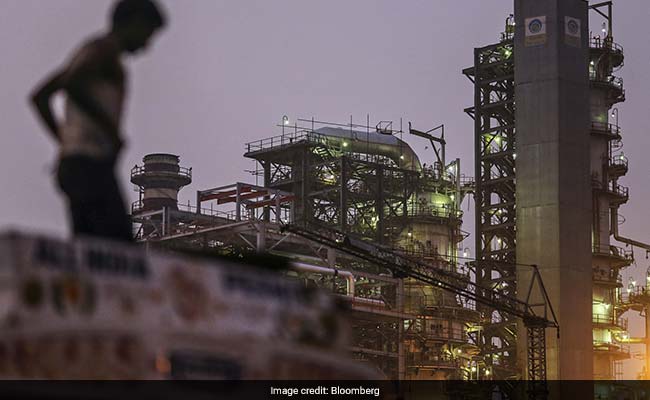
The spike in oil prices has focused attention on how the steady rise in energy costs is threatening to create a drag on the global economic recovery and stoking fears of inflation. After surging more than 30 per cent this year on coordinated supply constraints by major exporters and demand returning from the depths of Covid-19 crisis, a missile attack Sunday on a key Saudi Arabian export facility sent Brent crude, the international benchmark, above $70 a barrel for the first time since January 2020.
While prices have since pulled back, the impact on inflation and the overall global recovery depends on how sustained the underlying rally proves to be.
Here's a look at some of the factors at play:
What does it mean for global growth?
For economists, the cause of higher prices is what matters, rather than the price itself. Rising energy costs on the back of strong demand normally indicate robust and resilient growth, while a surge from crimped supply could weigh on a recovery. Morgan Stanley economists estimate that oil would need to average $85 a barrel for the global oil burden to rise above longer-term averages.
"For context, the global oil burden last rose above its long-term average in 2005, but with the backdrop of strong global growth, economies were able to withstand the impact of higher oil prices until 2007, when global growth momentum was already weakening and yet oil prices shot up rapidly," the bank's economists wrote last week.
What about inflation?
The run-up in oil prices comes against the backdrop of a global inflation debate that has heated up over the past month. With spikes in bond yields, investors continue to test policy makers, including Federal Reserve Chairman Jerome Powell, on their insistence that inflation isn't a threat this year, even with trillions of dollars of stimulus being pumped into the global economy.
Oil and food costs are both bubbling, though as the two most volatile categories of consumer prices they're easier for policy makers to look past as transitory. And while costs for homes and semiconductors also are on the rise, the prevailing trend worldwide is still one of damped price growth.
"As good economists, we stand somewhere in the middle: The era of meager inflation seems to be over, but that doesn't necessarily mean hyperinflation is around the corner," ING global head of macro Carsten Brzeski said in a March 5 report.
What does it mean for central banks?
While energy is a prominent component of consumer-price gauges, policy makers often focus on core indexes that remove volatile components such as oil. If the run-up in prices proves to be substantial and sustained, those costs will filter through to transportation and utilities. That scenario would pressure central banks to rein in their support for the economy, though for now officials continue to stress that high unemployment will offset any inflation pressure.
What Bloomberg Economics Says...
Emerging markets "with below-target inflation, stable price expectations, commodity-linked currencies or high real rates could look through the oil-driven price increases without tightening. Others will probably either raise rates (Brazil and Nigeria) or face a higher likelihood of delayed rate cuts (India, Mexico and Turkey) to stem the oil-fueled price gains."
--Ziad Daoud, chief Emerging Markets economist
Who wins from higher prices?
Exporting nations -- including Saudi Arabia, Russia, Norway and Nigeria -- will enjoy a boost to corporate and government revenues that will help repair budgets and improve current-account positions, allowing them to increase spending to drive the recovery. Emerging economies dominate the list of oil producers, which is why they're affected more than developed ones.
Who loses?
Consuming nations will bear the cost of pricier energy, potentially fanning inflation and hurting their recoveries. Those emerging economies that rely on imported energy could see their current-account positions and fiscal deficits come under pressure. That could trigger capital outflows and weaker currencies, laying the groundwork for inflation and potentially forcing governments and central banks to consider raising interest rates despite slow growth. That includes Turkey, Ukraine and India. As the world's biggest oil importer, China is also vulnerable to higher prices.
What's OPEC's role in the latest price run-up?
The Organization of Petroleum Exporting Countries and allies including Russia delivered a shock decision last week to continue with output cuts that have buoyed the market. Saudi Arabia also raised pricing for next month's shipments to the U.S. and Asia, signaling it sees demand holding up despite the cost increases. The bullish producer policies come even as Brent easily passed $60 a barrel last month, roughly the annual average level needed for the cartel's largest producers to balance their budgets this year.
What about geopolitics?
Despite a surge in U.S. output, the price of oil remains tightly linked to fragile geopolitical relationships in the Middle East, which is home to most of the world's major exporters.
The responsibility for Sunday's attack was claimed by Houthi fighters in Yemen, who are backed by Iran, and comes as the Biden administration has started to revise U.S. relationships in the region.
The U.S. recently rescinded a terrorist designation for the Houthis, and released a report that concluded Saudi crown prince Mohammed bin Salman approved the 2018 murder of journalist Jamal Khashoggi. The U.S. defense chief said Sunday that relations with Saudi Arabia are likely to be "good" but "different."
(Except for the headline, this story has not been edited by NDTV staff and is published from a syndicated feed.)

-
Unhedged Position: Can India See An Indonesia-Style Time Correction?

The Nifty is trading below levels it first clocked in 2024. Is there, then, as I have suggested in the headline, potential that the current time correction drags on painfully for the next three-five, even ten years?
-
Navigating Friction And Energy Realities: An Analysis Of Marco Rubio's October Visit To India
Occurring at a critical juncture marked by stalled trade negotiations and escalating geopolitical pressures over global energy supplies, the visit offers a profound window into modern US-India relations.
-
India Exports Capital. Why Not Export Trusteeship?
The big question, then, is whether India can build an institution that global borrowers, investors, banks, and lawyers can trust, even without an Indian connection.
-
France's Economy & Politics Are In Crisis | The Reason Why
Let's look at how the French economy and politics evolved under Nicolas Sarkozy, Franois Hollande and Emmanuel Macron.
-
You May Inherit The Business. You Must Earn Its Credibility.
Succession tests the founder's ability to share authority as much as it tests the next generation's readiness to assume it.
-
Signing Deals Is One Thing; Making Them Work Is Another | The Week In Whys
Sometimes, things don't turn out as planned. Indian companies have lost some bids to rivals, some projects won't produce until 2030.
-
FOMC Wall, PERM Suspension, Hospital Stocks | Talking Points This Week
A PERM suspension would directly affect green-card sponsorship rather than H-1B visas, so the near-term earnings impact could remain relatively limited. The key question is whether this marks a new phase in US scrutiny of Indian IT.
-
Everything, Everywhere, All At Once: Dalal Street's Week To Forget | Joining The Dots
Visa curbs, a Starlink spat and cancer drug caps: what connects this week's shocks for Indian markets
-
India Is Going Abroad For Critical Minerals. But It May Take Years To Pay Off | The Reason Why
Although India's steps are in the right direction, they remain modest compared with India's growing dependence.
-
When Everyone Has AI, What Gives You An Edge?
India's young workforce is entering an uncertain world of work where powerful AI tools are becoming widely accessible. The advantage will belong to those who combine deep expertise with digital fluency, and the distinctly human capabilities that technology cannot manufacture.









