As Inflation Eases, RBI Unlikely To Hike Key Lending Rate In December, Say Experts
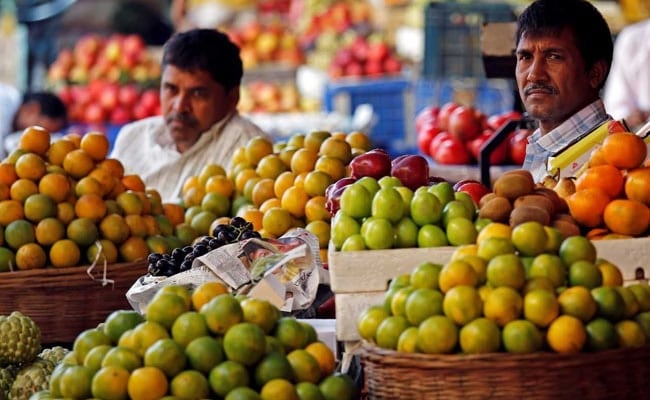
Retail inflation rate eased to 3.31 per cent in October from a year earlier, government data showed on Monday, helped by a fall in food prices. Analysts polled by Reuters had forecast October's annual increase in the consumer price index at 3.67 per cent, compared with a downwardly revised 3.70 per cent in September.
Here's what economists say about the latest official consumer inflation data:
Sujan Hajra, chief economist and executive director, Anand Rathi Shares and Stock Brokers, Mumbai:
"On the face of it, this number looks pretty benign - inflation has come off pretty significantly. But once you go into the internals of this number, it's not as encouraging as it appears. After three months of seeing core inflation coming off, the number is on the higher side in October."
"While food inflation will most likely keep low for the next month as well, beyond that we think the number will start picking up and overall inflation will also start going up."
"RBI very specifically targets the headline number more than core inflation. So, given the reading at 3.3 per cent, RBI is unlikely to do anything in term of rates in the near future. On the policy front, we don't see any action right now. But I think RBI will continue to remain accommodative of liquidity."
"The outlook for oil prices looks relatively better than it was a month back; we feel that fuel inflation will come off a bit."
"While RBI has multiple targets, by mandate, it is an inflation-targeting central bank. So, I don't think that RBI can dilute its focus from targeting inflation. But being the apex regulatory organization in the financial sector, RBI has to look into the financial stability aspect as well."
Puneet Pal, deputy head - fixed income, DHFL Pramerica Mutual Fund, Mumbai:
"I don't expect RBI to raise rates in December meeting because oil prices have come down and inflation continues to be on the lower side."
"Going forward, the rupee can come under slight depreciation pressure because the dollar is rallying, whereas for oil we'll have to wait and see as OPEC is talking about another production cut."
Aditi Nayar, principal economist, Icra Ltd, Gurugram:
"While the unexpected disinflation in food prices and easing in inflation for clothing and footwear, led to the headline CPI inflation coming in well below our forecast, the sequential hardening in core inflation driven by miscellaneous items poses some concern."
"Core inflation rose to an uncomfortably high 6.1 per cent in October, led by services such as health, as well as the impact of commodity prices on the inflation for transport and communication, household goods and services, and personal care and effects, in sharp contrast to the year-on-year disinflation in food items."
"The MPC is likely to maintain a status quo on the repo rate in the December policy review, following the correction in the October headline CPI inflation print, as well as the recent pullback in crude oil prices and the rupee, which have doused concerns related to the inflation trajectory."
"Nevertheless, the month-on-month rise in prices of various food items so far in November and the weak start to the post-monsoon rainfall season, remain a worry."
Gaurav Dua, market research head, Sharekhan, Mumbai:
"Expected core CPI number to be around 6 per cent, but it has come at around 6.2 per cent. The widening gap between urban and rural inflation is a cause for worry. (We) Expect RBI to maintain interest rates because inflation has been softer than expected. RBI has stated that its principle objective is inflation, however given the IL&FS issue, the central bank would take appropriate measures to provide adequate liquidity in the system. Given that Saudi Arabia has recently increased its oil production -- that will keep the oil prices in check. With oil prices in check, the rupee should consolidate around the current level."
Tushar Arora, senior economist, HDFC Bank, New Delhi:
"No rate hike is expected this fiscal as inflation is likely to remain below the central bank's target. For December meeting, this is the last inflation reading they will be able to analyse. For the next meeting in February, they will have two more inflation prints to look into, both of which are likely to come below 4 per cent."
"We expect the rupee to remain near the ballpark figure of 73 per dollar, and oil is likely to consolidate around $75 a barrel this year."
Devendra Kumar Pant, chief economist, India Ratings & Research, New Delhi:
"The CPI number is mainly driven by food deflation. The deflation in food is after a gap of 14 months. It has increased suddenly in vegetables, pulses and sugar and confectionary."
"We attach a very low probability of monetary tightening in December. However, we will have to see how oil behaves going forward. As of now, our base case is at max one hike if required but that will be data-dependent and in the fourth quarter of the fiscal year."
Shubhada Rao, chief economist, Yes Bank, Mumbai:
"This is the sixth consecutive downside surprise in headline inflation, driven by disinflation in food prices. A slowdown in overall economic growth is having a downward impact on inflation. Given this lower print, the average annual inflation looks to be close to 4 per cent for 2018/19. We expect inflation to pick up from here but will remain in line with the RBI's trajectory. We expect the RBI to hold policy rates going ahead with limited opportunities for a hike. Oil and rupee vs dollar are currently moving sideways. The trigger for a rate hike would come only if either of these show an upsurge post-OPEC and Fed commentary in December. We will also be watchful of the minimum support price hike impact going ahead."
A Prasanna, chief economist, ICICI Securities Primary Dealership Ltd, Mumbai:
"The headline was slightly better than our expectation. Food inflation continues to be more benign than expected despite fears about minimum support price-led spikes. However, core inflation has surprised on the upside which is worrisome. The Monetary Policy Committee will take comfort from headline and we expect a pause in December. We still expect a hike in February but will reassess the same given recent inflation prints and fall in oil prices."

-
Where You Live Shapes How You Get To Work | The Reason Why

Two-wheelers are the most popular way to get to work in India, accounting for nearly 43% of workplace commutes.
-
High US Salaries, No Green Card Certainty: The Financial Calculation Facing Indian H-1B Families
The suspension of PERM processing at eight technology employers does not cancel existing H-1B visas. What it does is force a question many Indian families have been avoiding: is the US salary worth tying your career and family plans to one employer?
-
Unhedged Position: Can India See An Indonesia-Style Time Correction?
The Nifty is trading below levels it first clocked in 2024. Is there, then, as I have suggested in the headline, potential that the current time correction drags on painfully for the next three-five, even ten years?
-
Navigating Friction And Energy Realities: An Analysis Of Marco Rubio's October Visit To India
Occurring at a critical juncture marked by stalled trade negotiations and escalating geopolitical pressures over global energy supplies, the visit offers a profound window into modern US-India relations.
-
India Exports Capital. Why Not Export Trusteeship?
The big question, then, is whether India can build an institution that global borrowers, investors, banks, and lawyers can trust, even without an Indian connection.
-
France's Economy & Politics Are In Crisis | The Reason Why
Let's look at how the French economy and politics evolved under Nicolas Sarkozy, Franois Hollande and Emmanuel Macron.
-
You May Inherit The Business. You Must Earn Its Credibility.
Succession tests the founder's ability to share authority as much as it tests the next generation's readiness to assume it.
-
Signing Deals Is One Thing; Making Them Work Is Another | The Week In Whys
Sometimes, things don't turn out as planned. Indian companies have lost some bids to rivals, some projects won't produce until 2030.
-
FOMC Wall, PERM Suspension, Hospital Stocks | Talking Points This Week
A PERM suspension would directly affect green-card sponsorship rather than H-1B visas, so the near-term earnings impact could remain relatively limited. The key question is whether this marks a new phase in US scrutiny of Indian IT.
-
Everything, Everywhere, All At Once: Dalal Street's Week To Forget | Joining The Dots
Visa curbs, a Starlink spat and cancer drug caps: what connects this week's shocks for Indian markets









