Is Afghanistan's Financial Chaos The Perfect Test Case For Usefulness Of Cryptocurrencies?
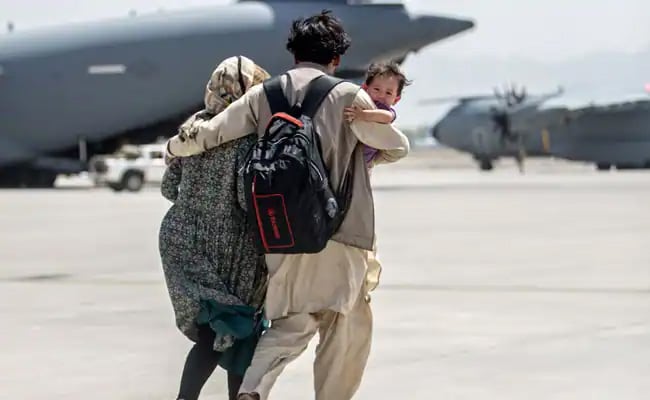
After the fall of Kabul in August 2021, many Afghans turned to cryptocurrency, particularly Bitcoin, as a means of escaping the country. The digital assets proved to be lifelines especially for women fleeing Afghanistan, who were not permitted to open bank accounts in the country. While Afghanistan's currency plummeted after the Taliban captured Kabul on August 15, cryptocurrencies have aided many people in relocating, evacuating their families, and establishing new lives in other countries. The pioneers in helping women of the country achieve financial independence were two sisters — Roya Mahboob and Forough Mahboob.
Had it not been for them, many Afghan women would have been in a precarious position in terms of evacuating or assisting their families to flee. The sisters taught hundreds of young women computer basics in Herat and Kabul through their non-profit organisation, Digital Citizen Fund. Apart from that, they also taught the women how to use Bitcoin and paid their employees in the digital currency, stated a Reuters report. The women also learnt how to invest and trade in Bitcoin and Ethereum.
Even as Bitcoin's value soared to new highs in 2021, it was increasingly embraced by many people without access to official banking, those living in conflict zones, and those residing in countries with poor governance. However, the most ardent of cryptocurrency followers are emerging from countries like Afghanistan, where many people do not have bank accounts or banks are closed for long periods of time, and the local currency has plummeted. In fact, blockchain data firm Chainalysis put the country 20th in the Global Cryptocurrency Adoption Index 2021.
Many Afghans who have relocated to other countries as a result of the Taliban-led disruption last year rely a lot on profits gained from cryptocurrency transactions to meet their daily requirements. Locals in the country are equally hopeful that cryptocurrencies can save them from the current financial crisis.
Farhan Hotak, a 22-year-old Afghan, for example, sees cryptocurrencies as a protection against inflation. He has been keeping a close eye on his cryptocurrency portfolio in one of the major exchanges since the Taliban took over in August 2021, which led to a nationwide cash shortage, shut borders, and plunged the local currency.
Hotak first heard about Bitcoin in 2019, according to a report in Thomson Reuters Foundation. During the COVID-19 shutdown in 2020, he spent much of his time online and began investing. As he began making money, he started following other cryptocurrency users and invested in coins such as Matic, XRP, and xHunter. Though his holdings won't help him put food on the table, he may rest assured that portion of his wealth is protected from economic downturn.
According to a CNBC report, the pandemic-induced lockdown provided an opportunity for another Afghan citizen, 27-year-old Musa Ramin, to embrace cryptocurrencies. He got stuck in Turkey in 2020 during a brief layover on a flight from London to Kabul. As all flights were cancelled due to the lockdown, he had no way out of Turkey. He realised he needed to find other means to support himself while stranded there. So, he began trading cryptocurrencies. He initially lost a lot of money, but thanks to Twitter and YouTube tutorials, he learned how to manage his digital assets.
So, even as the digital currencies are proving to be a lifeline for many Afghans, it would be too early to predict the future of cryptocurrencies in the country in the wake of the current turmoil.

-
Why Amazon And Flipkart Are Struggling To Beat Meesho In India's Smaller Cities

With 274 million users and lowest-cost logistics, Meesho is defending its value commerce crown against giants like Amazon and Flipkart.
-
High US Salaries, No Green Card Certainty: The Financial Calculation Facing Indian H-1B Families
The suspension of PERM processing at eight technology employers does not cancel existing H-1B visas. What it does is force a question many Indian families have been avoiding: is the US salary worth tying your career and family plans to one employer?
-
Swiggy vs Eternal: Food Delivery's Two Rivals Are No Longer In The Same Race
Eternal is building a private AI assistant, dark.ai. Swiggy is still working out how to make Instamart pay, with an operating loss of Rs 895 crore in the July-September quarter while Blinkit stayed profitable.
-
Where You Live Shapes How You Get To Work | The Reason Why
Two-wheelers are the most popular way to get to work in India, accounting for nearly 43% of workplace commutes.
-
Unhedged Position: Can India See An Indonesia-Style Time Correction?
The Nifty is trading below levels it first clocked in 2024. Is there, then, as I have suggested in the headline, potential that the current time correction drags on painfully for the next three-five, even ten years?
-
Navigating Friction And Energy Realities: An Analysis Of Marco Rubio's October Visit To India
Occurring at a critical juncture marked by stalled trade negotiations and escalating geopolitical pressures over global energy supplies, the visit offers a profound window into modern US-India relations.
-
India Exports Capital. Why Not Export Trusteeship?
The big question, then, is whether India can build an institution that global borrowers, investors, banks, and lawyers can trust, even without an Indian connection.
-
France's Economy & Politics Are In Crisis | The Reason Why
Let's look at how the French economy and politics evolved under Nicolas Sarkozy, Franois Hollande and Emmanuel Macron.
-
You May Inherit The Business. You Must Earn Its Credibility.
Succession tests the founder's ability to share authority as much as it tests the next generation's readiness to assume it.
-
Signing Deals Is One Thing; Making Them Work Is Another | The Week In Whys
Sometimes, things don't turn out as planned. Indian companies have lost some bids to rivals, some projects won't produce until 2030.










