Arun Jaitley Says Controlling Deficit, Inflation Top Priority as Finance Minister
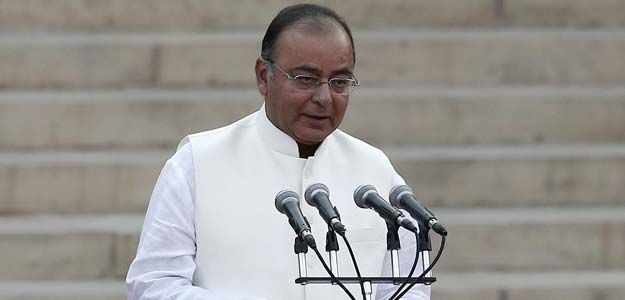
The BJP's Arun Jaitley took charge on Tuesday morning as Finance Minister, one of the most critical assignments in the Narendra Modi government that was sworn in yesterday. Mr Jaitley noted that he is taking over at a challenging time and said he will focus on fiscal consolidation and inflation.
"The challenges are very obvious. We have to restore back the pace of growth, contain inflation, and obviously concentrate on fiscal consolidation itself," Mr Jaitley said.
Arun Jaitley, one of Mr Modi's closest associates, has also been handed additional charge of another big portfolio - Defence. On Tuesday morning he sought to make clear that the Defence Ministry charge is temporary. (Read Arun Jaitley: From Corporate Lawyer to Finance Minister)
"For a transient phase, I will be looking after Ministry of Defence also, but that's only an additional charge till there's an expansion in cabinet itself," he said.
Mr Jaitley, 61, will have more than his hands full with the Finance Ministry. In less than two months, he has to present a Budget that will be determined by several sobering facts.
The Modi government inherits an economy that is growing at the slowest pace in a decade. It is also saddled with high fiscal deficit, which has led to threats of a sovereign downgrade by ratings agencies. And the country faces the worry of a poor monsoon.
To meet a deficit target of 4.6 per cent of gross domestic product in 2013-14, the outgoing government cut spending by nearly Rs 1 lakh crore and rolled over even larger subsidy costs into the new year.
That austerity could prove hard to sustain. Spending accounts for 11 per cent of GDP, offering a critical growth lever. Continuing to defer payments to state-run companies that would compensate them for selling fuel, fertiliser and food below market prices can create havoc with their finances and make them rely on borrowing to fund operations.
The Reserve Bank of India wants to bring down consumer price inflation to around 6 per cent from the current 8.6 per cent by January 2016, which would probably mean more interest rate increases. It has raised rates three times since September.
RBI Governor Raghuram Rajan was one of the first key officials to meet Mr Jaitley today. (Read the story here)
Mr Jaitley is one of India's top corporate lawyers and has served as a commerce minister in Atal Bihari Vajpayee's BJP-led government that preceded the 10 years of Congress rule.
He is a former commerce minister and is regarded as a capable administrator. He is one of the few people in the party who has experience, but is also not too old at 61. Mr Modi has picked a council of ministers with 75 as a cut-off age.
(With inputs from Reuters)

-
Unhedged Position: Can India See An Indonesia-Style Time Correction?

The Nifty is trading below levels it first clocked in 2024. Is there, then, as I have suggested in the headline, potential that the current time correction drags on painfully for the next three-five, even ten years?
-
Navigating Friction And Energy Realities: An Analysis Of Marco Rubio's October Visit To India
Occurring at a critical juncture marked by stalled trade negotiations and escalating geopolitical pressures over global energy supplies, the visit offers a profound window into modern US-India relations.
-
India Exports Capital. Why Not Export Trusteeship?
The big question, then, is whether India can build an institution that global borrowers, investors, banks, and lawyers can trust, even without an Indian connection.
-
France's Economy & Politics Are In Crisis | The Reason Why
Let's look at how the French economy and politics evolved under Nicolas Sarkozy, Franois Hollande and Emmanuel Macron.
-
You May Inherit The Business. You Must Earn Its Credibility.
Succession tests the founder's ability to share authority as much as it tests the next generation's readiness to assume it.
-
Signing Deals Is One Thing; Making Them Work Is Another | The Week In Whys
Sometimes, things don't turn out as planned. Indian companies have lost some bids to rivals, some projects won't produce until 2030.
-
FOMC Wall, PERM Suspension, Hospital Stocks | Talking Points This Week
A PERM suspension would directly affect green-card sponsorship rather than H-1B visas, so the near-term earnings impact could remain relatively limited. The key question is whether this marks a new phase in US scrutiny of Indian IT.
-
Everything, Everywhere, All At Once: Dalal Street's Week To Forget | Joining The Dots
Visa curbs, a Starlink spat and cancer drug caps: what connects this week's shocks for Indian markets
-
India Is Going Abroad For Critical Minerals. But It May Take Years To Pay Off | The Reason Why
Although India's steps are in the right direction, they remain modest compared with India's growing dependence.
-
When Everyone Has AI, What Gives You An Edge?
India's young workforce is entering an uncertain world of work where powerful AI tools are becoming widely accessible. The advantage will belong to those who combine deep expertise with digital fluency, and the distinctly human capabilities that technology cannot manufacture.









