Arun Jaitley In America: Change Versus Continuity
The World Bank and International Monetary Fund (IMF) held their spring meeting in Washington, DC on April 21-23. This provided a convenient occasion for Defence and Finance Minister Arun Jaitley to visit Washington, DC for his first engagements with the Trump administration. For this visit, he chose to focus on his Finance Ministry role and engaged private sector and financial sector officials instead of his revived position as Minister of Defence. It was a missed opportunity to provide critical ballast to the emerging United States - India defense partnership.
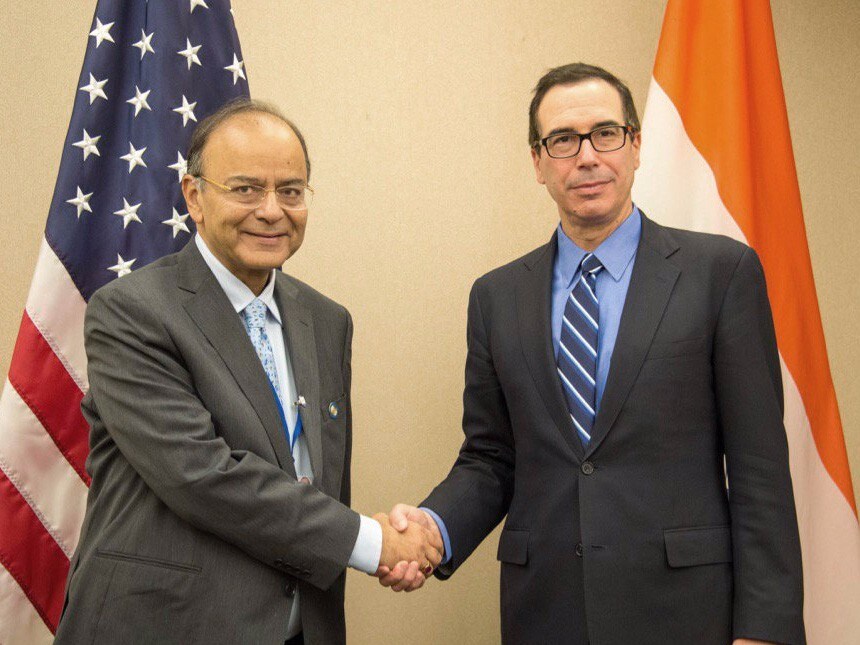
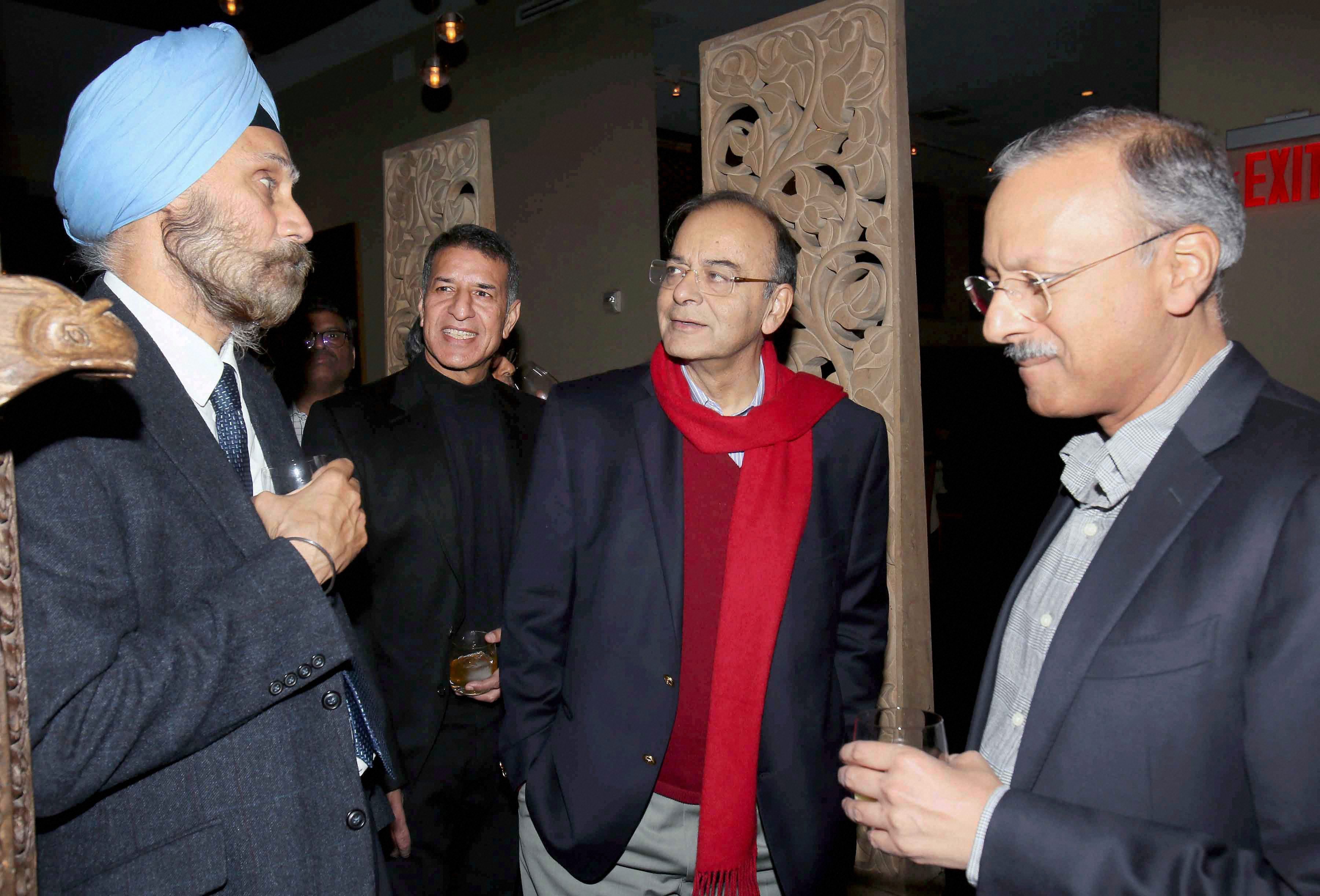
Jaitley maintained a busy schedule while in the United States. In addition to the many meetings for the World Bank and IMF, he met with U.S. Treasury Secretary Steven Mnuchin; U.S. Commerce Secretary Wilbur Ross; attended a dinner hosted by Indian ambassador Navtej Sarna; held bilateral meetings with several other finance ministers from partner nations. In New York, Jaitley joined group discussions with American financial services executives.
In his public remarks, Jaitley outlined his views on the Modi government's achievements to revive the economy. He noted his belief that India's new baseline economic growth was “seven or eight percent,” and could go much higher when recent economic reforms are supported by a global economic revival. Not surprisingly, he highlighted the passage of the Goods and Services Tax (GST), as well as demonetization. He boldly proclaimed at one point that the era of a government “paying a political price” for smart reforms is now over, as seen in recent electoral results.
In his private meetings with U.S. government officials, he reportedly pushed for the U.S. to maintain a liberal immigration policy, a vital requirement for India's powerful technology services sector.
The economic story is certainly compelling. India remains the fastest-growing large economy in the world. U.S. goods trade with India grew 2 percent in 2016, despite strong global headwinds on trade. And India is the largest recipient of foreign investment among global emerging markets.
However, most of the strengths of the economic relationship — outbound American investment, the U.S. trade deficit, and the IT services industry — are not likely to spark the imagination of Trump Administration officials.
Our one potential economic deal, a Bilateral Investment Treaty (BIT), appears in cold storage after 9 years of lackluster negotiations.
The security relationship, on the other hand, has been a powerful bright spot in the relationship over the last three years. The U.S. and India have defined shared values for Asian security, notably through the “Joint Strategic Vision for the Asia-Pacific and Indian Ocean Region,” signed in January 2015.
The militaries have formalized channels for cooperation through the renewed Defense Framework Agreement and the Logistics Exchange Memorandum of Agreement (LEMOA). And they have created and expanded areas of cooperation, such as complex new joint exercises and the multiple projects for co-development and co-production under the Defense Technology and Trade Initiative (DTTI).
While tangible signs of cooperation like joint operations are rare (and largely confined to humanitarian relief), the trajectory is clearly towards deeper defense cooperation on a range of fronts.
A Missed Opportunity
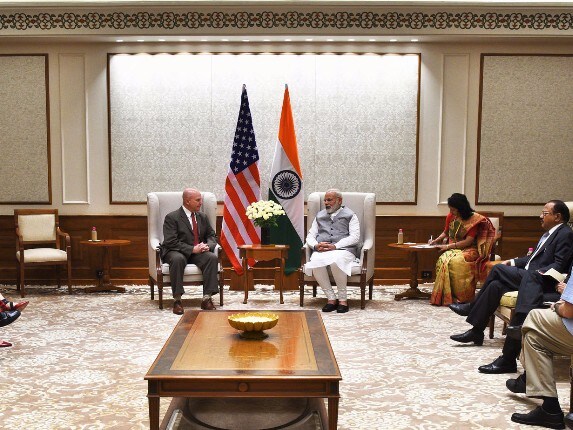
In mid-March 2017, Jaitley took on the additional role of Defence Minister, which he had also held for several months in 2014. While the role is expected to be temporary, the Government of India may ultimately get comparatively few opportunities for senior-level engagements with the Trump Administration. The utility of such visits must be maximized if the positive trajectory of the relationship is to be maintained.
Jaitley is obviously sufficiently powerful to ensure any commitments he would choose to make as Defence Minister will be upheld by his successor.
Especially as these commitments would likely be the continuation of work plans that are already in progress, such as moving and improving the Defense Technology and Trade Initiative.
Compounding this missed opportunity, Jaitley will wear his Defence ‘hat' for the next stop on this tour — in Moscow. India has a long-standing defense relationship with Russia.
New Delhi's desire to have options for defense technology supply, paired with Russia's possible belief that the United States is unlikely to engage India as closely as before, may result in some important new joint initiatives.
Announcements of expanded defense cooperation will certainly raise concerns in Washington, DC that India is tilting away from the U.S., even if this “tilt” is the result of a mix of potential American ambivalence and the lack of senior personnel in key positions.
Economic ties between the United States and India have provided a fairly high level of stability in the relationship over the last twenty years. The business community offered steadfast support in removing the sanctions against India following the 1998 nuclear tests, as well as supporting legislation to enact nuclear cooperation a decade later.
Still, the U.S. and Indian governments have not been able to find “middle ground” for any type of bilateral economic agreement beyond the U.S.-India Double Taxation Avoidance Agreement (DTAA), signed in 1989. The U.S.-India defense relationship, in contrast, has seen real progress in recent years, both in terms of articulating shared security concerns and putting into motion real areas of cooperation.
Adjusting To ‘America First'
In ordinary times, this type of business-focused visit to the United States makes a great deal of sense. However, the Trump Administration is poised to become more aggressive on securing what President Trump sees as American interests in America's key economic relationships.
The simple allure of the Indian market to American firms will not be sufficient to offset an assertive approach by the Trump Administration.
The strongest bulwark against inattention or aggressive posturing is for both governments to push forward cooperation in the defense sector. With a leaders' summit between President Trump and Prime Minister Modi likely to occur this summer, both nations have precious little time to vigorously pursue deeper defense cooperation — and cannot miss further opportunities to engage in this vital sector.
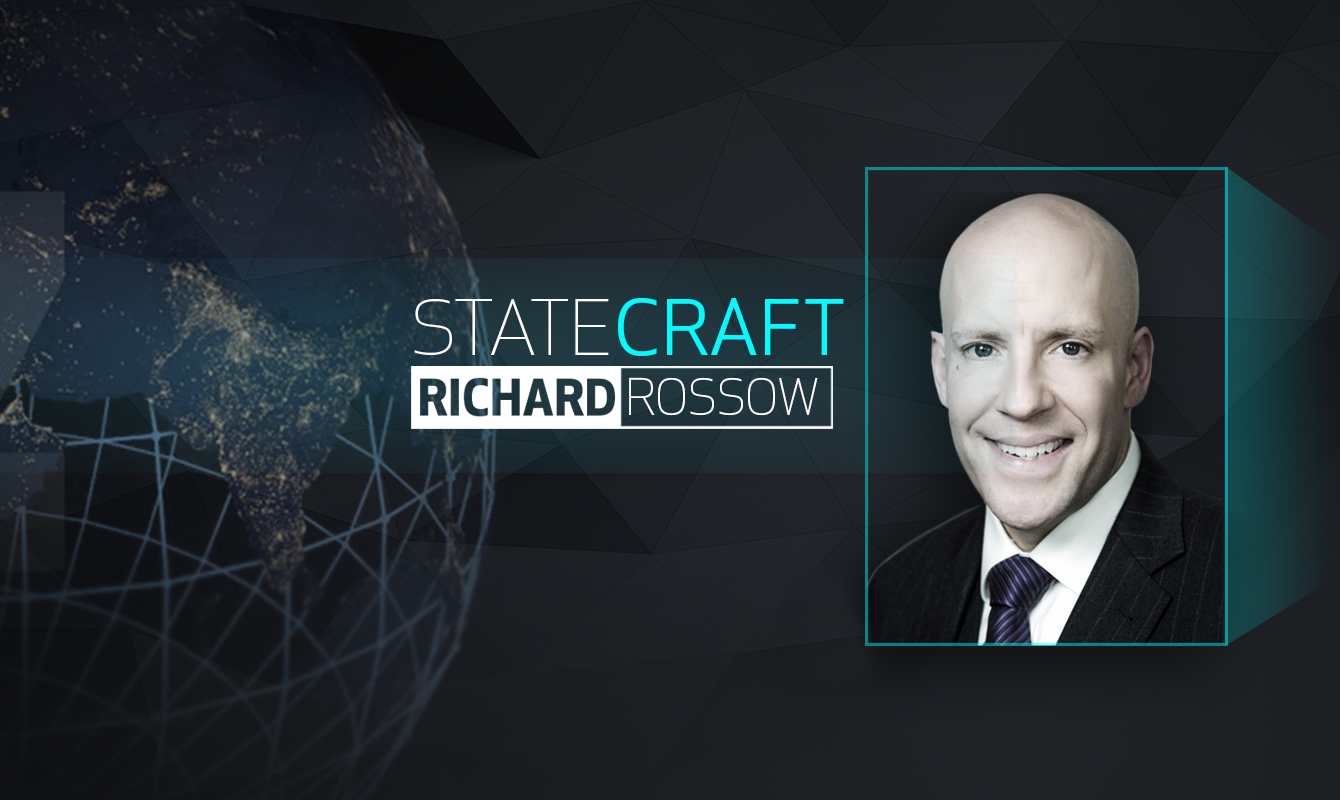
Richard Rossow is the Wadhwani Chair in U.S. India Policy Studies at The Center for Strategic and International Studies in Washington D.C.
The views expressed here are those of the author's and do not necessarily represent the views of BloombergQuint or its editorial team.

-
High US Salaries, No Green Card Certainty: The Financial Calculation Facing Indian H-1B Families

The suspension of PERM processing at eight technology employers does not cancel existing H-1B visas. What it does is force a question many Indian families have been avoiding: is the US salary worth tying your career and family plans to one employer?
-
Swiggy vs Eternal: Food Delivery's Two Rivals Are No Longer In The Same Race
Eternal is building a private AI assistant, dark.ai. Swiggy is still working out how to make Instamart pay, with an operating loss of Rs 895 crore in the July-September quarter while Blinkit stayed profitable.
-
Where You Live Shapes How You Get To Work | The Reason Why
Two-wheelers are the most popular way to get to work in India, accounting for nearly 43% of workplace commutes.
-
Unhedged Position: Can India See An Indonesia-Style Time Correction?
The Nifty is trading below levels it first clocked in 2024. Is there, then, as I have suggested in the headline, potential that the current time correction drags on painfully for the next three-five, even ten years?
-
Navigating Friction And Energy Realities: An Analysis Of Marco Rubio's October Visit To India
Occurring at a critical juncture marked by stalled trade negotiations and escalating geopolitical pressures over global energy supplies, the visit offers a profound window into modern US-India relations.
-
India Exports Capital. Why Not Export Trusteeship?
The big question, then, is whether India can build an institution that global borrowers, investors, banks, and lawyers can trust, even without an Indian connection.
-
France's Economy & Politics Are In Crisis | The Reason Why
Let's look at how the French economy and politics evolved under Nicolas Sarkozy, Franois Hollande and Emmanuel Macron.
-
You May Inherit The Business. You Must Earn Its Credibility.
Succession tests the founder's ability to share authority as much as it tests the next generation's readiness to assume it.
-
Signing Deals Is One Thing; Making Them Work Is Another | The Week In Whys
Sometimes, things don't turn out as planned. Indian companies have lost some bids to rivals, some projects won't produce until 2030.
-
FOMC Wall, PERM Suspension, Hospital Stocks | Talking Points This Week
A PERM suspension would directly affect green-card sponsorship rather than H-1B visas, so the near-term earnings impact could remain relatively limited. The key question is whether this marks a new phase in US scrutiny of Indian IT.









