Apple Plans Extreme Sports Watch With Larger Screen, Metal Case
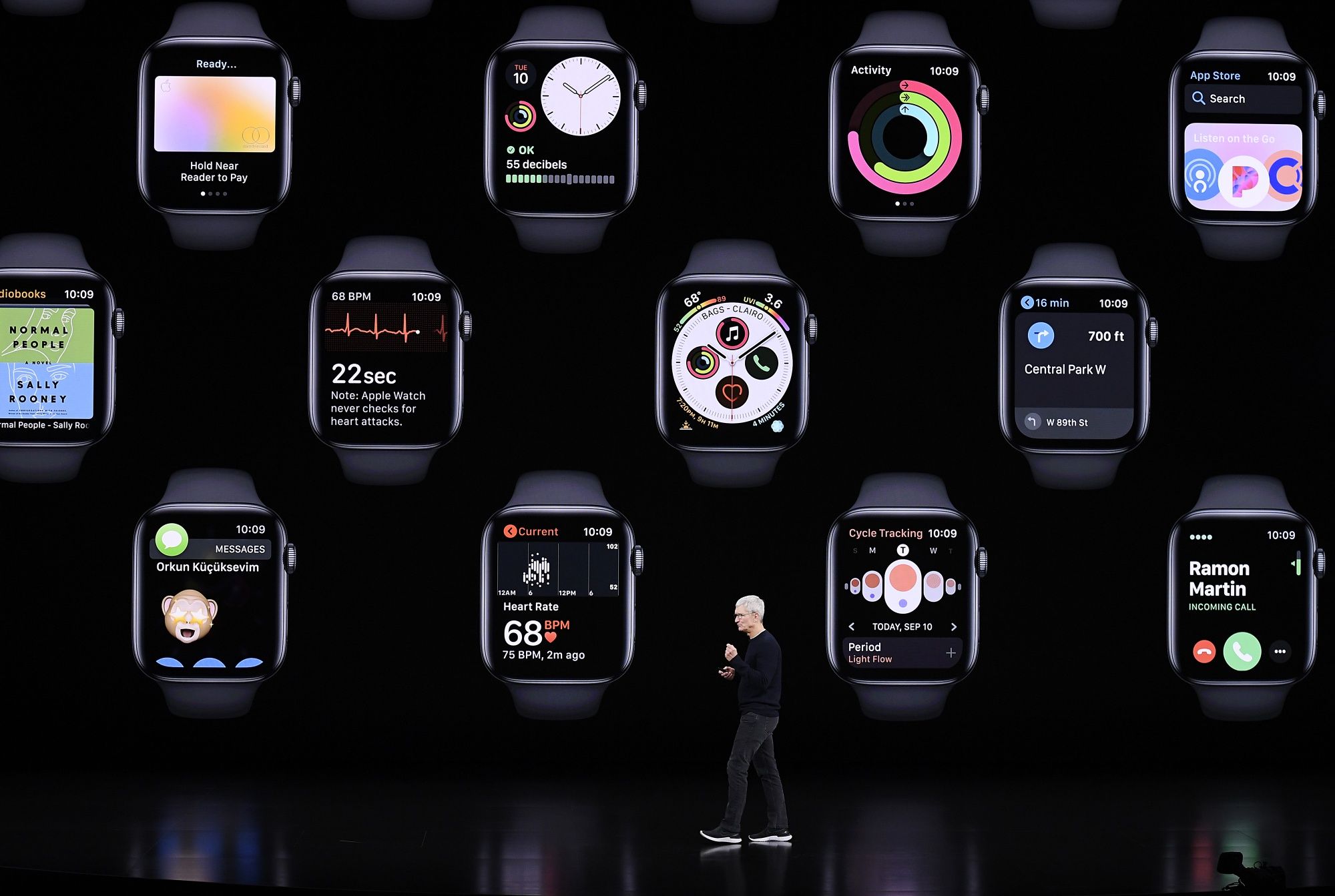
(Bloomberg) -- Apple Inc. plans its largest smartwatch display to date, a bigger battery and a rugged metal casing as part of the upcoming Apple Watch geared toward extreme sports athletes, according to people with knowledge of the plans.
The rugged version of the Apple Watch will get a screen that measures almost 2 inches diagonally, while a new, standard Apple Watch Series 8 will keep the 1.9-inch diagonal screen size of the current Apple Watch Series 7. A planned update to the low-end Apple Watch SE also will retain the current screen size.
The larger display on the extreme sports model, which is planned to be announced later this year with the other two models, will have about 7% more screen area than the largest current Apple Watch. The display will have a resolution of about 410 pixels by 502 pixels and retain the same overall sharpness as the existing models.
Apple could use the larger screen area to show more fitness metrics or information on watch faces at one time. The company added several new fitness features in watchOS 9, including multisport workouts and improved intensity tracking during exercise routines.
First released in 2015, the Apple Watch has become a key piece of Apple's hardware lineup. The watch models are included in the wearables, home and accessories division, which generated $38.4 billion -- or 10% of the company's total revenue -- in the past fiscal year. But smartwatches and fitness wearables are crowded markets and Apple competes with products from the likes of Google's Fitbit and Samsung Electronics Co.
The extreme sports watch will use a strong metal material rather than aluminum, have a more shatter-resistant screen and include a larger battery compared with standard Apple Watches -- letting athletes track workouts for longer periods of time, said the people, who asked not to be identified because the watch details haven't been announced.
Read more about Apple's 2022 and 2023 product plans
Like the standard Series 8, the sturdier watch will have the ability to take a user's body temperature to detect a fever. It will also improve tracking metrics like elevation during hiking workouts and data while swimming.
All of the new Apple Watches will use an S8 processor with similar performance to the S7 chip in the Apple Watch Series 7, which was on par with the S6 in the Apple Watch Series 6 from two years ago. This will mark the first time that the company is retaining the same general performance in the Apple Watch for three generations in a row.
An Apple spokeswoman declined to comment on the company's plans. Apple typically announces its new watch models in September alongside new iPhones. The Cupertino, California-based company is planning four new iPhone 14 models for the fall, including new pro versions with faster chips and a 48-megapixel rear camera.
The display size increase for the rugged model will be the third in the history of the Apple Watch. The company expanded the device's screen in 2018 with Series 4 and again last year with Series 7. The nearly 2-inch display on the rugged model will make the screen one of the largest offerings from a mainstream smartwatch maker.
Bloomberg News first reported early last year that Apple was planning to expand the Apple Watch lineup with a rugged version to better compete with offerings from Garmin and others geared toward extreme sports. The higher-end watch is likely to be pricier than the standard stainless steel Apple Watch, which today starts at $699.
More stories like this are available on bloomberg.com
©2022 Bloomberg L.P.

-
A New Samvat Wishlist: Inclusive Prosperity And Human Development

India has strengthened its economic foundations through infrastructure, digital access and enterprise. Its next growth chapter must deepen productivity, create better livelihoods and widen participation in prosperity.
-
Love, Sex Aur Dhokha: The Audacious Plot To Spy On Jensen Huang
A Taipei dinner, a Singapore chip buyer and a suspected Chinese asset: inside the alleged spy operation that got close to NVIDIA's Jensen Huang.
-
Ten Things I Learnt This Samvat
Patience can be a trap. Cheap stocks can stay cheap. Leverage can wipe you out. What did Samvat 2082 teach us? Niraj Shah writes on 10 lessons from the year gone by.
-
Talking Points This Week: Tech Nerves, FII Buying, And A Faraway Banking Shock
The global markets are not shining this Diwali. The exception in the large markets is, India.
-
Midterm Rally Lasted A Day. The Hard Reality Of A Divided US May Last Two Years | Opinion
Between a contested AI boom, a debt ceiling that arrives in 2027 and a president with every incentive to act alone, the next two years may prove more volatile than the first day's rally suggests.
-
Blue Wave Will Derail the AI Trade but Won't Dismantle the AI Era | Unhedged Position
The Democrats' sweep of the US Congress will see politics collide with economic forces both over the long and short term.
-
It's Time To Take The GST Council's Bet On Trust Global
Payment records can prove India's services exports, and clear, proportionate rules can bring foreign digital sellers into the tax net.
-
Opinion | India at 38: From Innovation Overperformer to Innovation Powerhouse
India now has 453 VC-backed deep science startups, 18 of them late-stage, after 117 percent growth since 2020. Laurus Labs, at USD 9.3 billion, is the most valuable deep science company in any middle-income economy outside China.
-
Navigating Energy Crossroads: S Jaishankar's Call For Diversified Supply Chains At G20 Ministerial Meeting
As geopolitical fault lines continue to test maritime trade routes and commodity flows, Jaishankar's message remains pertinent: true economic resilience requires open markets, protected transit lines, and a genuine commitment to multilateral cooperation rather than coercion.









