Apple Delays Bonuses For Some And Limits Hiring In Latest Cost-Cutting Effort

(Bloomberg) -- Apple Inc. is delaying bonuses for some corporate divisions and expanding a cost-cutting effort, joining Silicon Valley peers in trying to streamline operations during uncertain times, according to people with knowledge of the situation.
The shift will reduce the frequency of bonuses for a portion of Apple's corporate workforce, said the people, who asked not to be identified because the plan hasn't been announced publicly. Separately, the company is limiting hiring for more jobs and leaving additional positions open when employees depart.
In the past, Apple typically doled out bonuses and promotions once or twice per year depending on the division. The twice-a-year teams usually saw that happen in April and October. Under the new plan, that group won't see bonuses or promotions next month, and all divisions will move to an annual schedule — with the payments occurring only in October.
The majority of Apple's divisions had already moved to a once-a-year schedule for bonuses and promotions, including software engineering and services, but staff in operations, corporate retail and other groups had still been on the outgoing biannual plan.
Apple, the world's most valuable company, began a belt-tightening effort last July, when galloping inflation and recession fears spurred it to take a more cautious stance. The iPhone maker has avoided the kind of mass layoffs underway at most of its tech peers, but it has reduced budgets, cut headcount goals and paused hiring across several divisions.
Apple shares pared their gains after Bloomberg reported the news on Tuesday, slipping to a session low. The stock was up about 0.3% at $150.96 as of 1:48 p.m. in New York.
Employees are still slated to receive their full bonuses, just in one installment rather than two. Even so, the change could come as a blow to staff, especially because Apple hasn't provided much advance notice in some cases. Workers often count on such bonuses for their personal budgeting. The move could also potentially help retain employees who may have planned to leave the company after receiving the April payout.
The move applies to engineers and other non-managers as well as mid-level managers, but not senior employees at the director level and above. Apple's highest-ranking employees typically see their bonuses paid quarterly. A spokesman for the Cupertino, California-based company declined to comment.
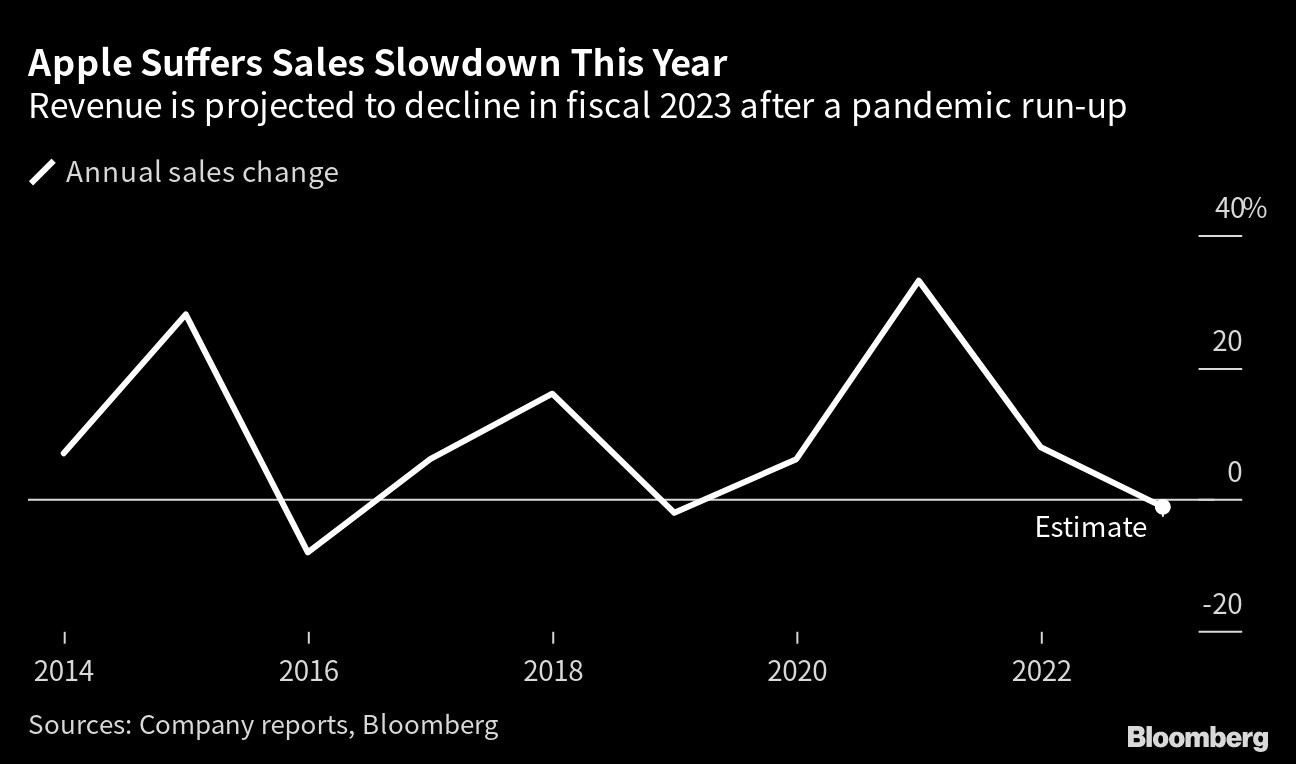
Apple is facing a sales slowdown, adding pressure to keep its operations lean. Revenue declined 5% during the holiday quarter, a steeper drop than Wall Street projected, hurt by iPhone production snags and sluggish demand for Macs and wearable devices. Sales are expected to fall by a similar amount in the current period.
During Apple's shareholder meeting last week, Chief Executive Officer Tim Cook said the company continues to be especially careful with money.
“We're being very prudent and thoughtful on spending and we continue to be very deliberate when it comes to hiring,” he told shareholders. Operating expenses during the holiday quarter came in below guidance and grew more slowly than in the past, Cook noted. Still, he added that Apple continues to “invest in innovation.”
As part of this more cautious approach to spending, Apple has reined in travel budgets and is now requiring senior vice president approval — the highest executive level at the company below the CEO and operating chief — for more budget items. It also has laid off some contract workers across the company.
Read More: Meta to Cut 10,000 Jobs and Slash 5,000 More Vacant Positions
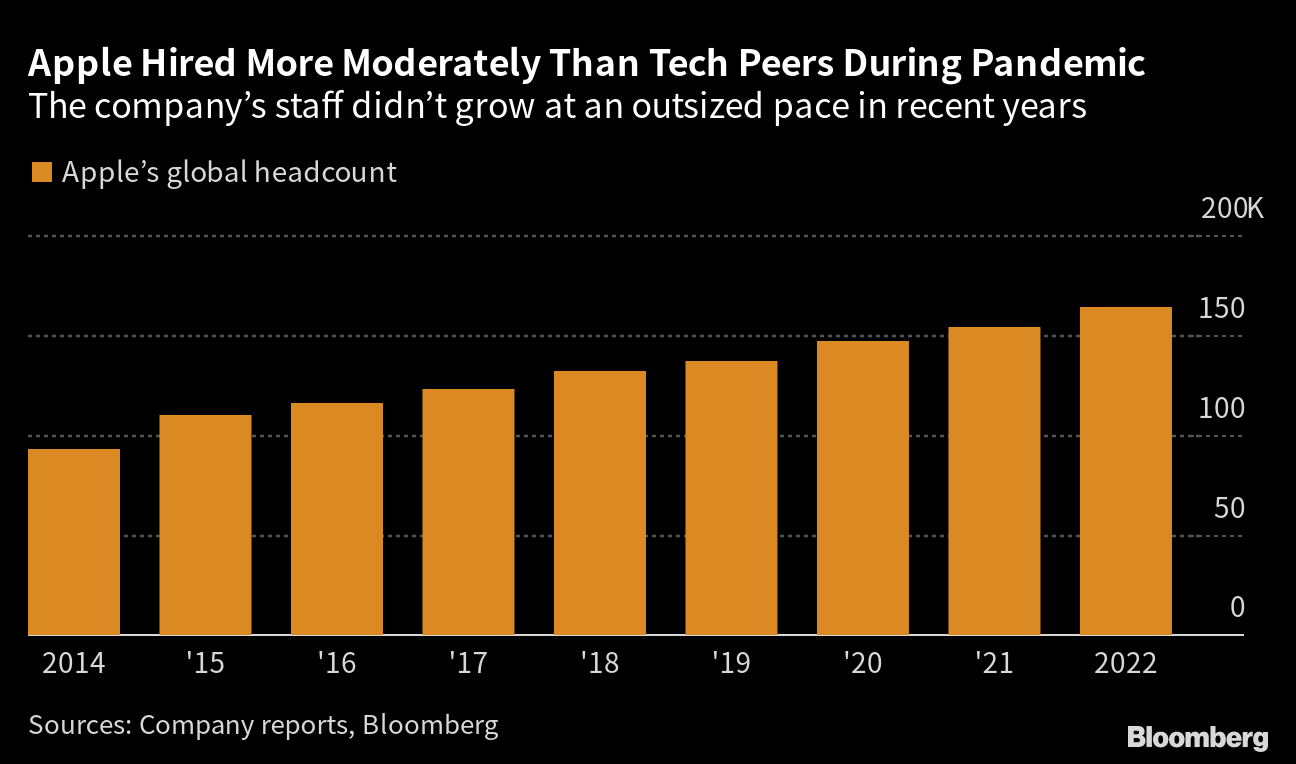
Still, Apple employees have generally been in a less precarious position than those at other big Silicon Valley companies, such as Meta Platforms Inc. and Alphabet Inc.'s Google, which have undergone deep cuts. Apple has been able to avoid layoffs in part because it was more measured in its hiring and spending during the pandemic.
As part of the moves, Cook is taking a pay cut himself. In January, Apple announced that his compensation for 2023 would fall by more than 40% to about $49 million. Shareholders approved executive pay packages at Apple's annual meeting last Friday.
In addition to trimming costs, Apple's human-resources department has been taking a closer look at how often employees come to the office. The company's current policy requires employees to work from an Apple building three times per week — a policy that was contentious when imposed last year. Some staffers are now worried that the increased scrutiny on office attendance is a precursor to the company firing workers who don't meet the three-days-a-week threshold.
The concerns have spread to Apple's retail staff. Several of those employees said that stores are increasingly scrutinizing hours worked and attendance. And some part-time retail employees have said they feel like they're being encouraged to quit by being asked to work more hours and days than they agreed to when they were hired.
(Updates with shares in sixth paragraph.)
More stories like this are available on bloomberg.com
©2023 Bloomberg L.P.

-
Ten Things I Learnt This Samvat

Patience can be a trap. Cheap stocks can stay cheap. Leverage can wipe you out. What did Samvat 2082 teach us? Niraj Shah writes on 10 lessons from the year gone by.
-
Talking Points This Week: Tech Nerves, FII Buying, And A Faraway Banking Shock
The global markets are not shining this Diwali. The exception in the large markets is, India.
-
Midterm Rally Lasted A Day. The Hard Reality Of A Divided US May Last Two Years | Opinion
Between a contested AI boom, a debt ceiling that arrives in 2027 and a president with every incentive to act alone, the next two years may prove more volatile than the first day's rally suggests.
-
Blue Wave Will Derail the AI Trade but Won't Dismantle the AI Era | Unhedged Position
The Democrats' sweep of the US Congress will see politics collide with economic forces both over the long and short term.
-
It's Time To Take The GST Council's Bet On Trust Global
Payment records can prove India's services exports, and clear, proportionate rules can bring foreign digital sellers into the tax net.
-
Opinion | India at 38: From Innovation Overperformer to Innovation Powerhouse
India now has 453 VC-backed deep science startups, 18 of them late-stage, after 117 percent growth since 2020. Laurus Labs, at USD 9.3 billion, is the most valuable deep science company in any middle-income economy outside China.
-
Navigating Energy Crossroads: S Jaishankar's Call For Diversified Supply Chains At G20 Ministerial Meeting
As geopolitical fault lines continue to test maritime trade routes and commodity flows, Jaishankar's message remains pertinent: true economic resilience requires open markets, protected transit lines, and a genuine commitment to multilateral cooperation rather than coercion.
-
Indians Are Travelling, But Not Every Journey Is A Holiday | The Week In Whys
Pilgrims, patients and working women are the real travellers, and the system hasn't quite caught up with them.
-
Getting To Work Costs Women More | The Reason Why
It is not just about women paying more than men. It is about women paying much more in cities than in villages.









