An Emergency Fed Rate Cut Would Be A Mistake
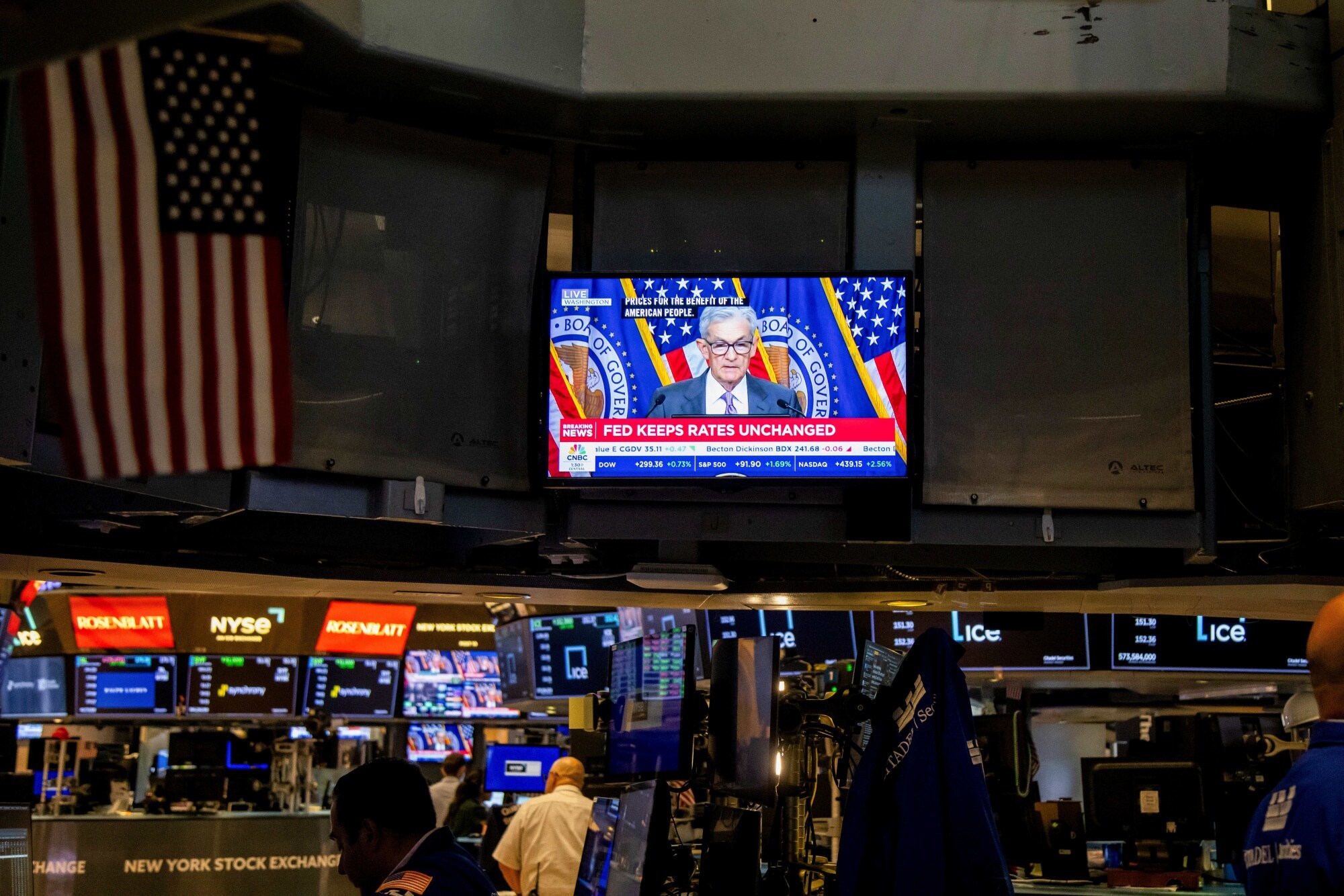
(Bloomberg Opinion) -- With stock markets plunging around the world, traders are talking up the prospect of an emergency interest-rate cut from the Federal Reserve after the US central bank passed up the opportunity to ease policy last week. Not only is this highly unlikely, it would be counterproductive.This equity downdraft is fundamentally a market positioning unwind, not a response to an economic shock. Swathes of investors have gotten over their skis on over-leveraged trades; from borrowing cheaply in low-interest rate Japanese yen to chasing the bubble in technology stocks, especially anything AI related. It's their Icarus moment.
There's nothing broken in the US economy, so there's no justification for the monetary authorities to step in and mitigate losses for over-extended equity holders. The fabled "Fed put" is a break-glass lever only to be used in event of a proper emergency — and we're not there yet.
The risks of a US recession have risen, but a contraction is far from being the base case scenario. The Atlanta Fed gross domestic product nowcast is anticipating growth of more than 2% in the third quarter, a repeat of impressive second-quarter strength. Friday's July employment report came in weaker than economists anticipated, but Hurricane Beryl effects make it hard to discern any worrisome trend, as opposed to simply a single month of less robust payroll gains. The latest corporate earnings season is also pretty decent across the board, albeit with a handful of exceptions.
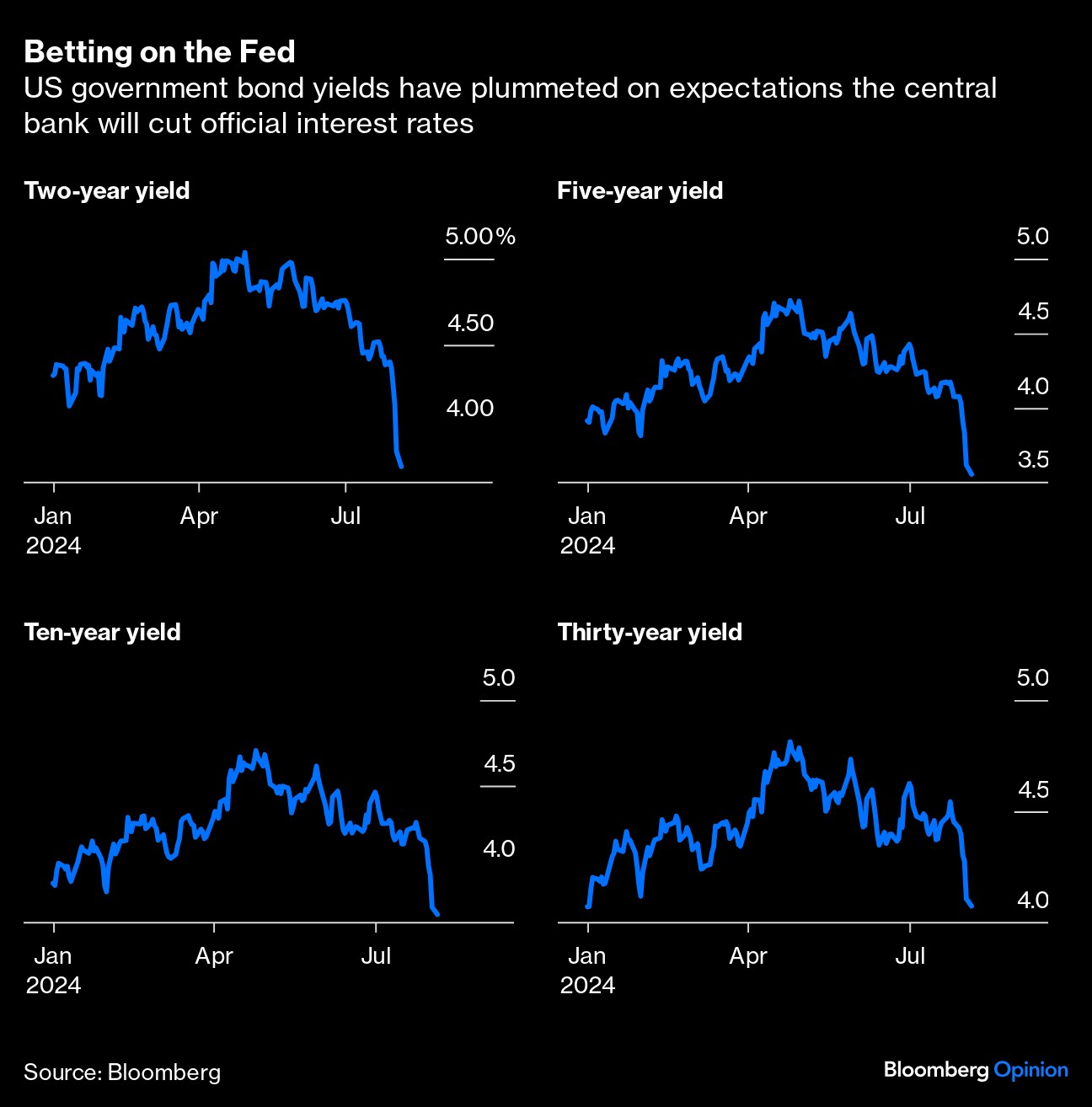
What's probably a more sustainable trend, though, is lower government borrowing costs, after fixed-income investors have suffered a couple of disastrous years of rising bond yields. The US Treasury 10-year yield has fallen 100 basis points to around 3.75% over the past three months, with half of that decline coming in the last eight trading sessions. Nonetheless, the two- to 10-year yield curve remains inverted by 26 basis points — but that's not a flashing recession alert. Bonds are reasserting their place in the investment mix versus once-omnipotent equities — a gradual evolution as the economic landscape becomes more mixed, and restrictive borrowing costs to crush inflation become evidently less necessary.
Emergency rate cuts do happen; but they're relatively rare, and are only employed when the economy is facing a sudden seizure. The last pair were in March 2020 in response to the pandemic, when interest rates were lowered 150 basis points to zero, where the Fed Funds rate stayed for two years. Prior to that, there were several during the global financial crisis. There were a couple of intra-meeting 50 basis-point cuts after the 2001 tech bubble burst, and a subsequent move after the Sept. 11, 2001, atrocities, but the Fed has learned hard lessons from the perception that it protects investors from their own irrational exuberance.
The Fed's next meeting is on Sept. 18, and a 50 basis-point reduction is nearly fully priced in by the futures market. Although Chair Jerome Powell played down the prospect of an outsized initial rate cut at the July 31 press conference, that view may no longer hold. The Fed is aware it has been keeping official rates restrictive for possibly too long. But it doesn't need to overreact, especially in an election year. Easing cycles often start with a half-point cut, and this time such a move may be justified — but at the right time and place, at a scheduled meeting rather than as an emergency response to an overdue correction in the stock market.
More from this writer at Bloomberg Opinion:
Bank Of England Summons Up the Courage to Cut: Marcus Ashworth
Germany Versus Spain Poses Problem for the ECB: Marcus Ashworth
The BOE Shouldn't Set Its Own Speed Limit: Marcus Ashworth
This column does not necessarily reflect the opinion of the editorial board or Bloomberg LP and its owners.
Marcus Ashworth is a Bloomberg Opinion columnist covering European markets. Previously, he was chief markets strategist for Haitong Securities in London.
More stories like this are available on bloomberg.com/opinion
©2024 Bloomberg L.P.

-
Ten Things I Learnt This Samvat

Patience can be a trap. Cheap stocks can stay cheap. Leverage can wipe you out. What did Samvat 2082 teach us? Niraj Shah writes on 10 lessons from the year gone by.
-
Talking Points This Week: Tech Nerves, FII Buying, And A Faraway Banking Shock
The global markets are not shining this Diwali. The exception in the large markets is, India.
-
Midterm Rally Lasted A Day. The Hard Reality Of A Divided US May Last Two Years | Opinion
Between a contested AI boom, a debt ceiling that arrives in 2027 and a president with every incentive to act alone, the next two years may prove more volatile than the first day's rally suggests.
-
Blue Wave Will Derail the AI Trade but Won't Dismantle the AI Era | Unhedged Position
The Democrats' sweep of the US Congress will see politics collide with economic forces both over the long and short term.
-
It's Time To Take The GST Council's Bet On Trust Global
Payment records can prove India's services exports, and clear, proportionate rules can bring foreign digital sellers into the tax net.
-
Opinion | India at 38: From Innovation Overperformer to Innovation Powerhouse
India now has 453 VC-backed deep science startups, 18 of them late-stage, after 117 percent growth since 2020. Laurus Labs, at USD 9.3 billion, is the most valuable deep science company in any middle-income economy outside China.
-
Navigating Energy Crossroads: S Jaishankar's Call For Diversified Supply Chains At G20 Ministerial Meeting
As geopolitical fault lines continue to test maritime trade routes and commodity flows, Jaishankar's message remains pertinent: true economic resilience requires open markets, protected transit lines, and a genuine commitment to multilateral cooperation rather than coercion.
-
Indians Are Travelling, But Not Every Journey Is A Holiday | The Week In Whys
Pilgrims, patients and working women are the real travellers, and the system hasn't quite caught up with them.
-
Getting To Work Costs Women More | The Reason Why
It is not just about women paying more than men. It is about women paying much more in cities than in villages.









