Ambani Succession Journey – Well Begun But Not Over
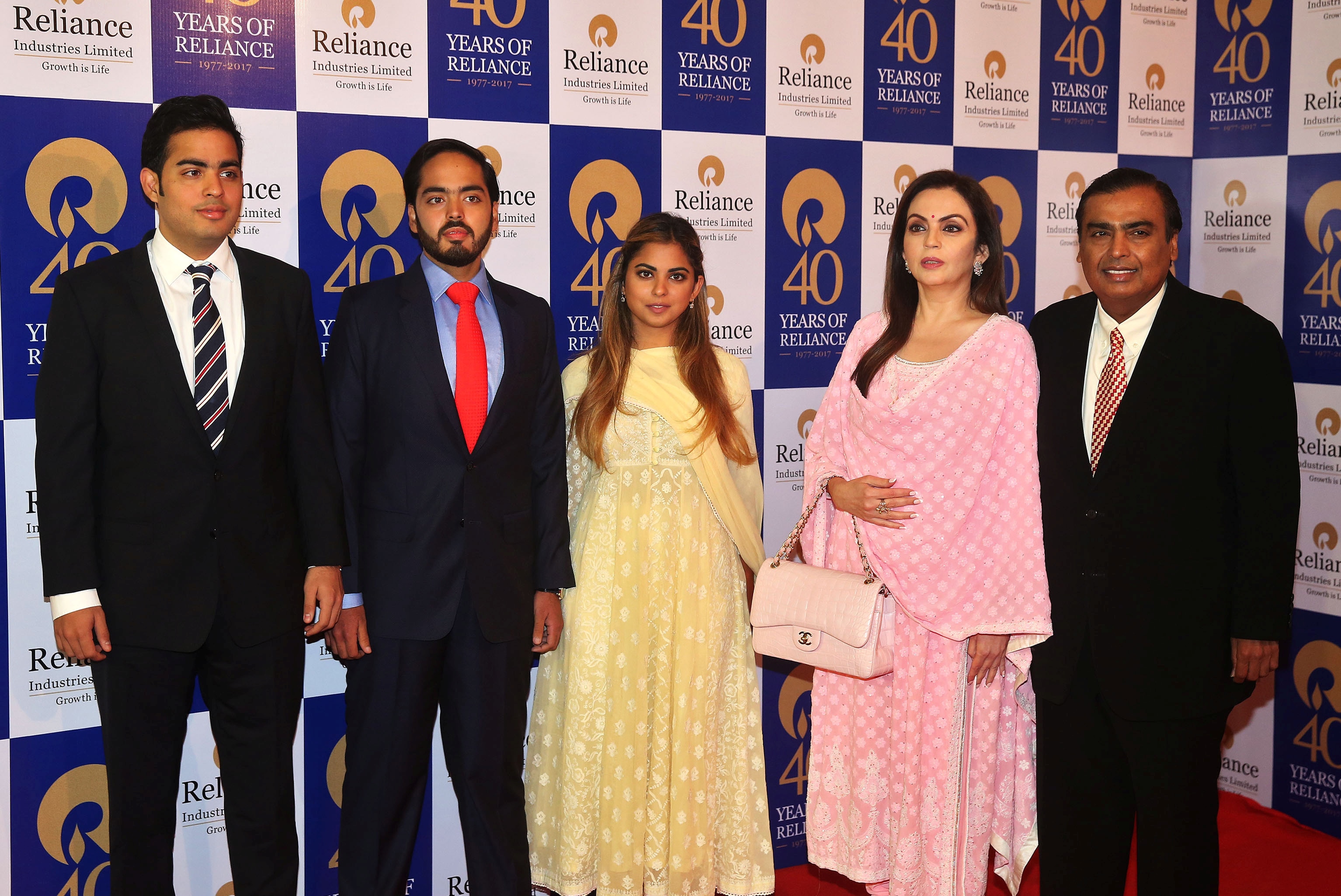
Mukesh Ambani's decision to resign as chairman of Reliance Jio Infocom Ltd. and nominate his elder son Akash to take up the mantle has drawn significant public attention. RJIL is a wholly-owned subsidiary of Jio Platforms Ltd., the holding company that owns all digital assets and a subsidiary of Reliance Industries Ltd. Mukesh Ambani continues as the chairman of JPL and RIL. It is anticipated that his daughter Isha would be made the chairwoman of Reliance Retail Ventures Ltd. too, an equally important business vertical of the Reliance group.
Few challenges demand more of a family business leader than passing on the baton of leadership to the next generation. Family's legacy, identity, family members' lifelong dreams, ambitions, relationships, and even personal struggles with ill health or mortality – all figure in managing succession. Research has consistently shown that the elder generation leaders often hang on for far too long without making room for the younger generation. This leads to poor preparedness, resentment, stagnation, infighting, jarring transitions and thus disruption of business and destruction of shareholder value. The purpose of succession planning in a business family is to make sure that the family's businesses always have the right leaders in place should a change happen suddenly.
The critical point in well-conceived succession planning is to ensure a business is successful in the future while being independent of the outgoing leader.
By moving out early and giving time for mentorship and opportunity to Akash to grow into the leadership role, Mukesh Ambani has set the platform for a stable and successful succession. Ambani's approach should inspire and provide a template for more business owners and leaders.
Creating Distinct Verticals: Efficient But Risky
The current leadership transition has been preceded by a massive strategic business transformation being undertaken at RIL. In a pivot from its legacy oil refining and petrochemicals business, the conglomerate has been diversifying into e-commerce, green energy and expanding its retail footprint across the country. Significant capital restructuring has also happened to reduce the debt burden and bring in strong global partners in its transformation journey. Also, to reduce the structural complexity, the primary businesses of RIL are grouped into three distinct verticals – telecom, retail and energy, to be led by the three Ambani children and managed by non-family professionals.
Assigning overall leadership responsibilities by strategic business units among children is a convenient and efficient way of avoiding conflicts in a family business. However, in almost all cases, that is the beginning of the formation of silos and ruptures in the absence of a strong chairman binding all the divisional heads together. In a family business, the challenge of integration across diverse divisions is found to be high.
We expect further strengthening of corporate governance both at the group and SBU levels. This will reduce pressure on the young Ambanis to make sure that power centres are not created at critical levels. Given that the young Ambanis are still in the process of gaining the much-needed wisdom to manage large corporations, it is important to revisit and facilitate further professionalisation. Also, there is nothing to suggest that family surnames actually guarantee great professionals. In fact, this is an opportunity for the group to revisit the existing style of professional management with a view to bringing more decentralisation.

The Reliance Industries board attends the company's 44th AGM virtually. (Image: RIL)
A Phased Succession Process
A smooth family business succession never happens unless there is a willing, competent, and well-prepared successor(s). Therefore, grooming the next generation as responsible owners and leaders is a precondition to a smooth leadership transition in the family business. While the next-gen grooming process will intensify when the children reach adulthood, it actually must begin when they are very young. Though Mukesh Ambani started talking about the “momentous leadership transition" only recently, evidently he began grooming his children for future business leadership roles much in advance. His twin children Akash and Isha, have been active in the group's new-age businesses of retail and telecom for quite some time. In 2014, both of them were appointed as directors on the boards of RIL's telecom and retail businesses. His youngest son Anant was also appointed a director at JPL a few years ago.
Mukesh Ambani seems to be following a gradual and progressive model of transition.
A family business succession is like a relay race that comprises a series of discrete elements—sequence, timing, technique, and communication—involving multiple actors and carried out over extended periods.
Succession is a process, rather than a one-off event of handing over the baton. It is a multi-stage process that happens over years, beginning long before the time when the heirs step up to their new roles. The planning for that process encompasses not just the roles of the next generation in the business prior to succeeding but the preparation of the business for the succession. The strategic business transformation initiatives undertaken by RIL in the last few years are also to be understood in that light.
Transfer Of Power
Succession includes an ideological transfer, a new narrative, a leadership style change, and a change in the power structure that promotes the emergence of new relationships and coalitions within the organisation. A succession process isn't complete until the transition from one leader to the next has actually taken place and the next generation has grown out of the shadow of the former and gained acceptance. Both the outgoing leader and the successor have to be deeply involved and play their roles effectively to navigate the entire process.
In the context of RIL and RJIL, Akash (also Isha and Anant when their time comes) faces the pressure to legitimate his role in the eyes of both family members and other stakeholders by proving himself in the role. He has an illustrious father's mentorship, support from competent professionals, goodwill of public shareholders and, most importantly, time on his side. The Ambani story has a lot to offer in terms of learning about succession management. It also underlines the need to address the challenges of divisional integration at the family level too. The group has a long way to go in terms of institutionalisation of its legacy and has made the right start.
Sougata Ray and Kavil Ramachandran are Professors at the Thomas Schmidheiny Centre for Family Enterprise, Indian School of Business.
The views expressed here are those of the authors and do not necessarily represent the views of BQ Prime or its editorial team.

-
A New Samvat Wishlist: Inclusive Prosperity And Human Development

India has strengthened its economic foundations through infrastructure, digital access and enterprise. Its next growth chapter must deepen productivity, create better livelihoods and widen participation in prosperity.
-
Love, Sex Aur Dhokha: The Audacious Plot To Spy On Jensen Huang
A Taipei dinner, a Singapore chip buyer and a suspected Chinese asset: inside the alleged spy operation that got close to NVIDIA's Jensen Huang.
-
Ten Things I Learnt This Samvat
Patience can be a trap. Cheap stocks can stay cheap. Leverage can wipe you out. What did Samvat 2082 teach us? Niraj Shah writes on 10 lessons from the year gone by.
-
Talking Points This Week: Tech Nerves, FII Buying, And A Faraway Banking Shock
The global markets are not shining this Diwali. The exception in the large markets is, India.
-
Midterm Rally Lasted A Day. The Hard Reality Of A Divided US May Last Two Years | Opinion
Between a contested AI boom, a debt ceiling that arrives in 2027 and a president with every incentive to act alone, the next two years may prove more volatile than the first day's rally suggests.
-
Blue Wave Will Derail the AI Trade but Won't Dismantle the AI Era | Unhedged Position
The Democrats' sweep of the US Congress will see politics collide with economic forces both over the long and short term.
-
It's Time To Take The GST Council's Bet On Trust Global
Payment records can prove India's services exports, and clear, proportionate rules can bring foreign digital sellers into the tax net.
-
Opinion | India at 38: From Innovation Overperformer to Innovation Powerhouse
India now has 453 VC-backed deep science startups, 18 of them late-stage, after 117 percent growth since 2020. Laurus Labs, at USD 9.3 billion, is the most valuable deep science company in any middle-income economy outside China.
-
Navigating Energy Crossroads: S Jaishankar's Call For Diversified Supply Chains At G20 Ministerial Meeting
As geopolitical fault lines continue to test maritime trade routes and commodity flows, Jaishankar's message remains pertinent: true economic resilience requires open markets, protected transit lines, and a genuine commitment to multilateral cooperation rather than coercion.









