Aluminium Producers’ SOS: We Need Coal. Now.
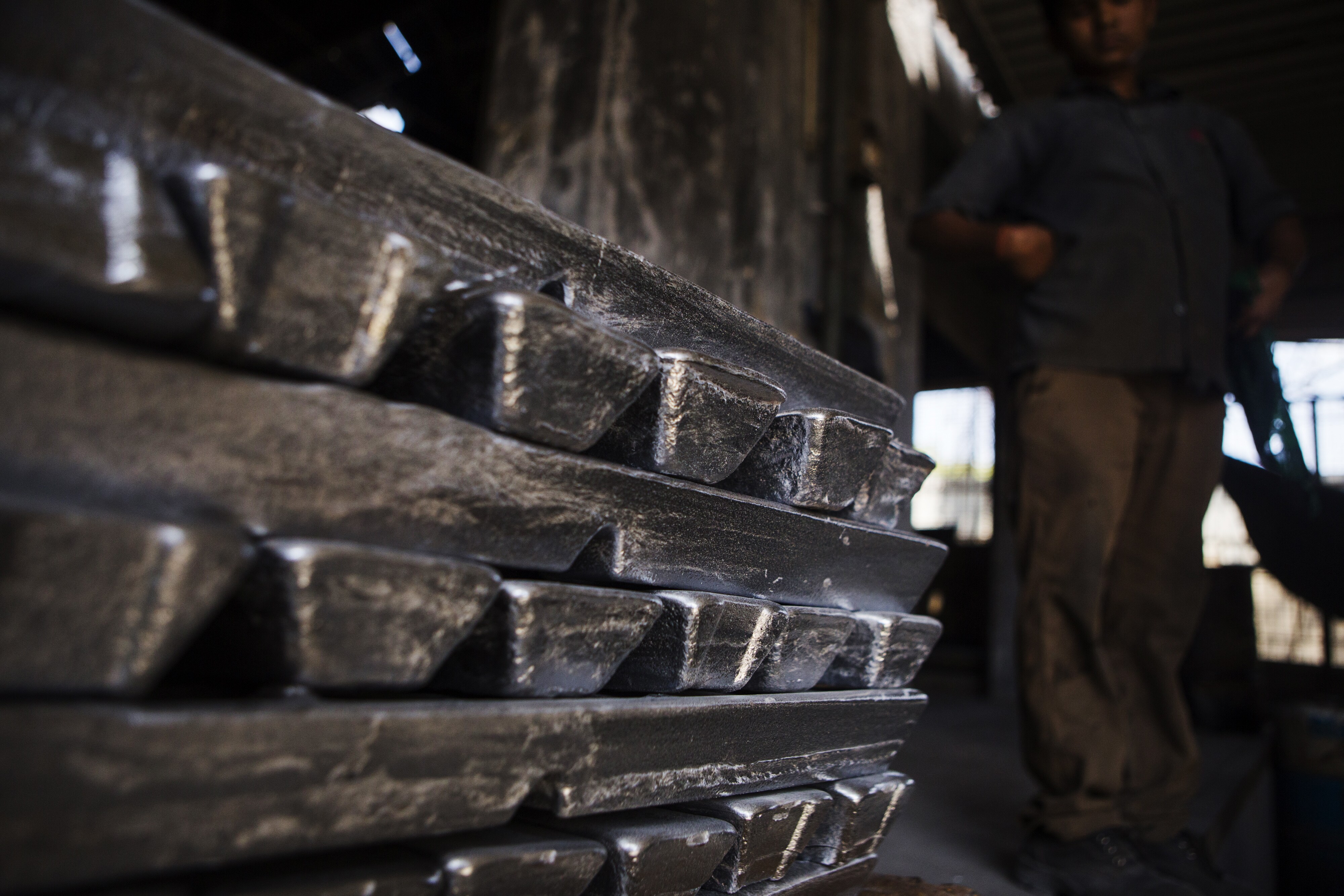
India's top aluminium producers stare at losses as a coal shortage at their captive power plants threatens to shut down smelters at a time when global metal prices are the highest in three years.
Most smelters face electricity shortfall as plants are operating at half a day's coal stock, according to the Aluminium Association of India. The industry body, representing companies like Vedanta Resources and Hindalco Ltd. in the world's fourth largest producer of the base metal, has written to the Prime Minister and the Coal Ministry for urgent fuel supply.
Power contributes about 40 percent of production costs, a reason why they have captive plants generating 8,700 megawatt, according to rating agency ICRA. Smelting requires uninterrupted electricity and any outage freezes pots, shutting down production for at least six months.
The coal crunch comes at a time when the benchmark three-month rolling forward price of aluminium hovers near its highest since September 2014 on the London Metal Exchange.
If coal shortage witnessed in the quarter ended September continues for the rest of financial year, a resultant power crunch will impact aluminium producers' operations, said Jayanta Roy, senior vice-president and group head of corporate ratings at ICRA. It will hurt their profitability regardless of a buoyant outlook on aluminium prices in the near term, he said.
Government-owned Coal India Ltd., the world's biggest miner of the fossil fuel, missed its output target in six months to September. Stock at power plants fell to its lowest in three years in October and has since only marginally improved. That came after the power demand rose during the festival season. About a fifth of 112 generating units tracked by the Central Electricity Authority had stock for less than the critical level of seven days on Nov. 12.
Also Read: Spot Power Prices At Three-Year High Amid Coal Crunch
State-run National Aluminium Company Ltd. was the first one last month to shut three captive power units due to a fuel crunch.
“Some of these large alumina players are evaluating options for sourcing power on the long-term basis on group captive and open access route,” said Sambitosh Mohapatra, partner (power and utilities), PwC India. “Investing or buying out a distressed asset with appropriate coal linkages might also be a viable proposition.”
The top three aluminium producers have supply pacts with Coal India. The shortfall was the highest at 78 percent of Hindalco, followed by Vedanta and Balco at the end of September, according to the letter by Aluminium Association of India.

The three had a combined backlog of 331 coal rakes at the end of September. The aluminium industry association demanded that Coal India should meet the backlog and prioritise rake allocation to captive power plants, according to the letter.
BloombergQuint's repeated calls to the three companies went unanswered. They are yet to respond to emailed queries. Indian Railways didn't immediately respond to an email.
The coal ministry said aluminium producers were getting their share. “Around 250 rakes are being supplied and about 30-plus rakes are going to non-power sectors,” Sushil Kumar, secretary at the ministry, told BloombergQuint.

-
It's Time To Take The GST Council's Bet On Trust Global

Payment records can prove India's services exports, and clear, proportionate rules can bring foreign digital sellers into the tax net.
-
Opinion | India at 38: From Innovation Overperformer to Innovation Powerhouse
India now has 453 VC-backed deep science startups, 18 of them late-stage, after 117 percent growth since 2020. Laurus Labs, at USD 9.3 billion, is the most valuable deep science company in any middle-income economy outside China.
-
Navigating Energy Crossroads: S Jaishankar's Call For Diversified Supply Chains At G20 Ministerial Meeting
As geopolitical fault lines continue to test maritime trade routes and commodity flows, Jaishankar's message remains pertinent: true economic resilience requires open markets, protected transit lines, and a genuine commitment to multilateral cooperation rather than coercion.
-
Indians Are Travelling, But Not Every Journey Is A Holiday | The Week In Whys
Pilgrims, patients and working women are the real travellers, and the system hasn't quite caught up with them.
-
Getting To Work Costs Women More | The Reason Why
It is not just about women paying more than men. It is about women paying much more in cities than in villages.
-
AI Bias In Investing Cannot Be Eliminated, But It Can Be Governed
Framing is a particularly important example as identical financial information presented in terms of gains rather than losses can lead an LLM to reach a different assessment.
-
Joining The Dots | Dark Skies, Steady Diya: Why Hope Holds This Diwali
With war, a weak rupee and foreign outflows weighing on sentiment, policymakers at the NDTV World Summit and market veterans at NDTV Profit Ignite: Diwali Edition offered the same advice: stay invested and filter out the noise.
-
The Curious Case of Equitas Small Finance Bank And A CEO Who Quit For Stock
PN Vasudevan believes persistent investor concerns over a perceived conflict of interest had become a governance overhang on Equitas Small Finance Bank's stock, even as the lender improved profitability and asset quality.
-
Talking Points This Week: AI Cash Burn, A Tiger Comeback And An India That Still Finds Its Own Path
India is not immune to higher oil or tighter global liquidity, yet its earnings base is broader, its domestic policy levers are still available.










