Alibaba Co-Founder Jack Ma Not Retiring Now: Report
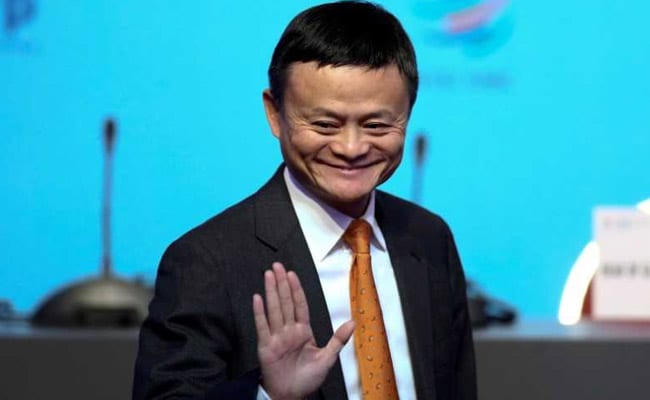
Alibaba co-founder and Executive Chairman Jack Ma is not retiring for now and will unveil a succession strategy on Monday when he turns 54, the South China Morning Post reported on Sunday. The Hong Kong based-daily, which is owned by Ma, denied a New York Times report based on the billionaire's interview that he planned to announce his retirement and do philanthropy. "The Times story was taken out of context (is) and factually wrong," an Alibaba spokesperson was quoted as saying by the newspaper.
The official said Ma remains the company's Executive Chairman and will provide transition plans over a significant period of time.
Ma is China's biggest success story whose rags-to-riches tale is an inspiration for many.
Ma, who is one of the richest men in the world and whose net worth is $36.6 billion, was once a teacher in China's small town Hangzhou where Alibaba is headquartered.
Alibaba is the one of the world's largest e-commerce giants, which has forayed into different sectors like cloud computing.
Although not directly present in the online marketplace, Alibaba's diversified portfolio in India include top-of-the-line investments in digital payments platform Paytm, in Cloud computing via Alibaba Cloud, in the digital media space via UCWeb and several innovation initiatives that makes China an attractive destination for the $420 billion conglomerate.
Ma, who also serves on the board of Japanese corporation SoftBank Group, always has big plans.
He is set to announce a succession plan on Monday on his 54th birthday, the Post reported.
"Jack Ma, who co-founded the world's largest e-commerce platform, will unveil a succession strategy next week, part of a management plan 10 years in the making for grooming a generation of younger executives to take over the reins of Asia's most valuable company," it reported.
Ma is also scheduled to speak at the company's investor's day in mid-September.
According to Alibaba's report filed with the US Securities and Exchange Commission, Ma is a lifetime member of the Alibaba Partnership, which is a group of 36 senior managers who are responsible for maintaining the mission and culture of the Internet company.
"I sat down with our senior executives 10 years ago and asked what Alibaba would do without me," Ma was quoted as saying by the SCMP.
"I'm very proud that Alibaba now has the structure, corporate culture, governance and system for grooming talent that allows me to step away without causing disruption."
Known as Ma Yun in mainland China, he is slated to travel to Russia next week to formalise Alibaba's venture with Mail.ru -- the internet company owned by Russian tycoon Alisher Usmanov and sovereign wealth fund Russian Direct Investment Fund (RDIF).
Ma gave up the title of Alibaba CEO in 2013 but remains a pivotal figure within the firm.
Last month, Alibaba reported a 60 per cent increase in quarterly sales, even as profits fell and its annual revenue totals about 250 billion yuan ($40 billion).
Alibaba has changed the way people work in China. Millions of people now run their own shops selling goods on its Taobao e-commerce platform or stream their own videos on its entertainment platforms, The Financial Times reported.
Taobao is estimated to have created almost 37 million jobs in China, according to a study last year by Renmin University's School of Labour and Human Resources.

-
High US Salaries, No Green Card Certainty: The Financial Calculation Facing Indian H-1B Families

The suspension of PERM processing at eight technology employers does not cancel existing H-1B visas. What it does is force a question many Indian families have been avoiding: is the US salary worth tying your career and family plans to one employer?
-
Swiggy vs Eternal: Food Delivery's Two Rivals Are No Longer In The Same Race
Eternal is building a private AI assistant, dark.ai. Swiggy is still working out how to make Instamart pay, with an operating loss of Rs 895 crore in the July-September quarter while Blinkit stayed profitable.
-
Where You Live Shapes How You Get To Work | The Reason Why
Two-wheelers are the most popular way to get to work in India, accounting for nearly 43% of workplace commutes.
-
Unhedged Position: Can India See An Indonesia-Style Time Correction?
The Nifty is trading below levels it first clocked in 2024. Is there, then, as I have suggested in the headline, potential that the current time correction drags on painfully for the next three-five, even ten years?
-
Navigating Friction And Energy Realities: An Analysis Of Marco Rubio's October Visit To India
Occurring at a critical juncture marked by stalled trade negotiations and escalating geopolitical pressures over global energy supplies, the visit offers a profound window into modern US-India relations.
-
India Exports Capital. Why Not Export Trusteeship?
The big question, then, is whether India can build an institution that global borrowers, investors, banks, and lawyers can trust, even without an Indian connection.
-
France's Economy & Politics Are In Crisis | The Reason Why
Let's look at how the French economy and politics evolved under Nicolas Sarkozy, Franois Hollande and Emmanuel Macron.
-
You May Inherit The Business. You Must Earn Its Credibility.
Succession tests the founder's ability to share authority as much as it tests the next generation's readiness to assume it.
-
Signing Deals Is One Thing; Making Them Work Is Another | The Week In Whys
Sometimes, things don't turn out as planned. Indian companies have lost some bids to rivals, some projects won't produce until 2030.
-
FOMC Wall, PERM Suspension, Hospital Stocks | Talking Points This Week
A PERM suspension would directly affect green-card sponsorship rather than H-1B visas, so the near-term earnings impact could remain relatively limited. The key question is whether this marks a new phase in US scrutiny of Indian IT.









