Alibaba: The New Face of Finance in China
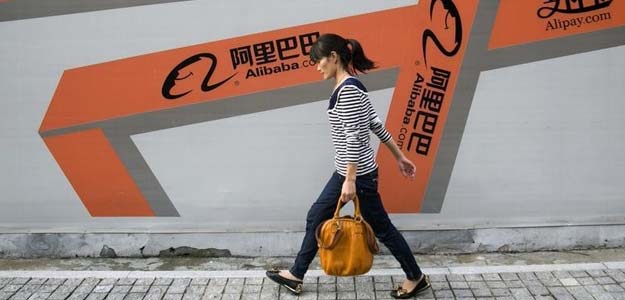
For Yuan Yue, a Chinese graduate student in international trade, moving all of her spare cash to an online investment fund called Yu'e Bao was a no brainer.
"The yield is even higher than a bank time deposit, but a time deposit ties up your money ... so it's better to just keep it in Yu'e Bao, because you can use the money anytime. So why keep it at the bank?" said Yuan, who studies in Shanghai.
Yu'e Bao, available on smartphones, is conveniently linked to China's biggest online payments platform Alipay, similar to PayPal and owned by an affiliate of e-commerce giant Alibaba Group Holding Ltd. Users can dip directly into Yu'e Bao to pay for goods bought online.
As Alibaba gears up for what could be the world's biggest tech IPO, online finance has become another focus of the sprawling firm - and while that business will be largely kept separate from the offering, it could play a major role in the entire company's future growth.
China's banking industry is behind those of developed markets but its number of Internet users, now more than 618 million, is sparking a boom in online and mobile payments.
The total transaction value of China's third-party online payments is expected to reach 18.5 trillion yuan ($2.97 trillion) by 2017, up from 5.4 trillion yuan last year, according to Shanghai-based data firm iResearch.
Yu'e Bao's high interest rates are an incentive to deposit money into the platform, money which can easily be used to buy products on Alibaba's huge online shopping websites and anywhere else that takes Alipay.
Money market fund Yu'e Bao has been such a success that the fund management company that helped launch it, Tianhong Asset Management Co, has gone from near obscurity to China's biggest in terms of assets under management (AUM) in just months.
The firm had 554 billion yuan ($88.88 billion) in AUM in the first quarter of 2014, from just 10.5 billion yuan a year earlier, according to Z-Ben Advisors, a Shanghai-based investment management consultancy.
And now the company that owns Alipay, Zhejiang Alibaba E-Commerce Co, is waiting for regulatory approval to buy 51 per cent of Tianhong.
Tianhong's massive assets under management are in low risk, highly liquid money market funds, said Wang Dengfeng, Tianhong's fund manager.
"We knew it was a break-through product and would succeed but we were surprised that it could reach today's levels," Wang said. "We didn't expect it to move the money market industry and also the country's money management policies."
Challenges Ahead
Tianhong may have grown fast, but like most money market funds it has razor thin profit margins, said Chris Powers, a consultant at Z-Ben Advisors.
"The key will be whether Tianhong can take their now new name recognition and their long list of investors and use them to get them to invest in normal equity funds or fixed income funds which will really help grow their AUM but also grow their revenue," he said.
Yu'e Bao and Tianhong may also come under regulatory pressure.
Their rise has angered China's big state-owned banks, which can't compete on deposit interest rates as they're controlled by the central bank. The banking regulator has been talking about possible restrictions on fund flows to e-payment platforms or even subjecting them to the same requirements as standard banks.
Alibaba founder Jack Ma is fighting back.
"It's not the monopolies and powers that determine success in the market, it's the consumer," Ma said on Alibaba's mobile chat app, after banks imposed limits on how much their customers could transfer to Alipay in March.
But it's not just regulatory challenges looming.
Competitors such as China's dominant online search company Baidu Inc and Tencent Holdings Ltd, a social networking and online gaming giant with the hugely popular WeChat mobile messaging app, have their own investment platforms for customers.
And those customers are fickle. Yuan Yue has been watching the yields on Yu'e Bao carefully as they've dropped below 5 per cent for the first time. A one-year time deposit at a local bank pays at most 3.3 per cent.
"If it falls below 4 per cent I won't keep it in Yu'e Bao," she said. "Others like WeChat and Baidu are offering similar products.
"I can split it up - 2,000 yuan in Baidu's fund, 2,000 yuan in a WeChat fund. They all make me money and the risk is diversified."
($1 = 6.2334 yuan)
Copyright: Thomson Reuters 2014

-
Swiggy vs Eternal: Food Delivery's Two Rivals Are No Longer In The Same Race

Eternal is building a private AI assistant, dark.ai. Swiggy is still working out how to make Instamart pay, with an operating loss of Rs 895 crore in the July-September quarter while Blinkit stayed profitable.
-
Where You Live Shapes How You Get To Work | The Reason Why
Two-wheelers are the most popular way to get to work in India, accounting for nearly 43% of workplace commutes.
-
High US Salaries, No Green Card Certainty: The Financial Calculation Facing Indian H-1B Families
The suspension of PERM processing at eight technology employers does not cancel existing H-1B visas. What it does is force a question many Indian families have been avoiding: is the US salary worth tying your career and family plans to one employer?
-
Unhedged Position: Can India See An Indonesia-Style Time Correction?
The Nifty is trading below levels it first clocked in 2024. Is there, then, as I have suggested in the headline, potential that the current time correction drags on painfully for the next three-five, even ten years?
-
Navigating Friction And Energy Realities: An Analysis Of Marco Rubio's October Visit To India
Occurring at a critical juncture marked by stalled trade negotiations and escalating geopolitical pressures over global energy supplies, the visit offers a profound window into modern US-India relations.
-
India Exports Capital. Why Not Export Trusteeship?
The big question, then, is whether India can build an institution that global borrowers, investors, banks, and lawyers can trust, even without an Indian connection.
-
France's Economy & Politics Are In Crisis | The Reason Why
Let's look at how the French economy and politics evolved under Nicolas Sarkozy, Franois Hollande and Emmanuel Macron.
-
You May Inherit The Business. You Must Earn Its Credibility.
Succession tests the founder's ability to share authority as much as it tests the next generation's readiness to assume it.
-
Signing Deals Is One Thing; Making Them Work Is Another | The Week In Whys
Sometimes, things don't turn out as planned. Indian companies have lost some bids to rivals, some projects won't produce until 2030.
-
FOMC Wall, PERM Suspension, Hospital Stocks | Talking Points This Week
A PERM suspension would directly affect green-card sponsorship rather than H-1B visas, so the near-term earnings impact could remain relatively limited. The key question is whether this marks a new phase in US scrutiny of Indian IT.









