Alibaba Group To Consider Giving Up Control Over Business Units After IPOs
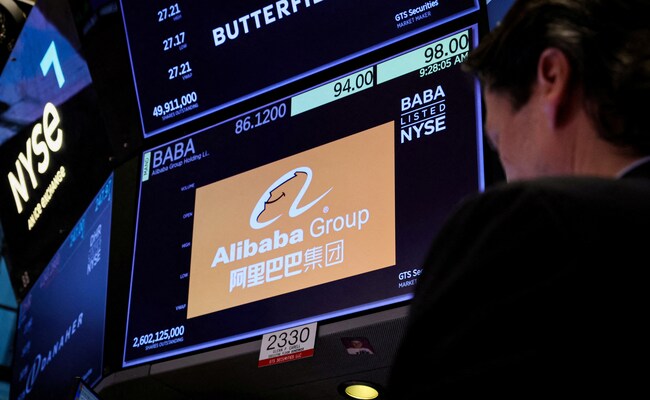
Alibaba Group said today it will look to monetise non-core assets and consider giving up control of some businesses, as the Chinese tech conglomerate reinvents itself after a regulatory crackdown that wiped 70% off its shares.
Group CEO Daniel Zhang said the company's breakup into separate businesses will allow its units to become more agile and eventually list on their own.
His comments come two days after Alibaba announced its largest restructuring in the company's history, which will see it change into a holding company structure with six business units, each with their own boards and CEOs.
"Alibaba will be more of the nature of an asset and capital operator than a business operator, in relation to the business group companies," Zhang told investors on a conference call on Thursday.
On the same call, Alibaba CFO Toby Xu said the group would "continue to evaluate the strategic importance of these companies" and "decide whether or not to continue to retain control".
Alibaba's indication that it could divest from assets and sell control of business units after they go public comes more than two years after Beijing launched a sweeping crackdown on its tech giants, targeting monopolistic practices, data security protection and other issues.
While the new business units will have their own CEOs and boards, Alibaba will retain seats on those boards in the short-term, Zhang added.
The group's Hong Kong-listed shares opened 2.7% higher after the investor call and were still up 2% as of 0147 GMT.
MATTER OF SURVIVAL
Alibaba began laying the groundwork for the restructuring a few years ago, Zhang told investors during a conference call.
As a result of the restructuring, each business unit can pursue independent fundraisings and IPOs when they're ready, Xu said, when asked about the timeline for the listings. The changes will come into effect immediately.
"We believe the market is the litmus test so each company can pursue financing and IPO as and when they are ready," said Xu.
Alibaba, however, will decide whether the group wants to keep strategic control of each unit after they go public, Xu said.
Meanwhile, the group is also planning to continue to monetise non-strategic assets in its portfolio to optimise its capital structure, said Xu.
Alibaba's major rival Tencent, has in the past year divested from a number of portfolio companies including selling a $3 billion stake in SEA, transferring $16.4 billion worth of JD.COM shares and $20 billion worth of Meituan shares to shareholders.
Alibaba's reorganisation will not change its share repurchase plan, Xu added on the call.
Qi Wang, CEO of China-focused asset manager MegaTrust Investment, said the sector's strategic move to reorganise was about survival.
"These internet firms are not going to just sit there and let regulation erode away their growth and profits," Wang said. "Companies including Tencent, Alibaba, JD, Didi and ByteDance have been making bottom-up changes to mitigate the regulatory risk, cost cutting (layoffs), improving operating efficiency, divesting non-core businesses."
Alibaba, once valued at more than $800 billion, has seen its market valuation decline to $260 billion since Beijing started a crackdown on its sprawling tech sector in late 2020.
Some analysts say Alibaba is currently undervalued as a standalone conglomerate and a breakup would allow investors to value each business division independently.
The restructuring could also better protect Alibaba shareholders from regulatory pressures, as penalties levied on one division in theory would not affect the operations of another.
(Except for the headline, this story has not been edited by NDTV staff and is published from a syndicated feed.)

-
Talking Points This Week: Tech Nerves, FII Buying, And A Faraway Banking Shock

The global markets are not shining this Diwali. The exception in the large markets is, India.
-
Midterm Rally Lasted A Day. The Hard Reality Of A Divided US May Last Two Years | Opinion
Between a contested AI boom, a debt ceiling that arrives in 2027 and a president with every incentive to act alone, the next two years may prove more volatile than the first day's rally suggests.
-
Blue Wave Will Derail the AI Trade but Won't Dismantle the AI Era | Unhedged Position
The Democrats' sweep of the US Congress will see politics collide with economic forces both over the long and short term.
-
It's Time To Take The GST Council's Bet On Trust Global
Payment records can prove India's services exports, and clear, proportionate rules can bring foreign digital sellers into the tax net.
-
Opinion | India at 38: From Innovation Overperformer to Innovation Powerhouse
India now has 453 VC-backed deep science startups, 18 of them late-stage, after 117 percent growth since 2020. Laurus Labs, at USD 9.3 billion, is the most valuable deep science company in any middle-income economy outside China.
-
Navigating Energy Crossroads: S Jaishankar's Call For Diversified Supply Chains At G20 Ministerial Meeting
As geopolitical fault lines continue to test maritime trade routes and commodity flows, Jaishankar's message remains pertinent: true economic resilience requires open markets, protected transit lines, and a genuine commitment to multilateral cooperation rather than coercion.
-
Indians Are Travelling, But Not Every Journey Is A Holiday | The Week In Whys
Pilgrims, patients and working women are the real travellers, and the system hasn't quite caught up with them.
-
Getting To Work Costs Women More | The Reason Why
It is not just about women paying more than men. It is about women paying much more in cities than in villages.
-
AI Bias In Investing Cannot Be Eliminated, But It Can Be Governed
Framing is a particularly important example as identical financial information presented in terms of gains rather than losses can lead an LLM to reach a different assessment.









