Alibaba's Jack Ma Is No Longer China's Richest Person. Who Replaced Him
Tencent Holdings Ltd.'s $40 billion surge this week and the recent ascent of Pinduoduo Inc. have reshuffled the ranking of China's richest people.
The country's largest game developer has surpassed Alibaba Group Holding Ltd. as Asia's most-valuable company, with its shares rising above HK$500 in intraday trading Wednesday for the first time. Pinduoduo, a Groupon-like shopping app also known as PDD, has more than doubled this year.
The rallies have propelled the wealth of their founders, with an added twist: Tencent's Pony Ma, worth $50 billion, has surpassed Jack Ma's $48 billion fortune, becoming China's richest person. And Colin Huang of PDD, whose net worth stands at $43 billion, has squeezed real estate mogul Hui Ka Yan of China Evergrande Group out of the top three earlier this year, according to the Bloomberg Billionaires Index.
The coronavirus pandemic has accelerated the digitization of the workplace and changed consumers' habits, boosting shares of many internet companies. Now tech tycoons are dominating the ranks of China's richest people. They occupy four of the top five spots: Ding Lei of Tencent peer NetEase Inc. follows China Evergrande's Hui.
‘Perform Strongly'
Tencent has come a long way since hitting a low in 2018, when China froze the approval process for new games. Since then, the stock has almost doubled, and last month the tech giant reported a 26 per cent jump in first-quarter revenue.
“Tencent's online games segment will probably perform strongly through the Covid-19 pandemic, and most of its other businesses are relatively unscathed,” said Vey-Sern Ling, a Bloomberg Intelligence analyst.
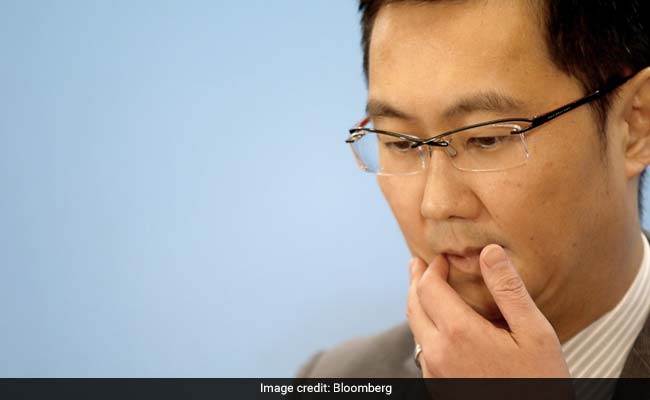
That has been a boon for Pony Ma, 48, who owns a 7 per cent stake in the company and pocketed about $757 million from selling some 14.6 million of his Tencent shares this year, data complied by Bloomberg show.
The native of China's southern Guangdong province studied computer science at Shenzhen University and was a software developer at a supplier of telecom services and products before co-founding Tencent with four others in the late 1990s. At the time, the company focused on instant-messaging services.
It has been a long comeback for Pony Ma. He overtook real estate tycoon Wang Jianlin as China's second-richest person in 2013 and topped Baidu Inc.'s Robin Li as the wealthiest in early 2014. Later that year, Alibaba went public in the U.S., catapulting Jack Ma's fortune.
Bloomberg Intelligence's Ling notes, however, that Tencent's jump this year has lagged behind some internet peers, especially those in e-commerce, games and online entertainment. Just consider: Tencent shares have climbed 31 per cent in 2020, while PDD's American depositary receipts have more than doubled. Alibaba, meanwhile, has advanced just 6.9 per cent.

-
Unhedged Position: Can India See An Indonesia-Style Time Correction?

The Nifty is trading below levels it first clocked in 2024. Is there, then, as I have suggested in the headline, potential that the current time correction drags on painfully for the next three-five, even ten years?
-
Navigating Friction And Energy Realities: An Analysis Of Marco Rubio's October Visit To India
Occurring at a critical juncture marked by stalled trade negotiations and escalating geopolitical pressures over global energy supplies, the visit offers a profound window into modern US-India relations.
-
India Exports Capital. Why Not Export Trusteeship?
The big question, then, is whether India can build an institution that global borrowers, investors, banks, and lawyers can trust, even without an Indian connection.
-
France's Economy & Politics Are In Crisis | The Reason Why
Let's look at how the French economy and politics evolved under Nicolas Sarkozy, Franois Hollande and Emmanuel Macron.
-
You May Inherit The Business. You Must Earn Its Credibility.
Succession tests the founder's ability to share authority as much as it tests the next generation's readiness to assume it.
-
Signing Deals Is One Thing; Making Them Work Is Another | The Week In Whys
Sometimes, things don't turn out as planned. Indian companies have lost some bids to rivals, some projects won't produce until 2030.
-
FOMC Wall, PERM Suspension, Hospital Stocks | Talking Points This Week
A PERM suspension would directly affect green-card sponsorship rather than H-1B visas, so the near-term earnings impact could remain relatively limited. The key question is whether this marks a new phase in US scrutiny of Indian IT.
-
Everything, Everywhere, All At Once: Dalal Street's Week To Forget | Joining The Dots
Visa curbs, a Starlink spat and cancer drug caps: what connects this week's shocks for Indian markets
-
India Is Going Abroad For Critical Minerals. But It May Take Years To Pay Off | The Reason Why
Although India's steps are in the right direction, they remain modest compared with India's growing dependence.
-
When Everyone Has AI, What Gives You An Edge?
India's young workforce is entering an uncertain world of work where powerful AI tools are becoming widely accessible. The advantage will belong to those who combine deep expertise with digital fluency, and the distinctly human capabilities that technology cannot manufacture.