Alibaba: Everything You Need to Know
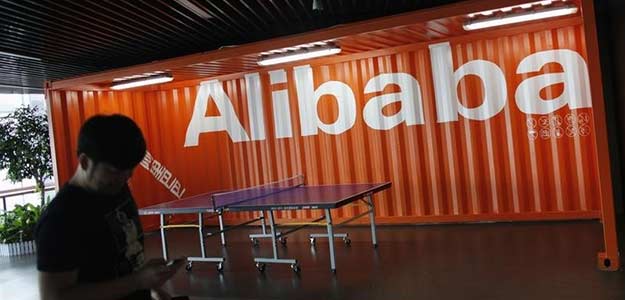
Beijing: Chinese Internet retail giant Alibaba made its historic Wall Street trading debut Friday, breaking the record for the largest-ever initial public offering by raising $25 billion. (Read: With Alibaba's Big Debut, 10 Things to Know)
The following is a fact-file about the e-commerce titan, founded by Chinese entrepreneur Jack Ma, who was in New York for the stock launch.
Founding: Alibaba Group was founded in 1999 by 18 people led by Ma. (Also Read: Alibaba's Jack Ma Rides 'Forrest Gump' Story to Riches)
Why Alibaba?: Ma chose the name because it is "easily pronounced in practically all languages" and because the "open sesame" catchphrase from 1,001 Nights signifies that the company's platforms "open a doorway to fortune for small businesses", the company's website says.
Size: A total of 20,000 people are employed by Alibaba, which has its headquarters in Hangzhou, Ma's hometown in China's eastern province of Zhejiang. The company has 73 offices in mainland China and 16 overseas. (Alibaba: China's Giant Online Shopping 'Crocodile')
Components: Taobao.com, China's most popular online consumer marketplace, and TMall.com, a website for business-to-consumer transactions, are among several online platforms which operate within the Alibaba structure. Raising its profile internationally is US shopping website 11 Main, launched in June. It also has a payment unit, Alipay, which is not included within the IPO vehicle.
Customers: Taobao has more than 800 million product listings and over 500 million registered users. It is estimated to have more than 90 percent of China's online consumer-to-consumer market.
The market: China's online shoppers spent nearly 1.26 trillion yuan ($200 billion) in 2012, up 66.5 percent from the previous year, the semi-official China Internet Network Information Centre said in an April 2013 report. 11 Main potentially opens the door to a wider global audience.
Acquisitions: Alibaba went on a deal-making frenzy ahead of its share offer in the United States. Its purchase of Chinese mobile browser developer UCWeb for an undisclosed sum in June came after it paid $192 million for a 50 percent stake in top Chinese football club Evergrande earlier that month.
In May, it paid $249 million for a stake in Singapore postal service Singapore Post to boost its logistics and delivery operations.
It has also made forays into entertainment, paying $1.22 billion for a stake in top Chinese online video platform Youku Tudou in April and acquiring Hong Kong-listed ChinaVision Media Group in March.
Potential: China has the world's biggest online population and its annual online sales are forecast to reach between $420 billion and $650 billion by 2020. By then it will be the world's largest online retail market, consulting firm McKinsey estimates.

-
Where You Live Shapes How You Get To Work | The Reason Why

Two-wheelers are the most popular way to get to work in India, accounting for nearly 43% of workplace commutes.
-
High US Salaries, No Green Card Certainty: The Financial Calculation Facing Indian H-1B Families
The suspension of PERM processing at eight technology employers does not cancel existing H-1B visas. What it does is force a question many Indian families have been avoiding: is the US salary worth tying your career and family plans to one employer?
-
Unhedged Position: Can India See An Indonesia-Style Time Correction?
The Nifty is trading below levels it first clocked in 2024. Is there, then, as I have suggested in the headline, potential that the current time correction drags on painfully for the next three-five, even ten years?
-
Navigating Friction And Energy Realities: An Analysis Of Marco Rubio's October Visit To India
Occurring at a critical juncture marked by stalled trade negotiations and escalating geopolitical pressures over global energy supplies, the visit offers a profound window into modern US-India relations.
-
India Exports Capital. Why Not Export Trusteeship?
The big question, then, is whether India can build an institution that global borrowers, investors, banks, and lawyers can trust, even without an Indian connection.
-
France's Economy & Politics Are In Crisis | The Reason Why
Let's look at how the French economy and politics evolved under Nicolas Sarkozy, Franois Hollande and Emmanuel Macron.
-
You May Inherit The Business. You Must Earn Its Credibility.
Succession tests the founder's ability to share authority as much as it tests the next generation's readiness to assume it.
-
Signing Deals Is One Thing; Making Them Work Is Another | The Week In Whys
Sometimes, things don't turn out as planned. Indian companies have lost some bids to rivals, some projects won't produce until 2030.
-
FOMC Wall, PERM Suspension, Hospital Stocks | Talking Points This Week
A PERM suspension would directly affect green-card sponsorship rather than H-1B visas, so the near-term earnings impact could remain relatively limited. The key question is whether this marks a new phase in US scrutiny of Indian IT.
-
Everything, Everywhere, All At Once: Dalal Street's Week To Forget | Joining The Dots
Visa curbs, a Starlink spat and cancer drug caps: what connects this week's shocks for Indian markets









