Air India Pushes Jet Upgrade To Lure Back Disgruntled Passengers
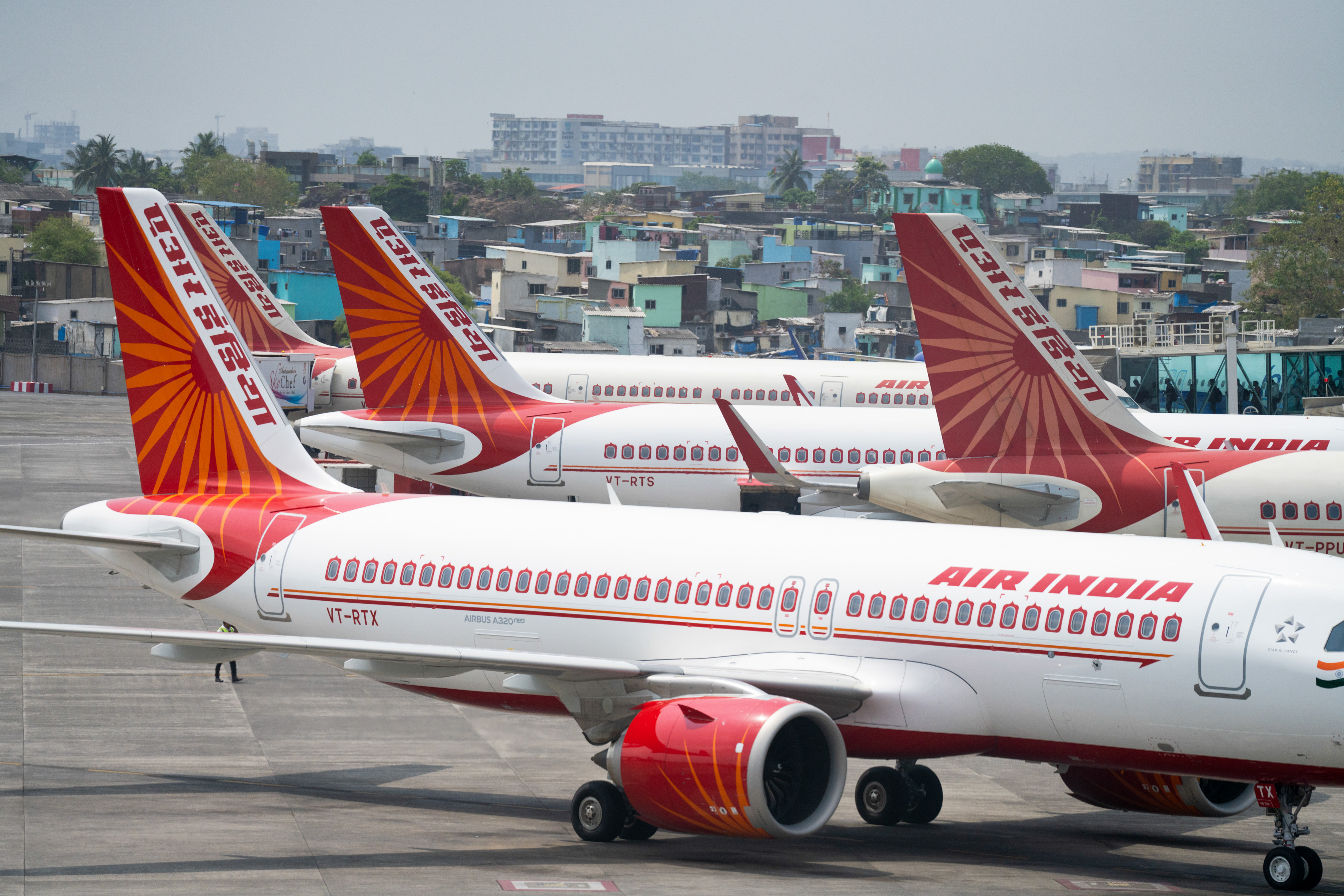
Air India long languished under government ownership while cash-rich Middle Eastern rivals siphoned off travelers. Now the airline is trying to even the score with cheaper fares, fresh cabins and lounges as well as shorter layover times.
The multi-year turnaround program will initially focus on the airline's 27 Boeing Co. 787-8 Dreamliners that are more than 10 years old in some cases, with Air India seeking to complete a refit in early 2027. A second stage, involving older Boeing 777 widebodies, will start late next year, though that step is proving more complex because of issues with seat suppliers, Chief Executive Officer Campbell Wilson said.
“Consistency makes an airline good,” Wilson said in an interview. “There should be a consistency in product quality, crew service, punctuality, and experience at airports and in aircraft. We are working on all of those.”
The Indian travel market offers huge untapped potential for local and foreign carriers, with a new middle class on the move and the government upgrading infrastructure including airports. Air India has sought to tap into that boom, placing a massive order two years ago for new aircraft with Airbus SE and Boeing to upgrade its fleet.
The new lounges, faster connection timings and more skilled ground employees are other elements that seek to improve both the profitability for the airline the passenger experience at its hubs in New Delhi, Mumbai and Bengaluru and put the carrier back on the global map.
A storied airline with close to a century of operation history, Air India has been brought under new ownership led by the Tata Group, which was among the aviation pioneers in the country. Upon taking over, the late Ratan Tata acknowledged in a statement in late 2021 that “admittedly it will take considerable effort to rebuild Air India,” while there's an opportunity to “regaining the image and reputation enjoyed in earlier years.
Among the upgrades targeted by Wilson are better connection timings. For example, on a flight between Australia and Europe, a stopover in India has been reduced to 180 minutes, compared with as long as 10 hours previously. That, in turn, has helped Air India lift the percentage of transit passengers to a high single digit from practically nothing previously, he said.
Wilson acknowledged that the overall experience hasn't always met his requirements. Cabin interiors are often a mishmash of older and newer materials, and traveler accounts on social media are filled with unflattering reviews that include messy seats and unappetizing catering. A deep refresh would mean changing all of the lavatories, interior panels, carpets, curtains and improve the existing seats and in-flight entertainment systems wherever possible, Wilson said.
“There are some cases that we have not done as well as we could,” Wilson said.
The Air India Group now operates two airline brands – full service Air India and Air India Express. Wilson's ambition is to make the group a challenger to global heavyweights like Emirates in carrying India's international passenger traffic and make India's airports a choice of transit for passengers flying between both sides of India — now a business that heavily favors low-cost specialist IndiGo.
India's largest airline, IndiGo has aggressively pushed an expansion that now targets a global reach. The airline has placed orders for the Airbus A350s that will start to come by 2027, putting it in direct competition with Air India's own international routes. And the low-cost airline is set to induct Airbus 321 XLRs this year, giving it access to city pairs as far flung as Germany.
Wilson, who joined after years at Singapore Airlines, is also working with Indian authorities to cut airport red tape that slows passengers as they depart on international flights. Steps include allowing passengers starting out at a domestic-only airport to complete the immigration process there, before they reach one of India's three hubs reserved for international transit.
At the same time, Wilson cautioned that supply-chain snags will remain with the company for several years, risking a delay to the planned product upgrade.
“These things can't be turned around overnight,” he said.

-
Opinion | India at 38: From Innovation Overperformer to Innovation Powerhouse

India now has 453 VC-backed deep science startups, 18 of them late-stage, after 117 percent growth since 2020. Laurus Labs, at USD 9.3 billion, is the most valuable deep science company in any middle-income economy outside China.
-
Navigating Energy Crossroads: S Jaishankar's Call For Diversified Supply Chains At G20 Ministerial Meeting
As geopolitical fault lines continue to test maritime trade routes and commodity flows, Jaishankar's message remains pertinent: true economic resilience requires open markets, protected transit lines, and a genuine commitment to multilateral cooperation rather than coercion.
-
Indians Are Travelling, But Not Every Journey Is A Holiday | The Week In Whys
Pilgrims, patients and working women are the real travellers, and the system hasn't quite caught up with them.
-
Getting To Work Costs Women More | The Reason Why
It is not just about women paying more than men. It is about women paying much more in cities than in villages.
-
AI Bias In Investing Cannot Be Eliminated, But It Can Be Governed
Framing is a particularly important example as identical financial information presented in terms of gains rather than losses can lead an LLM to reach a different assessment.
-
Joining The Dots | Dark Skies, Steady Diya: Why Hope Holds This Diwali
With war, a weak rupee and foreign outflows weighing on sentiment, policymakers at the NDTV World Summit and market veterans at NDTV Profit Ignite: Diwali Edition offered the same advice: stay invested and filter out the noise.
-
The Curious Case of Equitas Small Finance Bank And A CEO Who Quit For Stock
PN Vasudevan believes persistent investor concerns over a perceived conflict of interest had become a governance overhang on Equitas Small Finance Bank's stock, even as the lender improved profitability and asset quality.
-
Talking Points This Week: AI Cash Burn, A Tiger Comeback And An India That Still Finds Its Own Path
India is not immune to higher oil or tighter global liquidity, yet its earnings base is broader, its domestic policy levers are still available.
-
Foreign Investors Own Half Of HDFC Bank and ICICI Bank. An LTCG Cut Could Matter Most Here
Foreign portfolio investors have US$115 billion parked in HDFC Bank, ICICI Bank. If the government cuts long-term capital gains tax, Jefferies says returning foreign money could land here first.










