Air India Pilots' Group Flags Fatigue Concerns Over New Rostering System
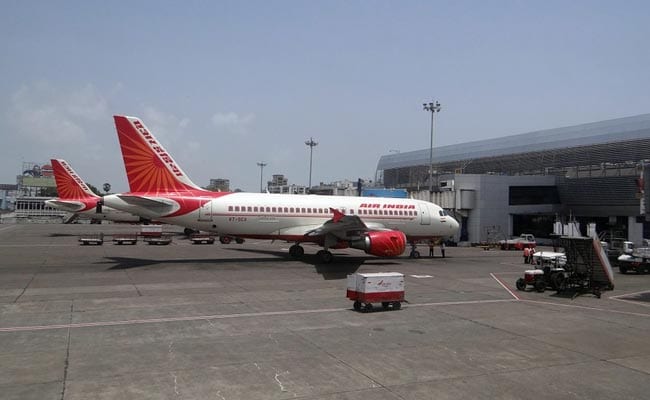
An Air India pilots' grouping has raised fatigue concerns in the wake of flight crew rosters generated using a new rostering tool, saying that extended waiting periods between duty time will jeopardise crew alertness and performance.
"Extended waiting periods, occurring before active flight duties, run counter to enhancing crew readiness and, in fact, contribute to the accumulation of fatigue over time," the Indian Pilots Guild (IPG) has said.
In a letter to Air India Head of Safety Henry Donohoe last week, IPG said it has been recently observed that the relentless pursuit of operational efficiency and economic gains has led to an unintended overshadowing of the primary intent behind Flight Duty Time Limitations (FDTL) regulations.
The Flight Duty Time Limitation (FDTL) are laid down by the Directorate General of Civil Aviation to ensure adequate res timings for pilots and cabin crew staff.
The issue of fatigue among pilots is in focus following the death of an IndiGo pilot recently. The pilot collapsed and died at the boarding gate at Nagpur airport last week as he was preparing to operate a flight from that city to Pune.
Expressing "deep concern" regarding the recent rosters generated by the Jeppesen rostering tool used by Air India, the IPG said, "we must address this specific issue as it pertains directly to flight safety and the well-being of both our esteemed flight crew and valued passengers".
The concern primarily revolves around the recently assigned rosters for the Airbus 320 involving extended waiting periods at the airport between flights, IPG said and added that "one's ability to perform optimally during flight is influenced by factors such as adequate rest, effective fatigue management, and overall physical well-being".
IPG alleged that the rostering approach yields a dual negative impact and not only "compromises with safety but also harbours sentiments of neglect and humiliation among our uniformed crew members".
According to the letter, instances of prolonged waits at airport eateries, departure halls, and various terminal areas for hours between flights are observed with "alarming frequency".
FDTL norms are implemented to mitigate the risks associated with fatigue-induced errors and to uphold an unwavering standard of flight safety, it noted.
However, the grouping said, "the current practice of scheduling extended waiting periods within flight duty periods undermines the very essence of these regulations, jeopardising crew alertness and performance".
"In light of these concerns, we earnestly request the elimination of these gaps within duty schedules and urge for pilots and crew to be rostered such that flight time is aligned as closely as possible with the flight duty period," it said.
Further, IPG said that implementing these modifications would uphold the principles of safety and fatigue management, thereby ensuring the well-being of our crew members and the commitment to our passengers' safety.
(Except for the headline, this story has not been edited by NDTV staff and is published from a syndicated feed.)

-
High US Salaries, No Green Card Certainty: The Financial Calculation Facing Indian H-1B Families

The suspension of PERM processing at eight technology employers does not cancel existing H-1B visas. What it does is force a question many Indian families have been avoiding: is the US salary worth tying your career and family plans to one employer?
-
Swiggy vs Eternal: Food Delivery's Two Rivals Are No Longer In The Same Race
Eternal is building a private AI assistant, dark.ai. Swiggy is still working out how to make Instamart pay, with an operating loss of Rs 895 crore in the July-September quarter while Blinkit stayed profitable.
-
Where You Live Shapes How You Get To Work | The Reason Why
Two-wheelers are the most popular way to get to work in India, accounting for nearly 43% of workplace commutes.
-
Unhedged Position: Can India See An Indonesia-Style Time Correction?
The Nifty is trading below levels it first clocked in 2024. Is there, then, as I have suggested in the headline, potential that the current time correction drags on painfully for the next three-five, even ten years?
-
Navigating Friction And Energy Realities: An Analysis Of Marco Rubio's October Visit To India
Occurring at a critical juncture marked by stalled trade negotiations and escalating geopolitical pressures over global energy supplies, the visit offers a profound window into modern US-India relations.
-
India Exports Capital. Why Not Export Trusteeship?
The big question, then, is whether India can build an institution that global borrowers, investors, banks, and lawyers can trust, even without an Indian connection.
-
France's Economy & Politics Are In Crisis | The Reason Why
Let's look at how the French economy and politics evolved under Nicolas Sarkozy, Franois Hollande and Emmanuel Macron.
-
You May Inherit The Business. You Must Earn Its Credibility.
Succession tests the founder's ability to share authority as much as it tests the next generation's readiness to assume it.
-
Signing Deals Is One Thing; Making Them Work Is Another | The Week In Whys
Sometimes, things don't turn out as planned. Indian companies have lost some bids to rivals, some projects won't produce until 2030.
-
FOMC Wall, PERM Suspension, Hospital Stocks | Talking Points This Week
A PERM suspension would directly affect green-card sponsorship rather than H-1B visas, so the near-term earnings impact could remain relatively limited. The key question is whether this marks a new phase in US scrutiny of Indian IT.









